
Best EPOS Systems for UK Cafés in 2026: A Practical Comparison
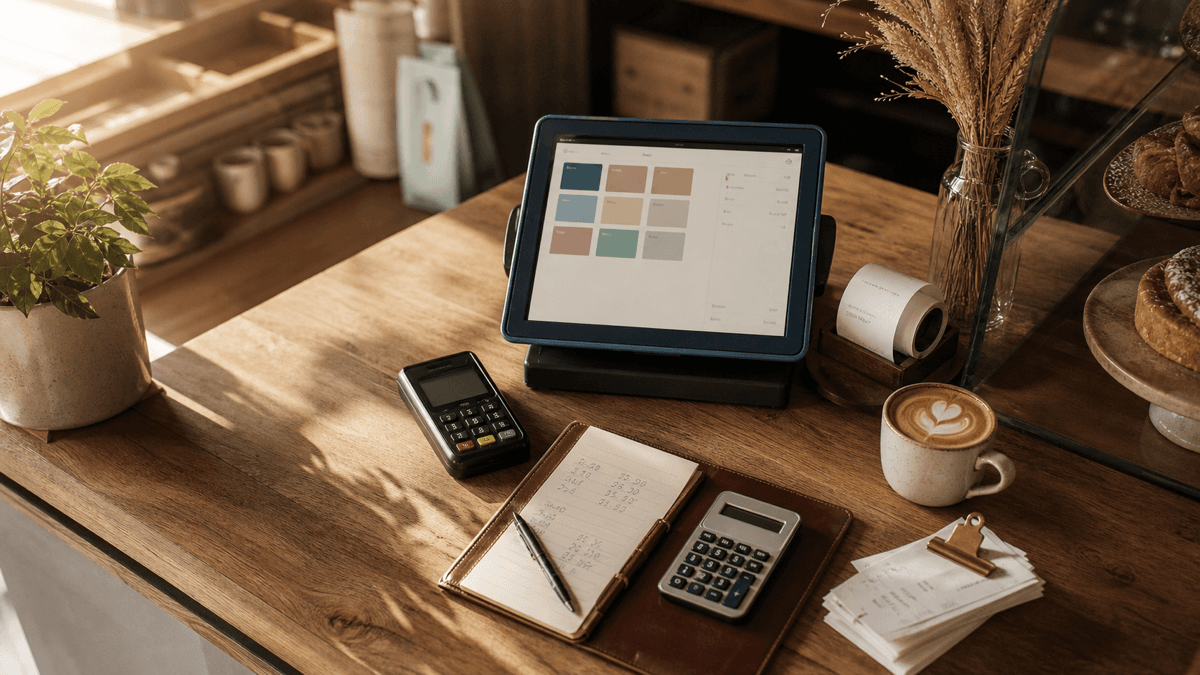
Your till is the heart of the business. Pick wrong and you're locked in for years - paying transaction fees you didn't budget for, fighting export quirks at month-end, or staring at a screen that doesn't actually show you what's selling.
Most café owners pick an EPOS in a hurry. Someone recommends one, the rep is friendly, the hardware looks the part, and three years later you're stuck with reports that don't tell you anything useful and contract terms you'd rather not be in.
This guide is the comparison I wish I'd had when I switched tills the last time. No sponsorships, no affiliate links, no "best of" rankings dressed up to nudge you toward the highest commission. Just what each system is actually good at, and where it falls down.
What "Best" Actually Means for an Independent Café
There's no single best EPOS. There's only the one that suits your setup, your volume, and your plans for the next few years.
Four things actually matter:
- Transaction fees - the percentage and pence per sale you hand over every time a card taps. On £400k turnover, the difference between 1.5% and 1.75% is £1,000 a year.
- Subscription cost - the monthly licence. Free plans exist but usually trade reporting depth for the cost saving.
- Reporting depth - can you actually see what's selling, by category, by hour, by staff member? Or do you get a daily total and a CSV of receipts?
- Integrations - does it talk to your accounting software, your costing tool, your rota app? This is the bit most operators undervalue at sign-up and regret later.
Everything else - hardware design, support hold times, contract length, app marketplace size - matters too, but those four decide whether your till becomes a tool or a tax.
The 6 EPOS Systems Worth Shortlisting in 2026
Here's the shortlist for a UK independent café in 2026. Confirm pricing on each provider's site before you commit - rates move, especially the card fees.
| EPOS | Monthly cost | UK in-person fee | Best for | Watch out for |
|---|---|---|---|---|
| Square | Free - £69/mo | 1.75% | Single-site cafés starting out | Reporting depth on the free tier |
| Lightspeed | £69 - £189/mo | ~1.5 - 2% | Multi-site, hospitality-focused | Higher monthly, contract length |
| Toast | ~£59 - £165/mo | Custom rates | Restaurant-style operations | Less UK presence, hardware lock-in |
| Epos Now | £25 - £75/mo | Separate processor | Tight monthly budget | Payment processing is bolted on |
| SumUp | Free - £19/mo Pro | 1.69% | Market stalls, pop-ups, kiosks | Limited reporting and integrations |
| Zettle (PayPal) | Free plan | 1.75% | Very simple setups | Owned by PayPal, future uncertain |
Pricing accurate to the best of my knowledge in May 2026 - always confirm directly with the provider.
Square
The default starting point for most UK cafés in 2026, and for good reason. The free plan is genuinely free, the hardware is well-designed, and the in-person fee is 1.75%. Square for Restaurants Plus sits around £69/month and unlocks better menu management and reporting.
Strengths: clean interface, fast onboarding, decent integrations marketplace, no contract. Square Online (free) is a workable starter website.
Weaknesses: the free-plan reporting gets thin once you're doing real volume. Custom item modifiers can feel clunky. If you're running a bakery-and-café hybrid, kitchen routing isn't its strong suit.
Lightspeed
A step up in capability and cost. Lightspeed has invested heavily in hospitality features - kitchen display systems, table management, menu engineering, advanced reporting. Monthly cost sits in the £69 - £189 range depending on tier, plus Lightspeed Payments at roughly 1.5 - 2% in-person.
Strengths: depth. Reports are properly designed for hospitality, not retrofitted from retail. Multi-site management is solid.
Weaknesses: contracts. You're usually signing for 12 months minimum. The interface can feel heavy if you're a small café with a simple menu.
Toast
The big US restaurant EPOS, now properly available in the UK. Toast is built for restaurants with kitchens, table service, and tipping. Monthly cost around £59 - £165 plus custom card processing rates.
Strengths: the restaurant-side features are excellent. Built-in handhelds for tableside ordering, tip pooling tools, and a proper KDS (kitchen display system).
Weaknesses: UK presence is still smaller than Square or Lightspeed. Hardware is proprietary - you can't bring your own. Less suited to a counter-service café than a sit-down restaurant.
Epos Now
The veteran UK option. Lower monthly cost (£25 - £75) but you bring your own payment processor (typically takepayments, Worldpay, or similar). That means your card fees are negotiated separately.
Strengths: flexibility on payment processing - if you're a high-volume site you can negotiate sharper card rates than Square's flat 1.75%. The hardware ecosystem is open.
Weaknesses: the software has improved but still feels older than Square or Lightspeed. The "bolted-on" feel of separate processing means more admin, more reconciliation, and another supplier relationship.
SumUp
Started as a card reader, grew into a full POS. Free plan, Pro at around £19/month, 1.69% in-person card fee.
Strengths: the cheapest serious option. Genuinely fine for a market stall, a pop-up, a tiny single-counter café. The hardware is small and portable.
Weaknesses: reporting is shallow. Integrations are limited. As soon as you want serious sales-mix analysis or to feed data into a costing tool, you'll hit a ceiling.
Zettle by PayPal
Free plan, 1.75% in-person fee. Simple, reliable, owned by PayPal.
Strengths: dead simple to set up. If you already use PayPal for online sales, the integration is tidy.
Weaknesses: PayPal's product roadmap for Zettle has been quiet for a while. It works, but it's not where serious investment is going. Reporting is basic and the integration ecosystem is thin.
What to Look For Beyond the Headline Price
The monthly fee and the card percentage are the obvious bits. Here's what catches people out.
Card fees - the maths matter
A 0.2% difference doesn't sound like much. On £15k a week in card sales, it's £30. Over a year, £1,560. That's the difference between paying for a costing tool, a rota tool, and a Friday lunch out.
Hardware lock-in
Some systems (Toast, parts of Lightspeed) only run on their proprietary hardware. Square and SumUp are more open - you can use a standard tablet plus their reader. This matters if a screen breaks at 7am on a Saturday and you need to improvise.
Reporting export quality
Can you export a clean sales-by-item CSV with categories, modifiers, and timestamps intact? Some systems give you that in one click. Others give you a PDF and a smile. If you ever want to do menu engineering or feed your sales into a costing tool, clean exports are non-negotiable. The free Square category analyser is one example of what's possible when the data is structured well.
Integrations
The till is one piece. The full stack for a 2026 café usually includes:
- Accounting - Xero or QuickBooks
- Costing - to know your true margin per item
- Rotas and payroll - to match labour cost to sales
- Online ordering and delivery - integrated, not double-keyed
If your EPOS doesn't talk to these, you're either double-entering data or flying blind on the bits in between.
The Integration Question
This is the one most operators get wrong. The till records what sold. That's it. The value isn't the sale itself, it's what you learn from it.
If your EPOS exports clean sales-mix data and connects to a costing tool, you can answer questions like:
- Which items are actually making me money once true ingredient cost is factored in?
- Which categories are growing? Which are flat?
- When I put oat milk up by 12p a litre, did margin recover or did I just absorb it?
That's where a tool like MenuBrik comes in - it sits between your EPOS sales data and your recipe costs, telling you where the profit is hiding. There's a longer piece here on why POS data alone doesn't tell you what makes money that explains the gap.
The point isn't which till you pick. The point is whether the till lets you act on what it records. A free Square plan with clean exports and a proper costing tool will beat a £150/month EPOS with locked-down reporting every time.
For the technical side of connecting your till to other tools, the POS integration guide for UK restaurants walks through what actually happens under the hood.
When You've Outgrown Square (or Whoever You Started With)
There's a moment most growing operators hit. Usually it's when you open your second site, or when you start running events, or when you realise the free plan reporting just isn't giving you what you need.
Signs you've outgrown your starter EPOS:
- You're exporting CSVs into spreadsheets every week just to get a usable view
- Stock and waste tracking is happening in a notebook
- Multi-site reporting is "log into each site separately"
- Your accountant keeps asking for data the system can't produce
When that happens, the move is usually from Square free/Plus to Lightspeed, or from SumUp/Zettle to Square Plus, or from Epos Now to Lightspeed. Stay in the same family if you can - migration is painful.
The Honest Takeaway
There is no single best EPOS for UK cafés in 2026. There's the one that fits your volume, your menu, and your appetite for monthly cost.
If you're starting out, Square or SumUp. If you're growing past one site and want proper hospitality features, Lightspeed. If you're a restaurant more than a café, Toast. If you want to negotiate your own card rates, Epos Now.
But the till itself isn't where the money is made. The till is a sales recorder. The value is what you do with the data after - feeding it into your costing tool, comparing it to your labour, watching for the items that look busy but quietly lose you money.
Pick the system that exports clean data and plays nicely with the rest of your stack. Then spend your effort on the bit that actually moves the needle.
Ed O'Brien has run Hunters Cake Company for 17 years across cafés in Witney, Burford, and a bakery in Carterton, Oxfordshire. He's building Brikly - modular tools that give independent café owners the same data the big chains have, without the big chain price tag.