
Building a Café That Runs Without You in the Kitchen
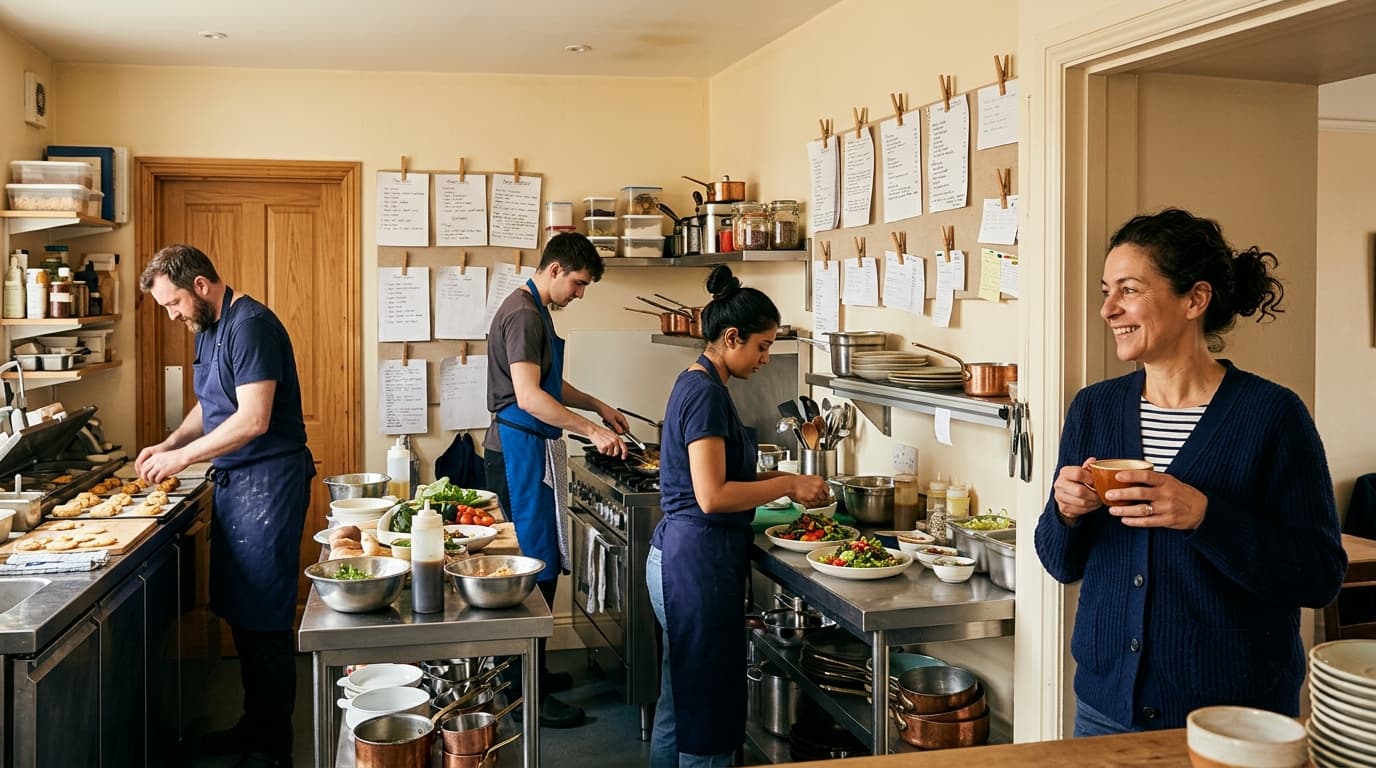
When I opened my second café, I thought I'd cracked it. The first site was running well, the numbers were good, and I had a solid team. So I signed the lease, fitted out the new place, and opened the doors.
Within three weeks I was working 14-hour days, bouncing between two sites, and neither one was running properly. The first site - the one that had been fine - started slipping. Why? Because it had never actually been systemised. It had been running on me.
Every recipe was in my head. The opening routine was whatever I did that morning. New starters were trained by following me around until they "got it." It worked when I was there. The moment I wasn't, it fell apart.
If that sounds familiar, this post is for you.
The Fragility Problem
Hospitality has roughly 30% annual staff turnover - double the UK national average. In some cafés, especially those relying on students or seasonal workers, it's even higher.
That means every year, nearly a third of your team leaves. And every time someone walks out the door, they take their knowledge with them. How they prepped the sourdough. Which supplier to call when the milk delivery doesn't show. Where the stopcock is.
If your business depends on any one person - and especially if that person is you - it's fragile. Not failing. Not broken. Just fragile. One illness, one holiday, one resignation away from chaos.
The goal isn't to make yourself unnecessary. It's to make yourself optional. To build something that runs on systems, not on you being in the kitchen at 5am.
The Owner-as-Head-Chef Trap
I see this constantly with independent café owners. You started the business because you're brilliant at making food. You know every recipe, every supplier, every quirk of the oven. You're the best person in the building at every single job.
And that's exactly the problem.
When every decision runs through you - what to order, how to prep the specials, whether the scones are right - you can't grow. You can't take a day off without your phone buzzing. You can't open a second site. And if you ever want to sell, the buyer is going to ask: "What happens when Ed leaves?"
If the honest answer is "it all falls apart," that's not a business. That's a job you've built around yourself.
The shift you need to make is uncomfortable but simple: from "nobody does it like me" to "I've built a system that works whether I'm here or not."
Step One: Document Every Recipe
This is where it starts. Not with software or consultants - with writing things down.
I'm talking about proper recipe documentation. Not a scribbled note that says "banana bread - usual method." I mean:
- Exact weights for every ingredient - 340g plain flour, not "about 3 cups"
- Step-by-step method - written so someone who's never made it before can follow it
- Photos of the finished product - so your team knows what "right" looks like
- Yield and portion size - how many portions, what weight per portion
- Allergen information - tagged to each recipe, not stored in someone's head
- Cost per portion - because if you don't know what it costs, you can't price it properly
When I finally sat down and documented every recipe at Hunters, it took the best part of two weeks. It was tedious. But the impact was immediate. New team members could produce consistent results from day one. I stopped getting calls asking "how much butter goes in the lemon drizzle?"
If you haven't costed your recipes yet, that's the other half of this equation. Documented recipes without costings are only doing half the job - our guide on recipe costing for UK cafés walks through the full process.
Step Two: Write Your SOPs
Recipes cover what you make. Standard Operating Procedures cover how you run the place.
Every café has routines. Opening. Closing. Prep. Cleaning. Cashing up. The problem is that in most independent cafés, these routines exist as oral tradition - passed from one team member to the next, slowly drifting further from the original intent.
Here's what to document:
Opening Procedure
- What time does the first person arrive?
- What gets turned on first? (Ovens, coffee machine, hot water)
- What prep needs doing before you open the doors?
- What checks happen? (Temperatures, stock levels, cleanliness)
Closing Procedure
- What gets cleaned and how?
- What food gets wrapped, dated, and stored?
- Cash reconciliation steps
- Security checklist (doors, windows, alarms)
Prep Lists
- What gets prepped daily vs weekly?
- Quantities tied to expected demand (not guesswork)
- Who's responsible for what?
Cleaning Schedules
- Daily, weekly, monthly tasks
- Who does what and when
- Sign-off sheets so nothing gets missed
The test is simple: if your best team member called in sick tomorrow, could someone else open the café without calling you? If the answer is no, you don't have a system. You have a dependency.
Step Three: Build a Training System That Actually Works
With 30% turnover, you're going to be training new people constantly. That's just reality in hospitality. The question is whether onboarding takes two days or two weeks.
Most independent cafés train new starters by shadowing. Follow Sarah around for a few shifts, watch how she does things, ask questions when you're confused. It sort of works, but it's slow, inconsistent, and completely dependent on Sarah being good at explaining things.
A better approach:
- A structured first-week plan - day one covers these tasks, day two covers these, by day five they should be able to do X independently
- Recipe cards they can reference - not memorise on the spot
- A skills checklist - signed off as they demonstrate competence on each station
- A buddy system - but with written materials backing it up, not replacing them
The goal is that a new starter is productive in days, not weeks. Every extra day of slow onboarding costs you money - in wasted labour, in mistakes, in slower service.
When you've got a smaller, focused menu, training becomes dramatically easier. Fifteen dishes to learn instead of forty. Three prep stations instead of eight. The menu decision directly feeds into how fast your team gets up to speed.
Step Four: Replace Tribal Knowledge With Tech
There's a category of knowledge in every café that lives nowhere except in people's heads. The supplier's mobile number. The fact that the Tuesday delivery is always short on cream. The workaround for the till when it freezes on card payments.
Some of this is just human knowledge that needs writing down. But a lot of it can be replaced - or at least backed up - by technology.
Recipe Management
Digital recipe systems mean your recipes live in one place, not in a folder that's been coffee-stained beyond recognition. When an ingredient price changes, your costings update. When you tweak a recipe, everyone sees the current version.
Automated Ordering Triggers
If you know you use 20 litres of milk a day and your supplier needs 24 hours notice, that's a system - not a thing someone needs to remember. Minimum stock levels with automatic reorder prompts take the guesswork out.
Rota Templates
Building a staff rota that controls labour costs is one of the most important things you do each week. But it shouldn't start from scratch every time. Templates based on your trading patterns - adjusted for seasonality, events, and holidays - save hours and reduce the risk of expensive overstaffing.
Data Instead of Instinct
"I think Tuesdays are quiet" is instinct. "Tuesdays average £420 between 2pm and close" is data. When your systems capture this information automatically, you stop making decisions based on feelings and start making them based on evidence.
There's a growing wave of AI-powered tools hitting hospitality - from smarter demand forecasting to automated invoice processing. The ones worth paying attention to are the ones that reduce your dependence on any single person's knowledge.
The Mental Shift
This is the hardest part. Harder than writing SOPs. Harder than documenting recipes.
You have to let go of the idea that you're the only person who can do it properly.
I struggled with this for years. I'd watch someone portion a cake differently from how I'd do it and feel a physical urge to step in. I'd rewrite prep lists my team had perfectly competently created because they weren't laid out the way I liked. I was the bottleneck and I couldn't see it.
The truth is, your way might be 5% better. But a documented, repeatable system that works at 95% without you is infinitely more valuable than perfection that depends on you being present.
Here's what changed for me: I stopped asking "is this as good as I'd do it?" and started asking "is this good enough for the customer to come back?" Almost always, the answer was yes.
Your team will do things slightly differently. That's fine. What matters is that the outcome is consistent - the croissant looks right, the coffee tastes right, the customer leaves happy. How someone holds the piping bag is not worth losing sleep over.
What This Looks Like in Practice
When I finally got this right across my sites, the difference was night and day.
- New starters were competent on their station within three to four days
- I could take a week off without a single phone call about operations
- Opening a third site didn't mean I had to physically be in three places
- My team felt more confident because they had clear standards to work to, not a vague sense of "do it like Ed does"
The business stopped being dependent on me and started being dependent on the systems I'd built. That's a fundamentally different thing. Systems can be maintained, improved, and scaled. One person's capacity can't.
Where to Start
If you're reading this thinking "I need to do all of this but it's overwhelming," here's the order I'd suggest:
- Document your top 10 recipes - exact weights, method, photos, costings
- Write your opening and closing procedures - one page each, laminate them, stick them on the wall
- Create a first-week training plan for new starters
- Digitise your recipes and costings so they're searchable, shareable, and always up to date
- Build rota templates based on actual trading data, not habit
- Review and refine - every month, ask your team what's unclear or missing
You don't need to do this in a weekend. Pick one thing from the list, do it properly, and move on. Over a few weeks, you'll have built something that fundamentally changes how your café operates.
The cafés that survive and grow are the ones that run on systems, not superhuman effort from one person. Build the system. Trust your team with it. And maybe - just maybe - take a Saturday off.
Ed O'Brien has run Hunters Cake Company for 17 years across cafés in Witney, Burford, and a bakery in Carterton, Oxfordshire. He's building Brikly - modular tools that give independent café owners the same data the big chains have, without the big chain price tag.