
Business Rates 2026: The 'Tax Cut' That's Costing Cafés and Restaurants More Than Ever
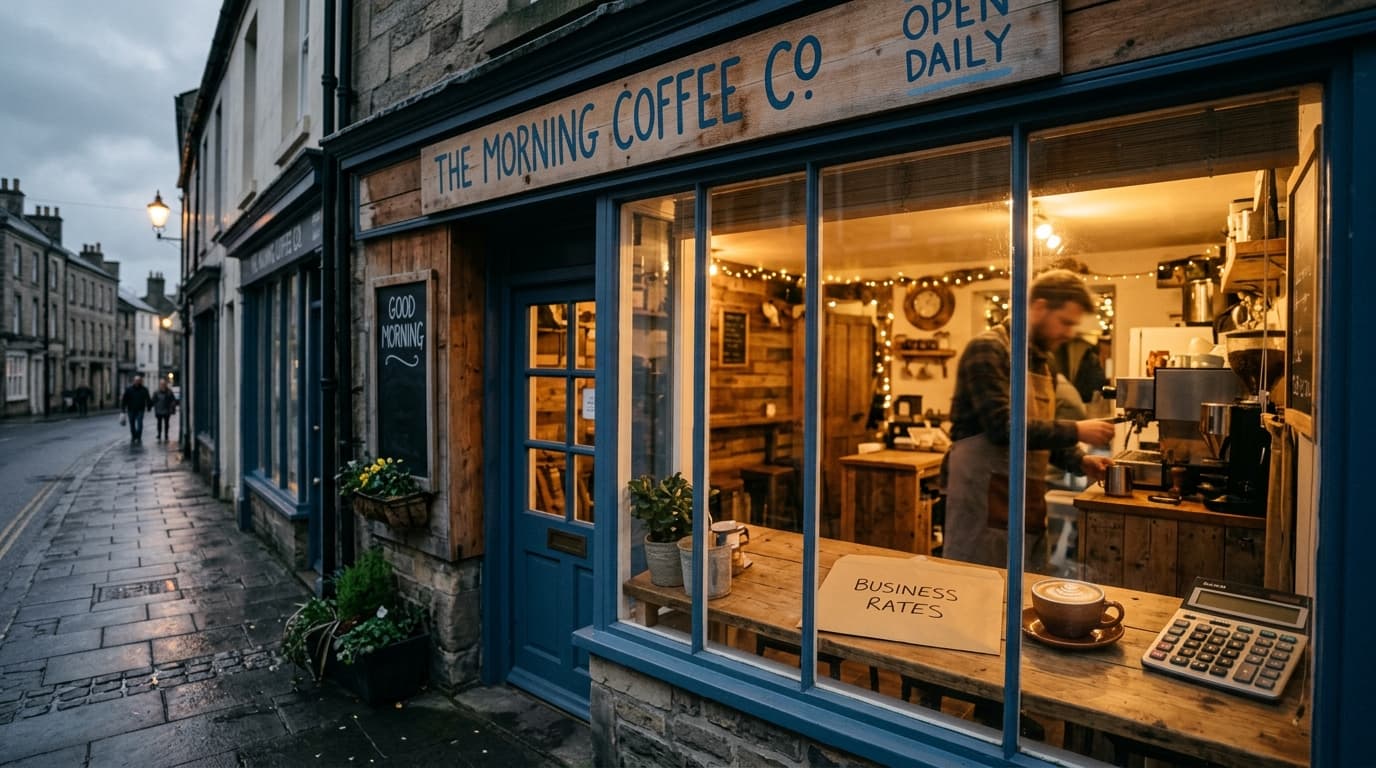
If you run a café, coffee shop, or restaurant in the UK, you've probably heard the government talk about their "permanent tax cut" on business rates for hospitality. It sounds great. It isn't.
From 1 April 2026, most hospitality businesses will pay significantly more in business rates than they have at any point in the last five years. Some will pay three or four times more. And while pubs have been thrown a lifeline, cafés and restaurants have been left out in the cold.
Here's what's actually happening - and what you can do about it.
The relief you've had for five years is gone
Since the pandemic, hospitality businesses have benefited from Retail, Hospitality and Leisure (RHL) business rates relief. At its peak, that was a 100% rates holiday. More recently, it's been a 75% discount - capped at £110,000 per business, but still a meaningful lifeline for most independents.
That relief has been winding down:
- 2023-24 and 2024-25: 75% relief
- 2025-26 (this year): 40% relief
- 2026-27 (from April): Gone entirely
The government's position is that the temporary relief has been replaced by a permanently lower multiplier. Which is technically true. But the maths doesn't work in your favour.
The new multiplier system
From April 2026, the old two-tier system (standard and small business multipliers) is being replaced with five multipliers. The ones that matter for hospitality are:
| Category | Rate (pence in the pound) |
|---|---|
| Small business RHL (rateable value under £51,000) | 38.2p |
| Standard RHL (rateable value £51,000 - £499,999) | 43.0p |
| Small business (non-RHL) | 43.2p |
| Standard (non-RHL) | 48.0p |
For comparison, the 2025-26 small business multiplier was 49.9p and the standard was 55.5p.
So yes, hospitality gets a lower rate than offices and warehouses - roughly 5p in the pound less. The government calls this a "permanent tax cut worth nearly £1 billion per year."
The problem? A 5p discount doesn't come close to replacing a 75% discount.
The revaluation makes it worse
On top of losing the relief, April 2026 also brings a business rates revaluation. Rateable values - the figure your bill is based on - are being recalculated based on rental values as of April 2024, replacing the previous valuation date of April 2021.
Why does that matter? Because April 2021 was the middle of the pandemic. Rents were depressed. Hospitality premises were valued at rock-bottom levels. April 2024, by contrast, reflects the post-pandemic recovery - higher rents, higher demand for commercial space.
The result: rateable values across the hospitality sector are up by an average of 28%. Pubs and pub restaurants are seeing increases of 30% or more. Some hotel and leisure properties are up by 70%.
So your multiplier is a bit lower, but it's being applied to a much higher number.
What this actually costs you
Let's work through a realistic example for a small café.
Under the old system (2024-25, with 75% relief):
- Rateable value: £15,000
- Bill before relief: £15,000 x 49.9p = £7,485
- After 75% relief: £1,871
Under the new system (2026-27, after revaluation):
- Rateable value increases to £20,000 (a 33% increase - below the sector average)
- Bill: £20,000 x 38.2p = £7,640
That's an increase from £1,871 to £7,640. A jump of over £5,700 - more than four times what you were paying.
Even compared to this year's reduced 40% relief, you're looking at a 70% increase.
For a mid-sized restaurant with a rateable value of £60,000, the numbers are starker. UKHospitality estimates that by 2028-29, the average hospitality business will be paying 76% more than current levels. Hotels face increases of up to 115%.
Pubs get help. Cafés and restaurants don't.
In January 2026, after sustained pressure from the pub industry and media campaigns, the government announced a support package - but only for pubs and live music venues.
The package includes:
- 15% additional business rates relief for 2026-27 (no cap)
- Bills frozen in real terms for 2027-28 and 2028-29
- An average saving of £1,650 per pub in the first year
To qualify as a pub, a premises must be open to the public, allow entry without charge, permit drinking without food, and serve drinks at a bar.
Cafés, coffee shops, restaurants, nightclubs, snack bars, and hotels are explicitly excluded.
This means two businesses on the same high street - a pub and a café - face the same revaluation, the same loss of relief, but completely different levels of support. The pub gets 15% off. The café gets nothing.
UKHospitality's response was blunt: "The entire hospitality sector is affected by these hikes - from pubs and hotels to restaurants and cafes. We need a hospitality-wide solution."
What the industry is saying
The reaction from hospitality bodies has been overwhelmingly negative.
UKHospitality described the end of temporary relief as a "devastating cliff-edge" representing a £928 million annual bill for the sector. They've called on the government to increase the RHL multiplier discount from 5p to 20p in the pound - arguing that 5p is "simply not enough to offset these costs."
The British Beer & Pub Association welcomed the pub-specific package but acknowledged it only "staves off the immediate financial threat" - and that permanent reform is still needed.
Industry commentators have pointed out the unfairness: distribution warehouses face a 16% increase, offices 7%, large supermarkets just 4%. Hospitality - already operating on razor-thin margins - faces 28% or more.
The government frames this as a permanent £1 billion annual tax cut. The industry sees it as losing £928 million in relief and getting back a fraction of that through slightly lower multipliers.
What you can do
You can't change government policy, but you can make sure you're not paying more than you should.
1. Check your new rateable value
The Valuation Office Agency (VOA) published draft 2026 rateable values in late 2025. If you haven't checked yours, do it now at gov.uk/correct-your-business-rates. Compare it against what you actually pay in rent - if the rateable value looks too high, you can challenge it.
2. Understand transitional relief
The transitional relief scheme caps how quickly your bill can increase year on year. For properties with a rateable value under £20,000 (£28,000 in London), the cap is just 5% in the first year. Make sure your council is applying this correctly.
3. Check if you qualify for small business rate relief
If your rateable value is below £15,000, you may qualify for small business rate relief - which is separate from the RHL changes. Properties with a rateable value below £12,000 pay no business rates at all.
4. Factor it into your pricing
This is a real cost increase, and it needs to be reflected somewhere. If you haven't reviewed your menu pricing recently, now is the time. A few pence on each item across your menu can absorb a significant rates increase without customers noticing.
5. Talk to your accountant
Business rates are an allowable expense for tax purposes. Make sure you're claiming them correctly and that any rate changes are reflected in your cash flow forecasts.
The bigger picture
The frustrating thing about these changes is that the headline - "permanent tax cut for hospitality" - sounds like good news. And politically, it's been presented as such. But when you strip away the messaging and look at the actual bills landing on doormats from April, the reality is that cafés, coffee shops, and restaurants across the UK are facing their highest business rates in at least five years.
The temporary relief got the sector through the pandemic and the cost-of-living squeeze. Removing it while simultaneously revaluing properties upward was always going to hurt. The pub-only support package, while welcome for publicans, only highlights how exposed the rest of the sector is.
If you run an independent café or restaurant, this is one more cost to absorb in a year that's already bringing higher employer NICs, a national minimum wage increase, and continued food price inflation. Changes to statutory sick pay add further pressure for businesses with part-time staff. None of these costs are going away. The businesses that survive will be the ones that know their margins inside out - and adjust before it's too late.