
Your Café's Energy Bill Is Too High - Here's What You Can Actually Do About It
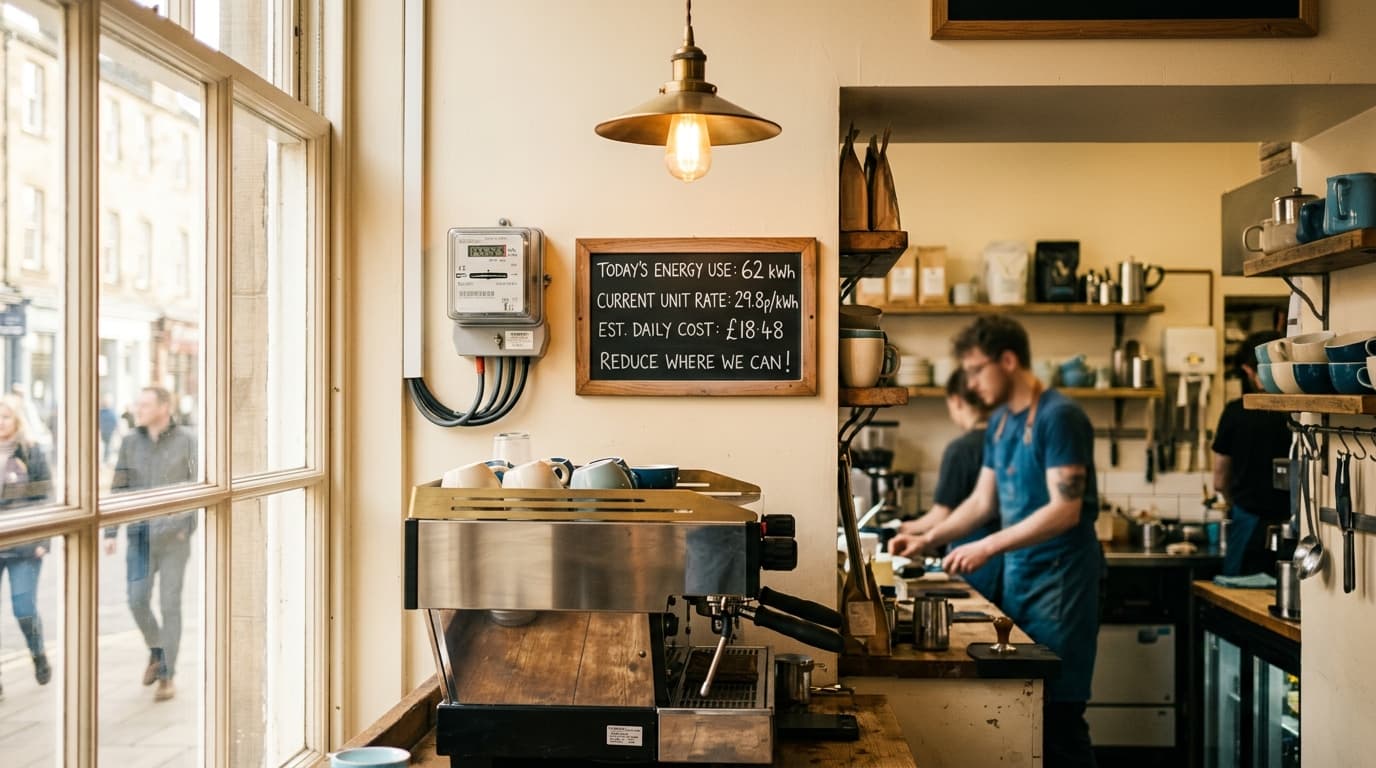
You open the energy bill. You already know it's going to hurt - but this month it's worse than you expected. Again.
You've switched off a few lights. You've told staff to close the fridge door properly. You've done the obvious things. And yet the number keeps climbing.
You're not imagining it. Energy costs for UK hospitality businesses remain 75% or more above pre-2021 levels. A medium-sized café is now spending somewhere between £1,200 and £2,400 a month on gas and electricity alone. That's before you've bought a single bag of flour.
If your energy bill feels out of control, this guide is for you. No vague advice about "being more sustainable." Just practical steps you can take this month to start clawing back margin.
Why Your Bill Keeps Going Up (Even When Prices "Fall")
You might have heard that wholesale energy prices have come down from the 2022 peak. That's true. But your bill hasn't dropped at the same rate - and there's a reason for that.
A big chunk of what you pay isn't the energy itself. It's the charges layered on top:
- TNUoS (Transmission Network Use of System) charges are nearly doubling in 2026/27. These are the costs of moving electricity across the national grid, and they're passed directly to you.
- Network charges, environmental levies, and capacity market costs have all risen. They now make up roughly 40-50% of a typical business electricity bill.
- Standing charges have crept up, meaning you're paying more before you've used a single unit.
This is why switching supplier alone won't fix it. The underlying charges are baked in. You need to use less energy and buy it smarter.
If you've been tracking the wave of cost increases hitting cafés this April, energy is another line on that growing list. It all compounds.
Start With a Free Energy Assessment
Here's something most café owners don't know: the government funds free energy assessments for hospitality SMEs. Over 600 businesses are eligible, and most never claim it.
These assessments are delivered through local authority partnerships and energy efficiency schemes. An assessor visits your site, reviews your equipment, checks insulation, lighting, heating, and ventilation, and gives you a tailored report with savings estimates.
If you can't get a free assessment, a private energy audit typically costs £300-600 for a single site. That might sound steep, but if it identifies £200/month in savings, it pays for itself inside a quarter.
The DIY Energy Audit: What to Check Yourself
You don't need an expert to spot the worst offenders. Walk through your café with fresh eyes and check these five areas.
1. Refrigeration
Commercial fridges and freezers are your biggest single energy draw - typically 30-40% of a café's electricity bill. Check:
- Door seals. Run your hand around the seal with the door closed. If you feel cold air escaping, the seal needs replacing. A £15 part can save you £30-50 a month.
- Condenser coils. Dusty coils make the compressor work harder. Clean them monthly. It takes five minutes.
- Temperature settings. Your fridge should be 1-5°C, your freezer -18°C. Every degree colder than necessary costs energy for zero food safety benefit.
- Age. A fridge from 2010 uses roughly 40% more electricity than a modern equivalent. If it's old, price up a replacement - the payback period might surprise you.
2. Cooking Equipment
Ovens, grills, and fryers left idling are burning money. Literally.
- Preheat times. Most commercial ovens reach temperature in 15-20 minutes. If your team is switching them on an hour before they're needed, that's 40 minutes of wasted energy every day.
- Idle equipment. If the grill isn't needed between lunch and dinner service, turn it off. "Keeping it warm" costs more than reheating it.
- Oven doors. Every time the door opens, the oven loses 20-25% of its heat and has to work to recover. Batch your bakes where you can.
3. Lighting
This is the easiest win. If you still have halogen or fluorescent bulbs anywhere, replacing them with LEDs will cut your lighting bill by 60-80%.
- A café with 30 halogen spotlights running 14 hours a day could save £80-120 a month by switching to LED equivalents.
- LED bulbs last 5-10 times longer, so you save on replacement costs too.
- Don't forget back-of-house. The kitchen, stockroom, and toilets are often lit by old fluorescents that nobody thinks about.
4. Heating and Hot Water
- Thermostat settings. Dropping from 22°C to 20°C saves roughly 10% on heating costs. Your customers won't notice - they're wearing coats when they walk in.
- Hot water temperature. Your calorifier or water heater doesn't need to be set above 60°C. Any higher is wasted energy.
- Draught-proofing. If your café door is opening and closing every two minutes, a good-quality air curtain or automatic door closer pays for itself quickly.
5. The Espresso Machine
Your espresso machine draws a lot of power - typically 2-4 kW. Most multi-group machines keep water at brewing temperature 24/7 unless you tell them not to.
- Use the eco mode if your machine has one. Most modern machines from La Marzocco, Victoria Arduino, and Sanremo have energy-saving modes that reduce boiler temperature during quiet periods.
- Switch off overnight. A machine left on from closing at 6pm to opening at 7am is burning 13 hours of electricity for zero coffees.
Switching Suppliers: When It Makes Sense
Supplier switching isn't the silver bullet it once was, but it's still worth reviewing every 12 months. Here's what to look for.
Check your current contract end date first. If you're on a fixed-rate deal, leaving early means exit fees - often 20-30% of your remaining contract value. Note when it ends and set a reminder to review 8-12 weeks before.
Compare business-specific tariffs. Don't use consumer comparison sites. Use business energy brokers like Bionic, Make It Cheaper, or Utility Bidder. They can access tariffs you won't find online.
Look at the unit rate and standing charge. A low unit rate with a high standing charge can cost you more overall if you're a smaller site with lower usage.
Consider time-of-use tariffs. Some suppliers offer cheaper rates during off-peak hours (usually overnight and early morning). If your team starts baking at 4am, you might save by shifting energy-heavy tasks to cheaper windows.
Green tariffs can sometimes be competitive, and they're worth considering if your customers care about sustainability. But don't pay a premium just for the label - check the numbers first.
Behavioural Changes That Actually Save Money
Equipment matters, but habits matter more. Here are the changes that make a real difference.
- Create an opening and closing checklist that includes energy tasks. Ovens on at the right time - not an hour early. Machines off at closing - not left for the morning team. Lights off in areas not in use.
- Assign energy responsibility. Give one team member the job of doing a "power walk" at closing time. Check every switch, every plug, every thermostat. It takes three minutes.
- Monitor your meter readings weekly. Most business meters now have smart functionality. Check your usage every Monday morning. If it spikes, you'll know immediately rather than finding out when the bill lands.
- Brief your team. Most staff don't know what energy costs. Tell them. "Our electricity bill is £1,800 a month" is more motivating than "please remember to turn the lights off."
These changes cost nothing but save real money. Operators who implement them consistently report 10-15% reductions in energy costs within three months.
When to Invest in Energy Monitoring Tech
If you're spending over £1,500 a month on energy, dedicated monitoring is worth considering. Systems from providers like Hive for Business, Stark, or Pilio can:
- Show you real-time energy usage by circuit, so you can see exactly what's costing the most.
- Alert you when equipment is drawing more power than it should (often a sign of failing components).
- Track usage patterns over time so you can benchmark and improve.
These systems typically cost £500-1,500 to install, with monthly subscriptions of £30-80. For a café spending £2,000+ a month on energy, a 15% reduction pays for the system inside six months.
If you're already using tools to track your food costs and margins, adding energy monitoring gives you another lever to pull. You can't improve what you don't measure.
Putting It All Together: Your Energy Action Plan
Energy costs are one of those things that feel too big to tackle. But broken down, the steps are straightforward.
This week:
- Do the DIY walk-through above. Note everything.
- Check your energy contract end date. Set a diary reminder.
- Replace any halogen or fluorescent bulbs with LEDs.
This month:
- Apply for a free energy assessment.
- Create opening and closing energy checklists for your team.
- Start reading your meter weekly.
This quarter:
- If your contract is ending, get quotes from at least three business energy brokers.
- Price up replacing any fridges or freezers over 10 years old.
- If your spend justifies it, look into energy monitoring.
Each of these steps is small. But stacked together, a 15-25% reduction in energy costs is realistic for most cafés. On a £2,000/month bill, that's £300-500 back in your pocket every month - £3,600-6,000 a year.
That money goes straight to your bottom line. If you're already tracking your monthly financial reports, you'll see the impact within a single reporting period. And with food costs rising at 9%, saving on energy is one of the few areas where you can genuinely push back.
You can't control wholesale gas prices. You can't stop TNUoS charges from rising. But you can control how much energy you use and how smartly you buy it. Start with the easy wins. Build from there.
Ed O'Brien has run Hunters Cake Company for 17 years across cafés in Witney, Burford, and a bakery in Carterton, Oxfordshire. He's building Brikly - modular tools that give independent café owners the same data the big chains have, without the big chain price tag.