
Digital Waste Tracking Is Coming in October - What Your Café Needs to Know
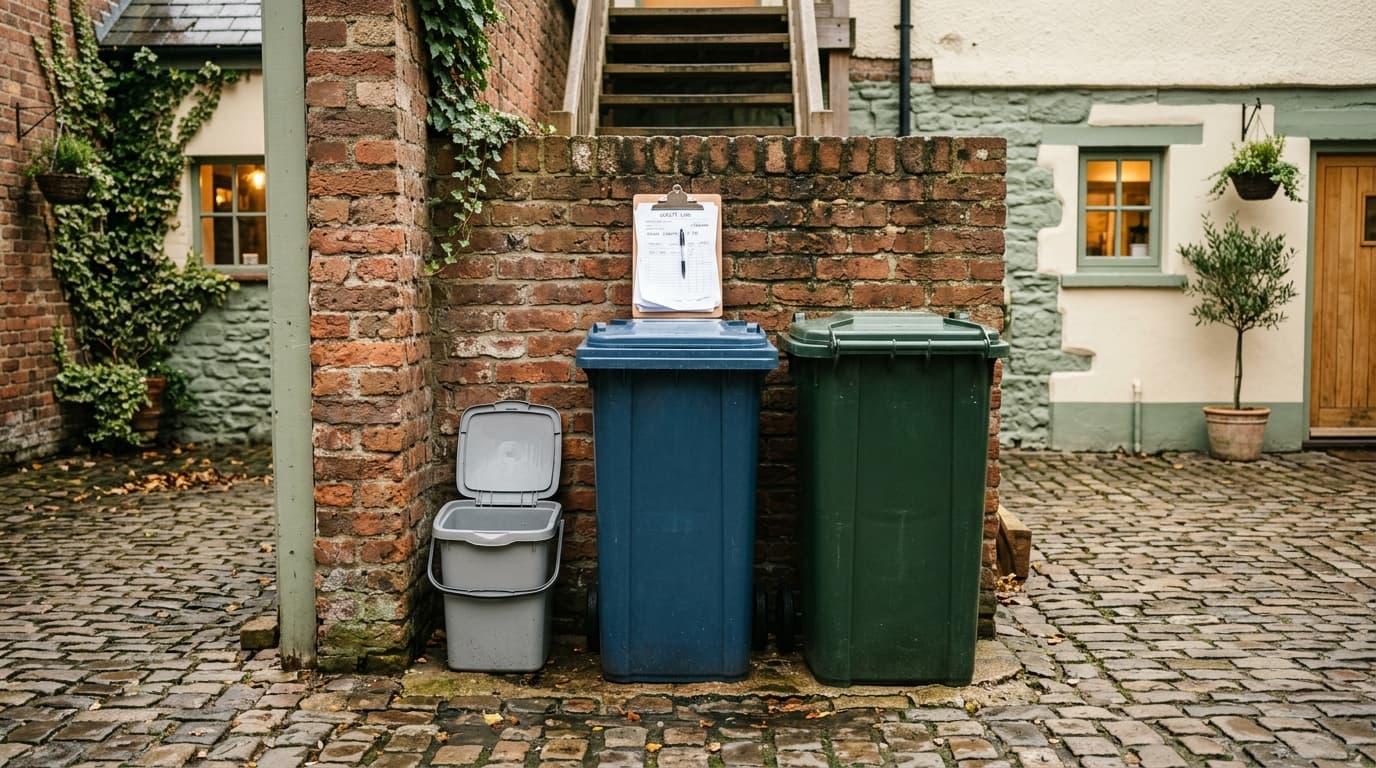
You've just got your head around separate food waste bins. Now the government wants you to track every bag digitally.
From October 2026, the new Digital Waste Tracking Service (DWTS) starts replacing paper Waste Transfer Notes. If you've been running your café with a folder of crumpled carbon copies stuffed behind the coffee machine, that system is on borrowed time.
This isn't a distant consultation. It's happening this year. And while the first phase targets waste receiving sites, the full rollout affects every business that produces waste - including yours.
Here's what's changing, what it means for a small food business, and what you should be doing right now.
What is the Digital Waste Tracking Service?
The DWTS is the Environment Agency's replacement for paper-based Waste Transfer Notes and Duty of Care documentation. Instead of filling in a paper form every time your waste carrier collects your bins, the process moves to a centralised digital system.
Think of it as Making Tax Digital, but for your bins.
Every waste movement - from your back courtyard to the processing site - gets logged digitally. The Environment Agency can see the full chain: who produced the waste, who carried it, where it went, and what happened to it.
The goals are straightforward:
- Reduce illegal dumping by creating an auditable trail for every waste movement
- Improve recycling rates by tracking what actually gets recycled versus landfilled
- Replace outdated paperwork that nobody checks and everyone loses
For independent operators, the change means swapping a paper habit for a digital one. It shouldn't be harder - but you do need to be ready.
The timeline you need to know
This is rolling out in phases, not all at once.
- October 2026 - Waste receiving sites (landfills, recycling centres, transfer stations) must start recording waste movements digitally
- 2027 - Full rollout to waste carriers and waste producers (that's you)
- Ongoing - The Environment Agency will phase out acceptance of paper Waste Transfer Notes entirely
The October 2026 date matters even if your obligations come later. Your waste carrier will need to start feeding data into the DWTS when they deliver to receiving sites. That means they'll need accurate information from you sooner than you think.
What this means for your café
If you run a café, bakery, or restaurant, you produce commercial waste. That puts you in scope.
The waste types covered
The DWTS covers all controlled waste, which for a typical café means:
- General commercial waste - black bag waste, non-recyclable packaging
- Food waste - prep trimmings, plate waste, expired stock (already subject to separate collection rules)
- Dry recyclables - cardboard, paper, plastic, tins, glass
- Cooking oil - if you have a fryer, your oil collection is in scope
- Electrical waste - broken equipment, old fridges (usually handled by specialist carriers)
If it leaves your premises in a bin, bag, or drum, it's covered.
What records you'll need to keep digitally
Under the current paper system, you're supposed to keep Waste Transfer Notes for two years. Most operators either lose them or never check them.
The DWTS will require you to hold digital records of:
- Your waste producer registration - confirming who you are and where you operate
- Each waste movement - date, waste type, quantity, and carrier details
- Your waste carrier's credentials - their licence number and DWTS registration
- Destination details - where your waste actually ends up
The good news is that much of this will be handled by your waste carrier through the system. Your job is making sure the information flowing into the system is accurate and that you can access your records when asked.
The penalties for getting it wrong
This is where it gets serious. Waste duty of care offences are not slaps on the wrist.
- Fines of up to £5,000 per incident for failing to comply with waste transfer documentation requirements
- The Environment Agency charges £118 per hour for non-compliance investigation time - and they bill the business being investigated
- Persistent non-compliance can lead to prosecution, with unlimited fines on conviction
For a café doing £400,000 turnover, a single £5,000 fine is more than a week's takings. Two or three incidents and you're looking at a serious dent in an already thin margin - on top of the other cost pressures hitting this year.
How this connects to food waste separation
If you've already set up separate food waste collection to comply with the March 2026 rules, you're ahead of the curve. The DWTS builds directly on that foundation.
Separate waste streams make digital tracking easier because each stream has a clear classification. If everything goes into one bin, classifying it digitally becomes a headache - and your waste carrier may start pushing back.
The two regulations are designed to work together:
- Simpler Recycling (already in force) - requires you to separate waste streams
- DWTS (from October 2026) - requires you to track those streams digitally
Getting your separation right now means less scrambling when digital tracking becomes mandatory.
What you should do right now
You don't need to panic, but you do need to start preparing. Here's a practical checklist.
1. Talk to your waste carrier
This is the single most important step. Your waste carrier is the one who'll be interfacing with the DWTS first. Ask them:
- Are they registered for the DWTS?
- What information will they need from you?
- Will their collection process change?
- Do they offer a portal or app for you to view your waste records?
If they can't answer these questions, that's a red flag. Consider whether they're the right carrier for your business going forward.
2. Check your current paperwork
Dig out your existing Waste Transfer Notes. Do you have them for every waste stream? Are they current? A Waste Transfer Note should be renewed annually or whenever your waste arrangements change.
If you can't find them, you're already non-compliant under the current rules - never mind the new ones.
3. Get your waste streams in order
If you haven't fully separated your waste yet, now is the time. You need clearly defined streams for:
- Food waste (separate caddy or bin)
- Dry mixed recycling
- General waste
- Cooking oil (if applicable)
- Glass (some areas require separate glass collection)
Each stream needs its own collection arrangement and documentation. The DWTS will track each one individually.
4. Set up digital record-keeping
Start keeping your waste records digitally now, even before it's mandatory. This could be as simple as:
- A spreadsheet logging collection dates, waste types, and carrier details
- Photos of your Waste Transfer Notes stored in a cloud folder
- A note in your weekly checklist to verify collections happened
The point is building the habit. When the DWTS arrives, you'll already be thinking digitally about your waste data.
5. Know your waste costs
Most operators don't know what they actually pay for waste collection - it just comes out of the account monthly. But waste is an operational cost like any other, and understanding where your money goes is the first step to controlling it.
Reducing waste at the source - better stock rotation, tighter portion control, smarter prep schedules - means fewer collections and lower costs. Digital tracking will eventually make it easier to see these patterns, but you can start analysing them now.
The bigger picture
The DWTS is part of a broader push to digitise how businesses interact with environmental regulation. It follows the same pattern as Making Tax Digital, online food hygiene records, and digital allergen documentation.
For independent operators, every new regulation feels like another layer of admin on top of an already demanding job. Running a café means you're already a barista, accountant, HR department, and health inspector rolled into one. Now you need to be a waste data manager too.
But there's a practical upside. Digital tracking means better visibility into what you're throwing away and what it's costing you. If you're binning 15 kilos of food waste a week, that's ingredient cost walking out the back door. Seeing the numbers in black and white - rather than guessing from a bin that's "about full" - gives you something to act on.
The operators who treat this as a compliance box to tick will resent it. The ones who use the data to reduce waste and cut costs will come out ahead.
Quick reference checklist
- Contact your waste carrier about DWTS readiness
- Locate and review your current Waste Transfer Notes
- Confirm you have separate collection for food waste, dry recycling, and general waste
- Start logging waste collections digitally (spreadsheet, folder, or app)
- Ask your carrier for a cost breakdown per waste stream
- Set a calendar reminder for October 2026 to check for updates
- Brief your team on the changes coming
Key dates at a glance
| Date | What happens |
|---|---|
| March 2026 | Food waste separation rules already in force |
| October 2026 | DWTS goes live for waste receiving sites |
| 2027 | Full DWTS rollout to carriers and producers |
The regulations keep coming. The margins keep tightening. But the operators who stay one step ahead - who prepare early instead of scrambling late - are the ones who'll still be pulling shots and buttering croissants in five years' time.
Start with a phone call to your waste carrier this week. That's the single best use of ten minutes you'll get.
Ed O'Brien has run Hunters Cake Company for 17 years across cafés in Witney, Burford, and a bakery in Carterton, Oxfordshire. He's building Brikly - modular tools that give independent café owners the same data the big chains have, without the big chain price tag.