
Food Inflation Could Hit 9% by Christmas - How to Stay Ahead of It
Three months ago the Food and Drink Federation forecast food inflation of around 3% for 2026. Manageable. Uncomfortable, but manageable.
Last week they revised that figure to 9%.
If you run a cafe or restaurant, that number should have your full attention. Not because you should panic - but because the operators who act early on cost increases are the ones who are still trading profitably in December.
Why the forecast tripled
The original 3% prediction assumed a broadly stable global picture. That hasn't held.
Three things have changed:
- Middle East disruption - Ongoing geopolitical instability has pushed up shipping costs and disrupted supply routes for key commodities. Anything that moves through the Suez Canal or relies on Middle Eastern energy markets is affected
- Energy cost pass-through - UK producers absorbed higher energy costs through 2025, hoping they were temporary. They weren't. Those costs are now being passed into wholesale food prices, and they'll land on your invoices over the coming months
- Supply chain pressure - Labour shortages in European agriculture, poor harvests in key growing regions, and tighter import rules post-Brexit are all tightening supply. When supply drops and demand holds, prices go one way
The 9% figure is an average. Some categories - dairy, fats, proteins - could see higher. Others might stay below. But the direction is clear, and the pace is accelerating.
What 9% actually means for your cafe
Let's make this concrete.
If your cafe spends between £8,000 and £12,000 a month on ingredients - a fairly typical range for a busy independent - then 9% food inflation means:
- At £8,000/month: an extra £720 per month, or £8,640 per year
- At £10,000/month: an extra £900 per month, or £10,800 per year
- At £12,000/month: an extra £1,080 per month, or £12,960 per year
That's not a rounding error. For many independents, that's the difference between a profitable year and a break-even one.
And here's the part that makes it worse: if your food cost percentage rises by even 3-4 points and you don't adjust your menu prices, your gross margin compresses by the same amount. On a cafe doing £300,000 in turnover, a 3-point margin drop is £9,000 straight off the bottom line.
The lag problem
The biggest risk with food inflation isn't the headline number. It's the delay between prices changing on your invoices and you noticing in your margins.
Most cafe operators review costs quarterly at best. Many only look when something feels wrong - when the bank balance is lower than expected, or when the monthly P&L looks tight.
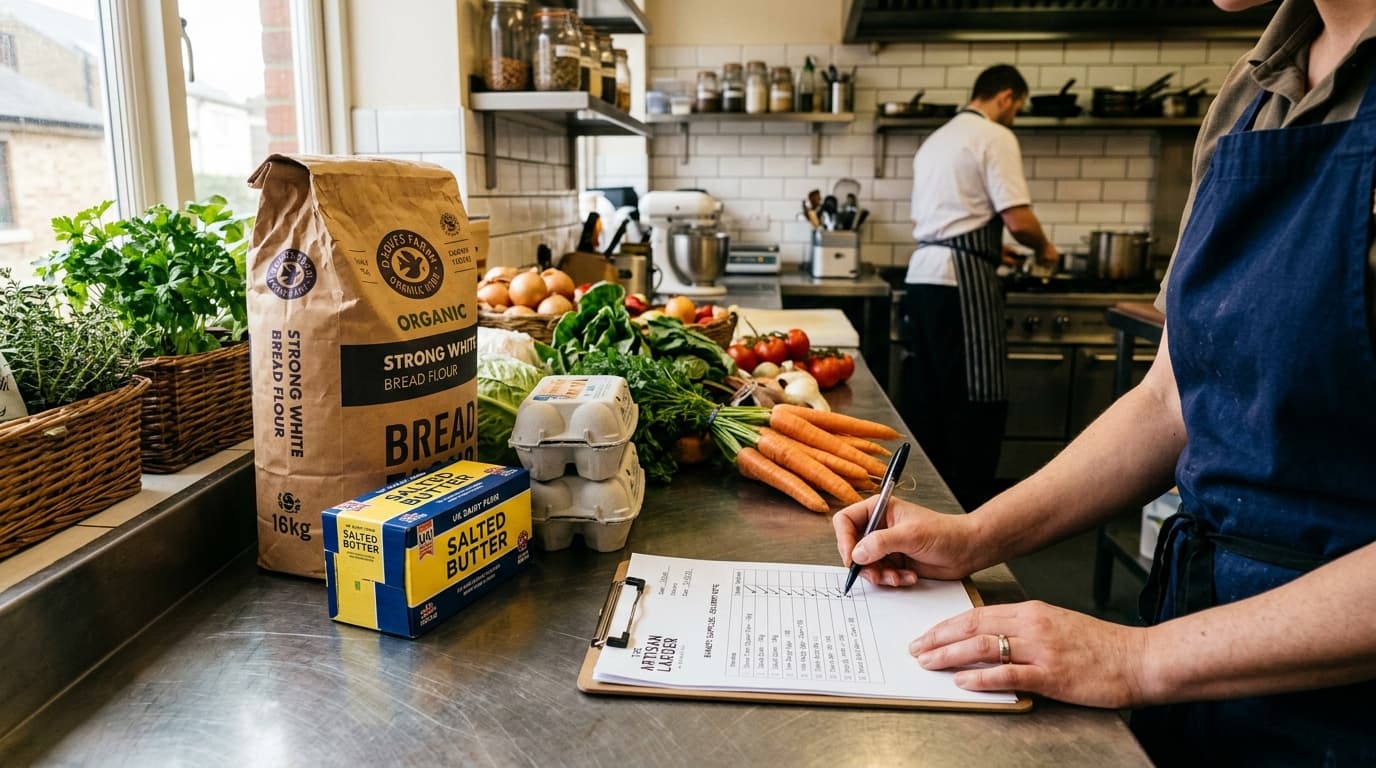
By then, the damage is done. You've been selling croissants at £3.20 for three months while your butter, flour, and egg costs have crept up 8-12%. Your flat white margin has quietly shrunk because milk has gone up twice since you last checked.
The lag is where the money goes. Not in one dramatic invoice, but in dozens of small increases you didn't catch in time.
This is exactly why tracking costs against every invoice matters more than doing a big costing exercise once a year. A recipe costed in January is already wrong by April if you're not updating ingredient prices as they move.
Five practical responses
You can't control global food prices. But you can control how quickly you respond to them. Here's what's worth doing right now.
1. Move to live cost tracking
Stop costing recipes once a quarter. Your ingredient costs should update every time you process an invoice - not every time you remember to sit down with a spreadsheet.
Every time a supplier price changes, your recipe costs change. Every time a recipe cost changes, your margin changes. If you're not seeing that in real time, you're flying blind.
Whether you use a recipe costing tool or a detailed spreadsheet, the principle is the same: your costs should reflect what you're actually paying today, not what you paid in January.
2. Diversify your suppliers
If you buy 80% of your ingredients from one supplier, you have no leverage and no safety net. When their prices go up, your costs go up. Full stop.
You don't need to split everything across five suppliers - that creates its own admin headache. But having at least two credible options for your highest-spend categories gives you:
- Negotiating power - You can push back on price increases with real alternatives, not bluffs
- Price benchmarking - You'll know whether a 10% increase on flour is market-wide or just your supplier trying it on
- Supply continuity - If one supplier has stock issues, you've got a backup that already knows your business
Focus on your top five ingredients by spend. Get a second quote for each. You don't have to switch - but you need to know what the market looks like.
3. Build menu flexibility
A fixed menu is a liability in a high-inflation environment. If your menu hasn't changed in six months, some of those dishes are costing you significantly more than when you priced them.
Smart operators build in flexibility:
- Seasonal specials that use whatever is cheap and plentiful right now
- Daily soup or salad options that rotate based on what the kitchen has
- Specials boards that let you test new price points without reprinting menus
- Smaller ranges with better margins rather than long menus with thin ones
This isn't about slashing your menu to five items. It's about having enough flex to steer towards ingredients that are holding steady and away from ones that are spiking.
4. Review prices more often
If you're reviewing menu prices once a year, you're leaving money on the table. In a 9% inflation environment, even quarterly reviews may not be enough.
Here's a sensible cadence:
- Monthly: Review your top 10 recipe costs against current ingredient prices. Flag any recipe where food cost percentage has moved more than 2 points
- Quarterly: Adjust menu prices where needed. Small, regular increases are far easier for customers to absorb than one big jump
- Immediately: If a key ingredient spikes by more than 15%, recost the affected recipes that week and decide whether to adjust the price, reduce the portion, or swap the ingredient
Price increases don't have to be dramatic. Going from £3.40 to £3.60 on a flat white is barely noticed by customers. Absorbing 20p across 150 flat whites a day for three months is very much noticed on your P&L.
5. Buy smart, not big
When prices are rising, there's a temptation to bulk-buy and lock in today's prices. For dry goods with long shelf lives - flour, sugar, tinned items - this can make sense if you have the storage and the cash flow.
But for perishables, over-stocking is a trap. You're not saving money if 10% of your bulk dairy order goes in the bin. Food waste is the hidden cost that makes bulk buying look good on paper and bad in practice.
The better approach:
- Tighten your ordering - Order more frequently in smaller quantities, based on actual usage not habit
- Track waste - If you're throwing away more than 2-3% of what you buy, your ordering needs work
- Negotiate on terms, not just price - Delivery frequency, minimum order values, and payment terms all affect your cash position
The compounding problem
Food inflation doesn't exist in isolation. If it were just ingredient costs going up, you'd adjust and move on. But 2026 is stacking costs:
- Food inflation at 9% (FDF forecast)
- Energy costs still elevated - your electricity and gas bills aren't coming down any time soon
- Employer NI increases from last year's threshold change
- National Minimum Wage up again from April
- Business rates relief reduced or removed for many hospitality businesses
Each of these on its own is manageable. Together, they compound. A cafe that was running at 8-10% net profit in 2024 could easily find itself at 3-4% or lower by the end of 2026 if nothing changes.
The operators who will come through this are the ones who see their numbers clearly, respond quickly, and make lots of small adjustments rather than hoping for one big fix.
The bottom line
Nine percent food inflation is not a forecast you can ignore. But it's also not a death sentence.
The cafes and restaurants that struggle most with inflation are the ones that don't know their numbers until it's too late. They find out their margins have gone when the quarterly accounts land, not when the invoice arrives.
The fix isn't complicated. Track your costs. Update them when prices move. Review your menu prices regularly. Keep your suppliers honest. Build in enough flexibility to adapt.
You don't need to predict what butter will cost in October. You need to know what it costs today, what that does to your recipes, and whether your prices still make sense.
That's it. Stay close to your numbers and you'll stay ahead of the curve - even when the curve is steeper than anyone expected.
Ed O'Brien has run Hunters Cake Company for 17 years across cafés in Witney, Burford, and a bakery in Carterton, Oxfordshire. He's building Brikly - modular tools that give independent café owners the same data the big chains have, without the big chain price tag.