
How to Calculate Food Cost Percentage (And Why Most Cafés Get It Wrong)
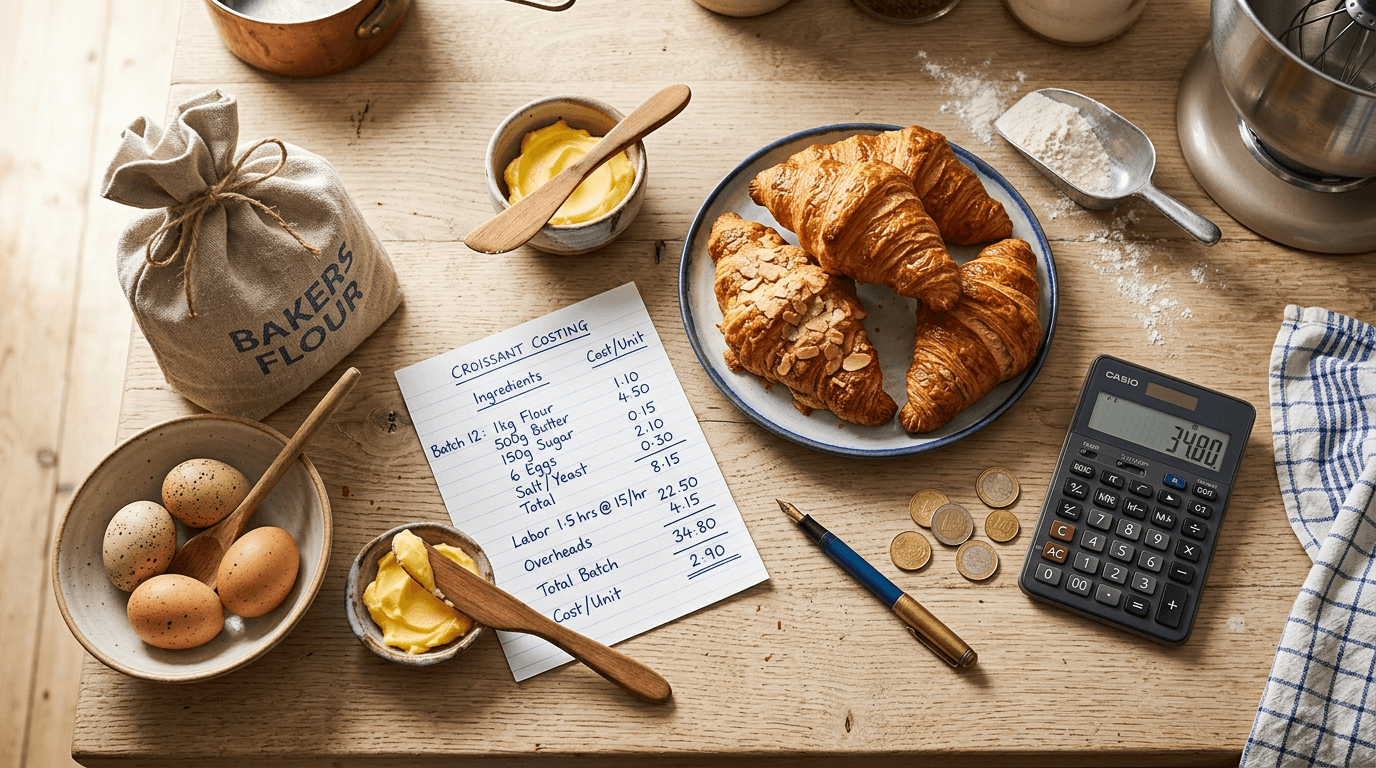
If you've Googled "how to calculate food cost" recently, you've probably found a lot of blog posts written by people who've never actually costed a recipe in a commercial kitchen.
So here's the version from someone who's been doing this for 17 years, across two cafés and a bakery.
The Basic Formula
Food cost percentage tells you what proportion of your selling price goes toward ingredients.
Food Cost % = (Total Ingredient Cost ÷ Selling Price) × 100
If your latte costs £0.52 to make and you sell it for £3.80:
£0.52 ÷ £3.80 × 100 = 13.7% food cost
That's your cost of goods on that item. The lower the percentage, the more of each sale you keep.
Margin vs Markup - The Mistake That Costs You Money
These two get confused constantly, and the difference matters when you're setting prices.
- Margin is what percentage of the selling price is profit: (Selling Price - Cost) ÷ Selling Price
- Markup is what percentage you've added on top of cost: (Selling Price - Cost) ÷ Cost
Example: You buy a bag of flour for £1 and sell a product using it for £4.
- Margin: (£4 - £1) ÷ £4 = 75%
- Markup: (£4 - £1) ÷ £1 = 300%
Same numbers, completely different percentages. If a supplier tells you they're giving you "50% margin" and they actually mean 50% markup - that's 33% margin.
Use margin. It's what hits your P&L, it's what your accountant cares about, and it's what tells you whether your business is actually viable.
Why a Single Recipe Isn't Enough
Knowing that your Eggs Benedict costs £2.10 to make is useful. But it doesn't tell you the full story. What matters is:
1. What's the actual margin per sale?
If you sell it for £12.50 with a food cost of £2.10, that's 83% margin. Healthy. But what about when someone swaps the ham for smoked salmon? Or adds a side? Or uses a voucher?
2. How does it compare to everything else on your menu?
Your best-selling item might not be your most profitable. A cake that sells 40 portions a day at 65% margin might contribute less total profit than a sandwich that sells 15 portions at 82% margin - but you wouldn't know unless you've costed both and looked at contribution.
3. Are your costs still accurate?
You costed that recipe in January. Your butter supplier put prices up in March. Your egg supplier changed in April. With food inflation running at 9% in 2026, if you're not updating costs regularly, your "70% margin" might actually be 58%.
How to Actually Do This
Step 1: List every ingredient in the recipe
Not just the main ones. The oil you cook in, the garnish, the sauce, the seasoning. They add up.
Step 2: Work out the cost per unit
If you buy 10kg of flour for £8.50, your cost per gram is £0.00085. If your recipe uses 250g, that's £0.21 in flour.
Step 3: Add up all ingredient costs
This gives you total recipe cost. Divide by portions to get cost per serving.
Step 4: Calculate your margin
(Selling Price - Cost per Portion) ÷ Selling Price × 100
Step 5: Repeat. For everything.
This is where it gets tedious - and where most people stop. A typical café menu has 30-60 items. Building a recipe cost card for every dish takes hours if you're doing it manually. Then a supplier price changes and you're back to square one. If you're looking for ways to cut food costs without expensive tools, there are practical steps you can take right away - but at some point, automation earns its place.
Try It Yourself
We built a free recipe costing calculator that actually works - no login required, no email capture, just the tool:
Add your ingredients, set your selling price, and see your food cost percentage, margin, and cost breakdown instantly.
When Spreadsheets Stop Working
The free calculator handles individual recipes. But if you're running a real café with 40+ items, multiple suppliers, prices that change monthly, and no time to sit down with a spreadsheet - you need something that updates itself. We've written a full comparison of food costing software for UK independents if you want to explore your options.
That's what Brikly's CostingBrik does. It connects to your invoices, automatically tracks ingredient prices as they change, and keeps every recipe costed in real time. When your butter goes up 12%, you see the impact across every recipe that uses it - instantly.
No spreadsheets. No manual updates. No guesswork.
Built by a café owner, for café owners. Because every food costing tool I've ever found was built by someone who's never had to cost a Victoria Sponge at 6am before the morning rush.
Ed O'Brien has run Hunters Cake Company for 17 years across cafés in Witney, Burford, and a bakery in Carterton, Oxfordshire. He's building Brikly - modular tools that give independent café owners the same data the big chains have, without the big chain price tag.