
How to Cut Food Costs on a Budget: A Guide for Independent Restaurants
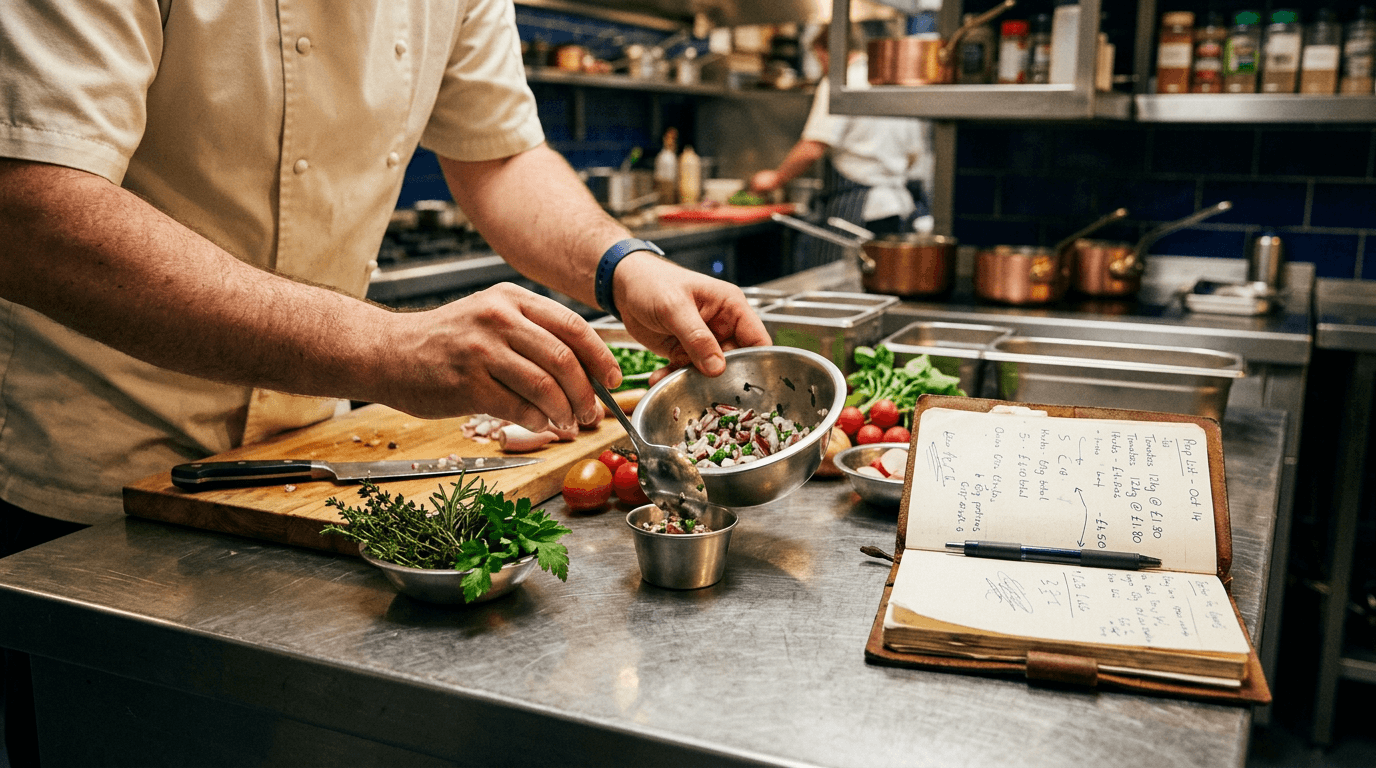
You don't need expensive software to start cutting food costs. You need a system, some discipline, and an hour a week.
I've run cafés and a bakery for 17 years. For most of that time, I managed food costs with spreadsheets, supplier phone calls, and a notebook I kept in the kitchen. It wasn't elegant but it worked - and the principles haven't changed even now that better tools exist.
Here are the strategies that actually move the needle for independent café and restaurant operators, ranked by impact and effort.
1. Know Your Top 10
You don't need to cost every recipe. Start with your top 10 sellers. These items represent the bulk of your revenue and therefore the bulk of your ingredient spend.
How to do it:
- Pull your top 10 items by sales volume from your POS (or just count for a week)
- Cost each recipe ingredient by ingredient
- Calculate the food cost percentage and margin for each
Why it matters: If your number one seller is running at 38% food cost when you thought it was 30%, that one item might be costing you thousands per year. Most operators find at least one surprise in their top 10.
Cost: Free. One afternoon.
2. Check Your Supplier Prices Monthly
Supplier prices creep up. Not dramatically - 2% here, 5% there. Most café and coffee shop owners don't notice until they've been absorbing increases for months.
How to do it:
- Keep your last 3 invoices from each main supplier
- Once a month, compare the line items. Look specifically for price changes on your highest-volume ingredients
- If something's gone up, call and ask why. Sometimes it's temporary (seasonal). Sometimes it's permanent. Either way, you should know
Why it matters: A 5% increase on your dairy bill might be £200/month. Across all suppliers, unnoticed price creep can cost 1-2% of turnover annually.
The difficult truth: Most operators don't do this because it's tedious. You're comparing PDFs side by side, squinting at line items that look different on every invoice - one from your dairy supplier, another from your coffee roaster, a third from the bakery wholesaler. This is genuinely one of the problems food costing software solves well - automatic price alerts save real money. But even doing it manually once a month is better than never.
3. Weigh Your Portions
This is boring advice. It's also the single highest-impact thing most kitchens can do.
Portion consistency is where good recipes meet bad execution. Your recipe says 200g of chicken per portion. Your team serves "about that much". Over a hundred covers, the variance is enormous.
How to do it:
- Put a digital scale at every plating station
- Define portion weights for every protein, every carb, every expensive ingredient
- Check randomly. Not constantly - just enough that the team knows you're watching
Why it matters: A 20% over-portion on a £3 ingredient across 50 daily covers is £30/day. That's £900/month. For doing nothing differently except being consistent with what you already planned.
Cost: A £15 digital scale per station.
4. Track Your Waste
Not formally. Not with smart bins or AI. Just a clipboard on the wall near the bin.
How to do it:
- Put a sheet on the wall: date, item, amount, reason
- Ask staff to write down what they throw away and why
- Review it weekly
Why it matters: You'll spot patterns immediately. Too much bread prep on Mondays. Avocados going off because you over-order on Thursdays. A dessert that never sells on weekdays but gets prepped anyway.
The goal isn't to eliminate all waste - some waste is unavoidable in food service. The goal is to find the waste that's avoidable and fix it.
Cost: A clipboard and a pen.
5. Renegotiate or Re-tender Annually
Many independent café and restaurant owners stick with the same suppliers for years out of habit and loyalty. Loyalty is admirable - but your suppliers are businesses too, and they're not going to proactively lower your prices.
How to do it:
- Once a year, get quotes from 2-3 alternative suppliers for your highest-spend categories (dairy, meat, dry goods)
- You don't have to switch. Often, showing your current supplier a competitive quote is enough to prompt a better deal
- Focus on the categories where you spend the most, not every single product
Why it matters: Even a 3-5% reduction on your top three supplier categories can save £2,000-5,000/year for a typical independent.
The relationship reality: Some operators worry about damaging supplier relationships. In practice, most suppliers expect this. They'd rather match a price than lose the account. And if they can't match it, that tells you something too.
6. Engineer Your Menu (Simply)
Menu engineering sounds complicated. At its simplest, it's asking two questions about every dish: does it sell, and does it make money?
How to do it:
- For each menu item, write down: weekly sales volume and contribution margin (selling price minus food cost)
- Sort by contribution margin. Your highest-margin items should be the most visible on your menu
- Look for items that sell well but have low margins. Can you adjust the recipe? Increase the price? Reduce portion cost?
Why it matters: Repositioning your top-margin item from the middle of the menu to the top-right corner (where eyes go first) can increase its sales by 10-15%. On a dish with £5 contribution margin that sells 20 times a day, that's an extra £10-15/day from changing nothing except where it sits on the page.
Cost: Free. One evening with your menu and your numbers.
Try our Menu Profit Simulator to model different pricing scenarios.
7. Prep Smarter, Not More
Over-prepping is one of the biggest hidden costs in independent kitchens. It happens because:
- Prep lists are based on "what we always do" rather than what we actually need
- Nobody wants to run out, so everything gets a safety buffer
- Prep happens early in the day before you know how busy you'll be
How to do it:
- Track daily covers for a month (just a tally on a sheet)
- Adjust prep quantities based on actual demand by day of the week
- Prep in two stages where possible: base prep in the morning, top-up prep at midday based on bookings and walk-in patterns
Why it matters: Reducing over-prep by even 10% directly reduces waste and ingredient spend. On a kitchen doing £8,000/month in ingredients, that's £800/month.
8. Review Your Menu Size
More items means more ingredients. More ingredients means more stock, more waste, and more complexity. Independent cafés and restaurants frequently have menus that are too large for their volume.
A rough rule: If a dish sells fewer than 5 portions per day on average, question whether it needs to be on the menu. Every low-volume dish carries ingredients that might expire before they're used.
The counterargument: Yes, some dishes serve a purpose beyond profit (a vegan option, a kids' meal, a signature item). Keep those. But most menus have 3-5 items that nobody would miss and whose ingredients are quietly expiring in the walk-in.
Removing 4 low-selling dishes might eliminate 8-10 ingredients from your ordering. That's less stock, less waste, and less cash tied up in your fridge.
When to Invest in Software
Everything above is free or near-free. It works. Café and restaurant owners have managed food costs this way for decades.
So when does software earn its place?
When you can't keep up. If you're processing 40+ invoices a month and manually checking prices is taking 5+ hours, automation pays for itself in time alone. Tools that use AI to process invoices and learn supplier patterns can turn hours of data entry into minutes.
When you want real-time accuracy. Manual systems have a lag. You cost your recipes in January. Prices change in February. You don't notice until March. Software that updates costs from invoices in real time closes that gap.
When you've done the basics and want to go deeper. The strategies above will get you to "good". Software gets you to "precise". If the difference between good and precise is worth £39-50/month, the tool has earned its place.
When the maths works. If a £39/month tool saves you 8 hours of manual work and helps you catch 1-2% in margin erosion, that's hundreds per month in value for tens in cost. If a £129/month tool delivers the same result, the maths might still work - but the margin of safety is thinner.
Start Today, Not Next Month
The most common thing I hear from other café and restaurant owners is "I know I should be tracking my food costs better but I never get round to it."
Here's the minimum viable version: this week, cost your top 3 sellers and check whether your main supplier has changed any prices in the last 3 months.
That's it. One hour. You'll almost certainly learn something that changes how you think about your menu.
Everything else - the software, the systems, the full menu engineering exercise - can come later. But start with the hour.
Ed O'Brien has run Hunters Cake Company for 17 years across cafés in Witney, Burford, and a bakery in Carterton, Oxfordshire. He's building Brikly - modular tools that give independent café owners the same data the big chains have, without the big chain price tag.