
Why Smaller Menus Make More Money
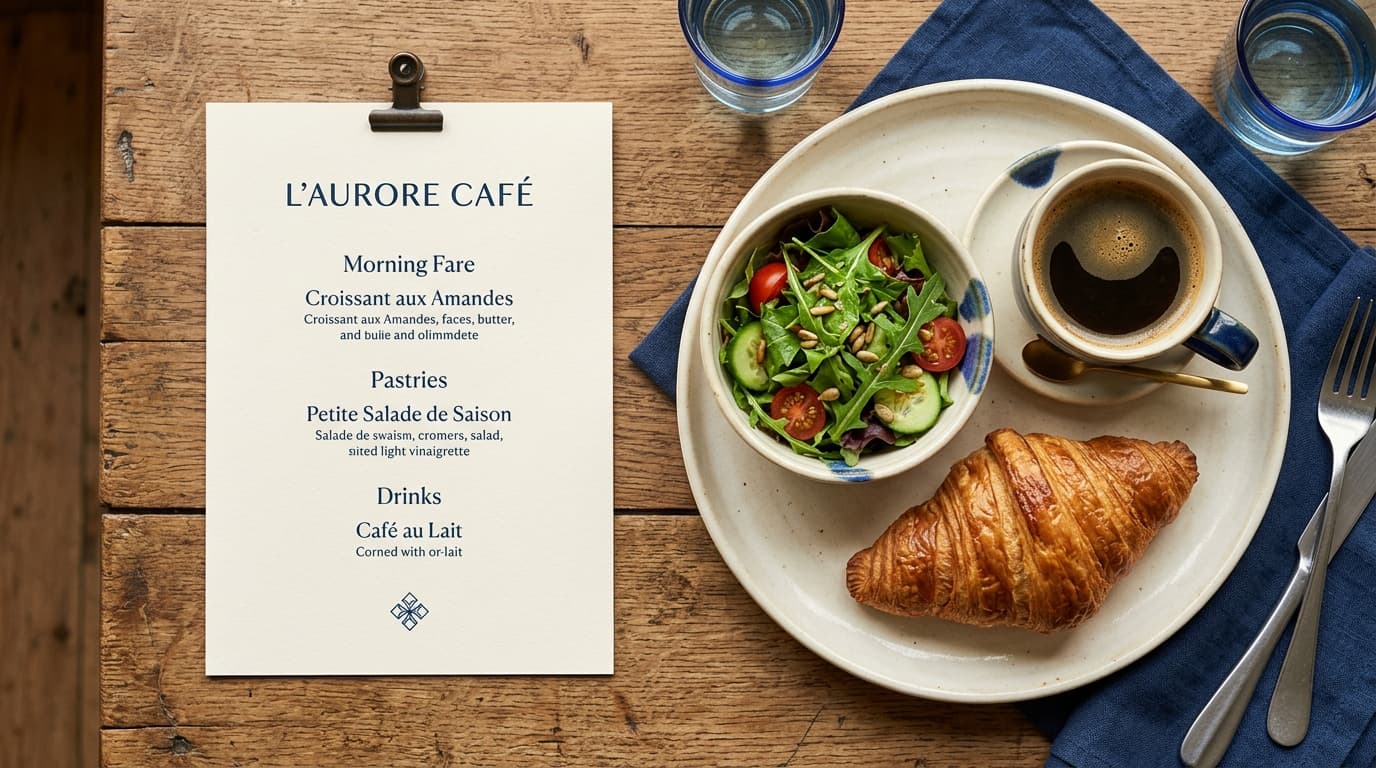
Every café owner I know has done it. Sales dip for a couple of weeks, so you add a new sandwich. A customer asks if you do smoothies, so you add three. Your chef suggests a specials board. Before you know it, your menu has 40 items, your prep list is two pages long, and your walk-in fridge looks like a chaotic stockroom.
More choice should mean more sales. It makes intuitive sense. But it's almost always wrong.
The cafés and coffee shops I've seen do best - including my own - are the ones that resist the urge to add and find the courage to cut. A tight, well-executed menu of 12 to 15 items will outperform a sprawling 40-item one almost every time. Not just on quality. On profit.
With April 2026's cost increases squeezing margins from every direction, there's never been a better time to look at your menu and ask: what can go?
The Paradox of Choice
There's a well-known psychological principle here. When customers face too many options, they don't feel liberated - they feel overwhelmed. Decision fatigue kicks in. They take longer to order, second-guess their choice, and often default to whatever feels safest.
A shorter menu does the opposite. Customers scan it in seconds. They feel confident. They order faster. The queue moves. And because every item on the menu is there for a reason, the quality is consistently high.
Lightspeed's 2026 Hospitality Trends report calls this "intentional dining" - curated experiences where every item earns its place. It's not about offering less. It's about offering better.
The Operational Case
This is where smaller menus really start to pay for themselves. The kitchen benefits are enormous and they compound over time.
Less Food Waste
Fewer menu items means fewer ingredients in your walk-in. Fewer ingredients means less spoilage, fewer items expiring before you use them, and less money in the bin every week.
A 40-item menu might need 120 different ingredients. A 15-item menu might need 40. The difference in waste is staggering - particularly with fresh produce, herbs, and anything with a short shelf life.
If you're looking for more ways to cut food costs, reducing ingredient variety is one of the highest-impact changes you can make.
Simpler Prep, Faster Service
A shorter menu means a shorter prep list. Your team can prep everything properly instead of rushing through 30 different mise en place items before service.
During service, fewer options means faster ticket times. Your kitchen isn't context-switching between a Thai curry, a Caesar salad, and a croque monsieur. They're executing a focused set of dishes they know inside out.
Faster tickets mean shorter waits. Shorter waits mean happier customers and higher table turnover. In a busy café doing 200 covers on a Saturday, cutting average ticket time by even two minutes adds up to real revenue.
Easier Stock Management
Ordering 40 different ingredients from six suppliers is a weekly headache. Ordering 20 ingredients from three suppliers takes half the time and is much harder to get wrong.
With fewer lines to track, you spot shortages earlier, over-ordering becomes less common, and your stock counts take 20 minutes instead of an hour.
Higher Consistency
Your team can nail 12 items better than 40. Every single time. Consistency is arguably the most important thing in hospitality - regulars come back because they know exactly what they're going to get.
When your barista is also expected to make smoothies, frappes, and matcha lattes, something suffers. When they just make brilliant coffee, they make really brilliant coffee.
Lower Training Burden
New staff member starts on Monday. Would you rather train them on 15 dishes or 40? A smaller menu means faster onboarding, fewer mistakes during the learning curve, and less stress for the rest of the team covering gaps.
The Financial Case
The operational benefits are clear. But the financial case is even stronger.
Better Buying Power
If you're buying 50kg of chicken breast a week instead of 15kg, you get a better price. Fewer ingredients ordered in larger volumes means better margins from your suppliers before you've changed a single recipe.
This is especially true with specialty items. That truffle oil you use for one dish? You're buying a small bottle at full price. Consolidate your menu and your core ingredients benefit from volume pricing.
Lower Food Cost Percentage
Less waste directly reduces your food cost percentage. If you're throwing away £200 worth of ingredients a week because half your menu barely sells, that's waste eating straight into your margin.
A tight menu with strong sell-through on every item keeps actual food cost much closer to theoretical food cost - the gap between what your recipes should cost and what they actually cost once you factor in waste, over-portioning, and spoilage.
Higher Throughput
Faster service means more covers per hour. In a café doing £4.50 flat whites and £8 brunch plates, an extra 10 covers on a Saturday morning is £80 to £125 in additional revenue. Over a month, that adds up.
Easier to Cost Accurately
With 15 recipes instead of 40, you can actually keep your costings current. You can check supplier prices, update recipe costs, and run a proper menu engineering analysis without it taking an entire weekend.
The Hero Item Strategy
The most profitable independent cafés I've seen - and the approach I've used at Hunters - build their menu around 3 to 5 signature items. Everything else supports them.
Your hero items are the reason people walk through the door. They're the dishes that get photographed, recommended, and talked about. They should be:
- High margin - these are your Stars in the menu engineering matrix
- Consistent - your team can make them perfectly every time
- Distinctive - they give customers a reason to choose you over the café next door
Build outwards from there. If your hero is a signature sourdough toastie, support it with a simple salad, a soup of the day, and great coffee. You don't need 12 other sandwich options.
How to Decide What to Cut
This is the hard part. Not because the data is complicated - because it's emotional. You invented that recipe. Your regulars love that cake. Your chef is proud of that special.
But the numbers don't lie.
Use Your POS Data
Pull your sales mix data from your POS. Look at the last 3 months. You'll almost certainly find that 20% of your menu generates 80% of your sales. The bottom 30% of items are barely selling.
If something sells fewer than 5 portions a week, it's a candidate for removal. If it sells fewer than 5 portions a week and has a food cost above 35%, it should probably go today.
Apply the Menu Engineering Matrix
Plot every item by popularity (how many you sell) and profitability (contribution margin in pounds, not percentage). This gives you four categories:
- Stars - popular and profitable. Keep and protect these
- Plowhorses - popular but low margin. Re-engineer the recipe or raise the price
- Puzzles - profitable but unpopular. Try repositioning before cutting
- Dogs - unpopular and unprofitable. Cut them
Track Ingredient Overlap
Look at which ingredients are used by only one or two dishes. If you're buying fresh dill solely for your salmon bagel and that bagel sells 8 portions a week, you're carrying spoilage risk for an ingredient that isn't pulling its weight.
Every ingredient that only serves one dish is a potential cut.
The Seasonal Rotation Approach
Cutting your menu doesn't mean being boring. In fact, a smaller core menu gives you more room to play.
Keep your 10 to 12 core items - the ones that sell consistently and deliver strong margins. Then rotate 2 to 3 specials weekly or monthly. This gives you:
- Freshness - regulars always see something new
- Flexibility - you can use seasonal ingredients when they're cheapest
- Testing ground - try new dishes as specials before committing them to the core menu
- Social media content - a new special every week gives you something to post about
The key is discipline. Specials are temporary. If a special consistently outsells a core item, it earns a permanent spot - and something else comes off.
The Courage to Cut
Here's the truth that nobody talks about: operators resist cutting menu items because they're afraid of losing customers.
"But Mrs Thompson always orders the quiche."
Mrs Thompson will order something else. She comes for the coffee, the atmosphere, and because she knows your team by name. She doesn't come exclusively for the quiche.
In 17 years, I have never - not once - seen a café lose meaningful trade because they removed a low-selling item. I have seen cafés transform their profitability by cutting their menu in half.
The customers who leave because you stopped doing smoothies were never your core customers. The customers who stay notice that everything on the menu is now excellent, the service is faster, and there's always a new special to try.
The Bottom Line
With cost pressures mounting from every angle this April - wages up, NI up, business rates up, SSP expanded - your menu is one of the few things entirely within your control.
A smaller menu won't fix everything. But it will:
- Cut your food waste by 20 to 30%
- Reduce your ingredient costs through better buying
- Speed up your service and increase throughput
- Make your kitchen easier to run and your team easier to train
- Let you cost accurately and price confidently
You don't need to do it all at once. Start by pulling your sales data. Find the bottom 10 items. Remove five of them next week. See what happens. I'd bet good money you won't miss them - and your P&L certainly won't.
Ed O'Brien has run Hunters Cake Company for 17 years across cafés in Witney, Burford, and a bakery in Carterton, Oxfordshire. He's building Brikly - modular tools that give independent café owners the same data the big chains have, without the big chain price tag.