
Cutting end-of-day waste: production planning for cafés and bakeries
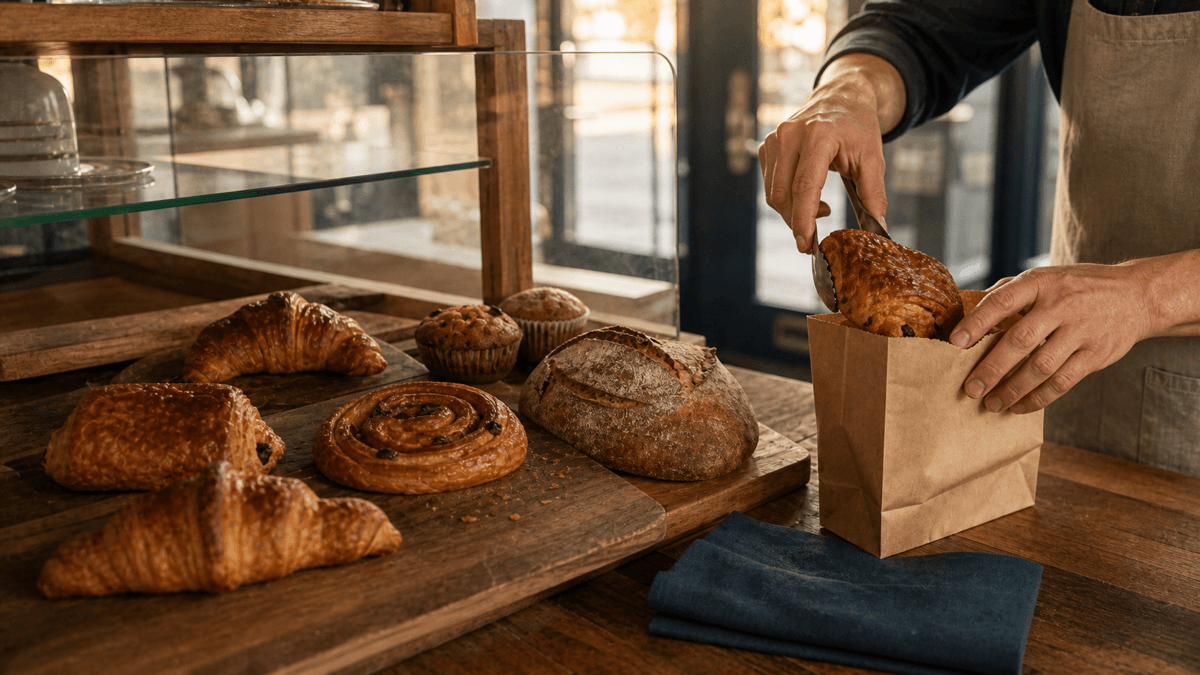
Look in the bin at close. The tray of unsold pastries, the half-batch of sandwiches, the two loaves that didn't go. That's not rubbish. That's money you already spent.
You paid for the flour, the butter, the filling. You paid someone to prep and bake it. You paid to run the oven and the fridge. Then you binned it. Every bit of that was margin, and it's gone.
After 17 years running a bakery and cafés, I've made peace with one thing: some waste is unavoidable. You can't sell out completely every day without disappointing customers and losing trade. The goal isn't zero. The goal is to manage it, not obsess over it.
Here's how I think about it.
Why end-of-day waste hurts more than you think
A 35% food cost item doesn't cost you 35% when you bin it. It costs you the selling price in lost turnover, plus the labour and energy you sunk into making it.
A £3.20 sausage roll you don't sell isn't a £1.10 ingredient loss. It's £3.20 of turnover that never happened, on top of the cost to produce it. Waste is the one line where you lose the margin and pay the cost.
That's why it deserves attention out of all proportion to the size of the number. Knowing the true cost of each item, which is exactly what calculating food cost percentage gives you, turns "we threw a bit out" into a real figure you can act on.
Measure it before you fix it
You can't fix what you don't see. Most operators have a feeling about waste but no number. The feeling is always wrong, usually too low.
For two weeks, track what goes in the bin at close. Keep it simple:
- A clipboard by the bin, or a note on your phone.
- Item and quantity - "4 croissants, 2 ham sandwiches, 1 carrot cake slice."
- Value - use the selling price, because that's what you actually lost.
Two weeks is enough to see the pattern. You'll spot the items that always die on the shelf, the days that run heavy, and the difference between Monday and Saturday. That alone usually pays for the effort.
Plan production to footfall, not habit
The biggest source of avoidable waste is baking "what we always bake." Tuesday is not Saturday. Rainy January is not sunny June. But the prep list stays the same because nobody changed it.
Set pars by day of the week
Build a production par for each day, based on what actually sold, not what you hoped would sell. If Mondays move 12 sausage rolls and Saturdays move 40, your prep should say so.
Your sales data already holds this. The weekday-by-weekday pattern is sitting in your POS, and it's the cheapest forecast you'll ever get. Last week is usually a better predictor than your gut.
Bake through the day, don't front-load the morning
Front-loading the whole day's bake before opening feels efficient. It also guarantees that whatever doesn't sell by 11am sits there going stale until close.
Where your kit allows, bake in waves. A morning batch, a top-up around late morning, a smaller afternoon bake. You'll have fresher product on the shelf at 2pm, which sells better, and far less stranded stock at close. Par-baked and frozen-to-bake lines make this genuinely easy now, even in a small kitchen.
Work the markdown clock
Even with good pars, you'll have stock at risk near close. Don't let pride keep it on the shelf at full price until it's worthless. A pastry sold at half price is a better outcome than a pastry in the bin, because half of something beats all of nothing.
Have a simple, consistent markdown rhythm:
- An hour or two before close, mark down the obvious at-risk items. Ten to twenty percent to start.
- Last 30 to 60 minutes, go deeper, or bundle into an end-of-day bag.
- Staff and loyalty offers clear the rest. A discounted treat is a cheap perk for the team, and your regulars love being let in on it.
End-of-day surplus bags, whether you run them yourself or through an app, turn near-certain waste into a bit of turnover and a goodwill touch - we've run the honest maths on surplus apps and when they earn their keep separately. Just don't let easy markdowns become a crutch that hides a production problem. If you're discounting the same forty items every evening, the answer is to bake fewer, not to discount harder.
Give at-risk stock a second life
Some surplus doesn't need discounting, it needs repurposing.
- Next-day specials. Yesterday's bread becomes today's bruschetta or a bread-and-butter pudding. Leftover roast veg goes into a frittata or a soup. This is the heart of running specials that clear at-risk stock without quietly eroding your margin.
- Freeze where it suits. Plenty of bakes freeze well and bake off fresh the next morning. Cakes, certain pastries, soup bases. It won't suit everything, but where it works it converts waste into stock - there's a whole playbook in using your freezer as a margin tool rather than a graveyard.
- Prep components, not finished goods. A frozen tray of unbaked scones is far more flexible than a tray of baked ones going stale on the counter.
Buy less, waste less
A lot of end-of-day waste starts at the back door, not the counter. Over-ordering perishables guarantees waste before you've baked a thing.
Tighten your ordering discipline:
- Order perishables to your actual pars, not to a comfortable round number.
- Order little and often where your suppliers allow it, rather than one big drop that ages on the shelf.
- Cross-check what you're throwing out against what you're buying. If you bin cream every week, you're buying too much cream. This is the same instinct as investigating stocktake variance: the gap between what you bought and what you sold is where the money leaks.
Sensible ordering is the quiet half of waste control, and it sits right alongside the everyday habits in cutting food costs on a budget.
A worked example
Say you do £8,000 a week in food sales. Industry waste runs anywhere from 4% to 10% of food sales for a café or bakery, and bakeries sit at the higher end because fresh bake doesn't keep.
Take a middling 8%. That's £640 a week in food you binned. Over a year, that's £33,280 of lost turnover.
Now halve it. Not to zero, just to a managed 4%, which is realistic with pars, batching and markdowns. You've recovered £320 a week, or roughly £16,600 a year.
That money is close to pure profit, because the fixed costs are already covered. It's the difference between a stressful year and a comfortable one, and it came entirely from paying attention to the bin.
The takeaway
- Waste is lost margin, not just lost ingredients. You lose the selling price plus the labour and energy you put in.
- Measure first. Track item and value at close for two weeks. The pattern will surprise you.
- Set pars by day of the week from your actual sales, not from habit.
- Bake in waves through the day instead of front-loading the morning.
- Work a consistent markdown clock near close, and use staff and loyalty offers to clear the rest.
- Repurpose at-risk stock into next-day specials, and freeze or par-bake where it suits.
- Fix ordering too. Over-buying perishables is waste you've paid for before you've baked.
- Don't chase zero. Some waste keeps your shelves looking full and your customers happy. Manage it, don't obsess.
Ed O'Brien has run Hunters Cake Company for 17 years across cafés in Witney, Burford, and a bakery in Carterton, Oxfordshire. He's building Brikly - modular tools that give independent café owners the same data the big chains have, without the big chain price tag.