
Opening a second café: the 90-day pre-launch checklist
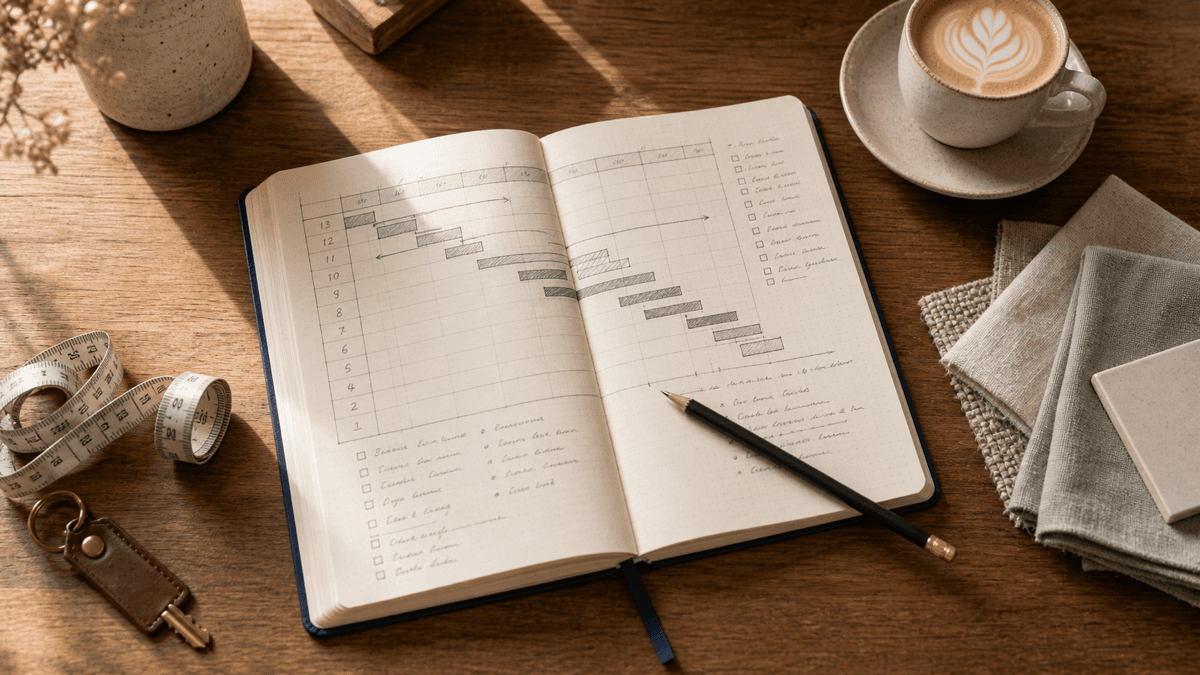
The trap with site two is treating it like site one with a different postcode. It isn't. Site one was built around you, day by day, over years. Site two has to land fully formed on the day you turn the key, with a team that's never worked together, in a building where you've never made a coffee, in front of customers who haven't decided whether to come back yet.
The 90 days before opening day are where that gets won or lost. Not the fit-out, not the launch party. The boring, ordered, dated stuff that you can either do in the right week or scramble to do in the wrong one.
If you've not read it, the sibling piece to this one is from one café to two: 17 years of expanding. That covers the why and the lessons. This one is the what to do, and when. Save it. Print it. Work it backwards from your opening date. And if you're at the very start - site one, not site two - begin with what it actually costs to open a café in 2026.
Day 90 to 75 (weeks 13 to 11): paperwork and permissions
Boring, slow-moving, and the bit that most often blows up the timeline if you leave it late.
- Premises licence: if you're transferring a licence, the application takes a minimum 28 days for the notice period, and that's assuming no representations. If it's a fresh application, longer. Get this in before anything else.
- Business rates: register with the local authority for the new site. It's not automatic. The bill follows the occupier.
- Food business registration: at least 28 days before you start trading, with your local authority's environmental health team. Free, but non-negotiable. The full list of licences and registrations for a new café is worth a run-through even on a second site, because the first one was a while ago.
- Insurance: don't just clone your site one policy. Ring your broker, add the new premises, check public liability limits against the new lease wording, and update employer's liability for the new headcount.
- Companies House: if site two is a new entity (separate Ltd, partnership, etc.), get it incorporated now. Every director has to verify their identity with Companies House first, because the registration needs each director's personal code. Bank account opening is the slow bit, allow three to four weeks.
- Utilities: open accounts for electricity, gas, water, and trade waste in your name from the day of completion, not opening day. Standing charges on empty buildings are real and they bite.
- HMRC / VAT: if the new entity needs its own VAT registration, start the process. Online registrations are taking weeks, not days.
If site one still depends on you being there to keep it standing, you're not ready for any of this yet. That's a different problem and it's worth reading how to build a café that runs without you before signing the lease. The lease itself is the highest-stakes negotiation in this entire checklist - three lease renewal lessons from three Oxfordshire sites is the founder piece I wish I'd had before signing the second one.
Day 75 to 60 (weeks 10 to 9): suppliers and supply chain
Existing suppliers do not automatically cover a new postcode. You'd be amazed how often operators assume they do.
- Open a new trading account for site two with every existing supplier. Even if it's the same coffee roaster you've used for ten years. New delivery address, new account number, new credit terms conversation.
- Confirm delivery schedules in writing. Which days, what cut-offs, minimum order values, what they do if their van can't make it.
- Walk the new building with your coffee supplier. Where does the bean delivery go? Is there a goods entrance? Where does the milk fridge live? Get them on site before the fit-out is finished.
- Decide central kitchen vs decentralised production, and decide it now. Are pastries baked at site one and transported, or made fresh on site? This decision drives your fit-out (oven specs, prep area size), your van logistics, your HACCP paperwork, and your day-1 menu. Don't leave it to "we'll figure it out". If you go central, settle how each café will be charged for what the kitchen makes at the same time.
- Map your cold chain end-to-end if you're moving product between sites. Vehicle temperature, transit time, probe records. EHO will ask.
- Set up trade waste, glass recycling, and grease trap servicing. Lead times are 2 to 4 weeks for first collection in most areas.
- Backup suppliers: identify a second source for milk and coffee specifically, because those are the two things that close you for the day if they don't arrive.
Day 60 to 45 (weeks 8 to 7): POS, payments, and the tech stack
The biggest mistake here is waiting until the fit-out is done before provisioning any tech. By then it's too late to negotiate, integrate, or train on it.
- EPOS hardware ordered and configured. Tills, kitchen printers, customer-facing screens. If you're picking a new system rather than cloning site one, the best EPOS systems for UK cafés in 2026 is worth a read before you commit.
- Payment terminals: ordered, with the new site's trading address. Some providers take 2 to 3 weeks to ship, longer if KYC flags anything.
- WiFi and connectivity: business broadband installation is rarely under 4 weeks. Book the engineer the day you have keys, not the day you want internet.
- CCTV, alarm, and access control: install, test, and link to your monitoring contract.
- Set up site two in CostingBrik now, with the new location's supplier prices and recipes mirrored from site one. This means the day you take your first delivery, invoices flow through correctly and you've got accurate margins from day one rather than three months of guesswork. Do not assume site one's numbers carry over, either: the same recipe genuinely costs different money at each location.
- StaffBrik: provision the new location, build the opening rota, set pay rates per role, and create employee records ready to onboard.
- Accounting integration: hook the new site into Xero / QuickBooks under its own tracking category or entity. Get your accountant to sign off the chart of accounts before anything posts.
- Email, shared drives, printers: new site needs its own email alias, its own document folder, its own label printer. Set up access for the manager before they start.
Day 45 to 30 (weeks 6 to 5): menu, recipes, and allergens
Decide menu parity before you start hiring, because what you serve dictates who you need behind the counter.
- Pick your model: identical menu to site one, or site-specific? "Identical with three local additions" is fine, but write it down and stop adding to it.
- Re-cost every item for site two if anything differs: different suppliers, different delivery costs, different waste assumptions. A 4% cost gap on a flat white compounds quickly. The piece on recipe costing for UK cafés walks through the method if you need a refresher.
- Allergen documentation: a current allergen matrix for every item on the menu, printed, laminated, and on the wall. Natasha's Law applies to anything PPDS. Don't fudge it.
- Print run: menus, table talkers, A-boards, allergen sheets, takeaway cup sleeves. Allow 10 working days for proofing and print.
- Drinks build sheets: photo-illustrated, laminated, one per drink. New baristas learn 3x faster from these than from being shouted at over the bar.
- Stock par levels for site two: don't copy site one's pars blindly. A smaller or larger room, different footfall pattern, different fridge capacity all matter.
Day 30 to 14 (weeks 4 to 3): hiring (the one everyone underestimates)
This is the bit that goes wrong most often. Operators are still painting the walls and assuming staff will appear. They won't, not the ones you want.
- Job ads should already be live by day 45. If they're not, get them out today.
- Manager onboarded a minimum of 4 weeks before open. They need to sit in site one for two weeks, then run the build-up at site two for two weeks. If your manager starts the week before opening, you've effectively got no manager.
- Core team onboarded 2 weeks before open. Baristas, kitchen, FOH. Trickle them in, don't dump them all in the same week.
- Pay site one staff to do training shifts with the new team, at site one and then at site two during fit-out. Site one is your training school - use it. The hourly cost of those shifts is the cheapest training spend you'll ever make.
- DBS / right to work / food hygiene level 2 completed before they touch the floor. Not in week one of trading.
- Payroll set up for the new site in StaffBrik, with HMRC PAYE references correct, pension scheme attached, and a test run completed before the first real pay date.
- Uniforms ordered, sized, named, labelled with locker / hook / hanger assignments at the new site.
Day 14 to 7 (week 2): soft launch prep
The week the building stops being a project and starts being a café.
- Friends-and-family soft open day 4 or 5 of this week. Invite-only, free or pay-what-you-want, full menu but reduced covers. The goal is to break things in a forgiving room.
- Stocktake at site one the day before opening stock moves. Bring across the opening stock as an inter-site transfer, not a free freebie, so your COGS holds.
- Day-1 stock list: every item, every quantity, who's responsible for receiving it, where it goes. Print it.
- Cash float: agreed amount, in the safe, with documented opening / closing procedures and a banking schedule.
- Opening and closing checklists printed and laminated, signed off shift by shift.
- Test every till button, every printer, every payment flow with a real card and a real receipt. Refunds too.
- Snag list started: a single shared document, anyone on the team can add to it, the manager triages it daily.
- Cash flow check: the ramp-up is when you'll feel the burn. If you haven't built a 13-week cash flow forecast, this is the week to do it. Bills land before turnover catches up.
Day 7 to 0 (week 1): soft launch, snag, open
- Day -5 or -4: friends-and-family. Get feedback in writing, fix what you can in 48 hours, accept the rest as launch-week noise.
- Day -3: full deep clean, EHO walk-through if your local authority offers one, photograph the room ready for opening.
- Day -2: full team briefing, opening day plan walked through minute by minute, contingencies named (machine failure, no-show staff, card system down).
- Day -1: do nothing. Pay everyone to rest. You'll need them tomorrow.
- Day 0: open. Quietly. No press, no influencers, no ribbon. Just open the door and serve coffee.
Day 0: the rule that matters most
Don't launch in week one. Don't book the local paper, don't post the big Instagram reel, don't invite the regulars from site one to descend in a coach party.
The team needs three to four weeks to become a team. Equipment needs a fortnight to show you which bits are wrong. The morning routine needs to settle. The bin run, the milk order, the closing checklist, the way the queue forms - none of it works the way you sketched it, and you only find that out by trading.
Run quiet for three to four weeks. Then launch. By that point your team is calm, the snag list is short, and you have a café that can take a busy day instead of being broken by one.
That's the 90 days. Save this, work it backwards from your opening date, and tick it off week by week. The boring version of opening site two is the one that gets to year two.
Ed O'Brien has run Hunters Cake Company for 17 years across cafés in Witney, Burford, and a bakery in Carterton, Oxfordshire. He's building Brikly - modular tools that give independent café owners the same data the big chains have, without the big chain price tag.