
Getting a 5-star food hygiene rating - what actually moves the needle
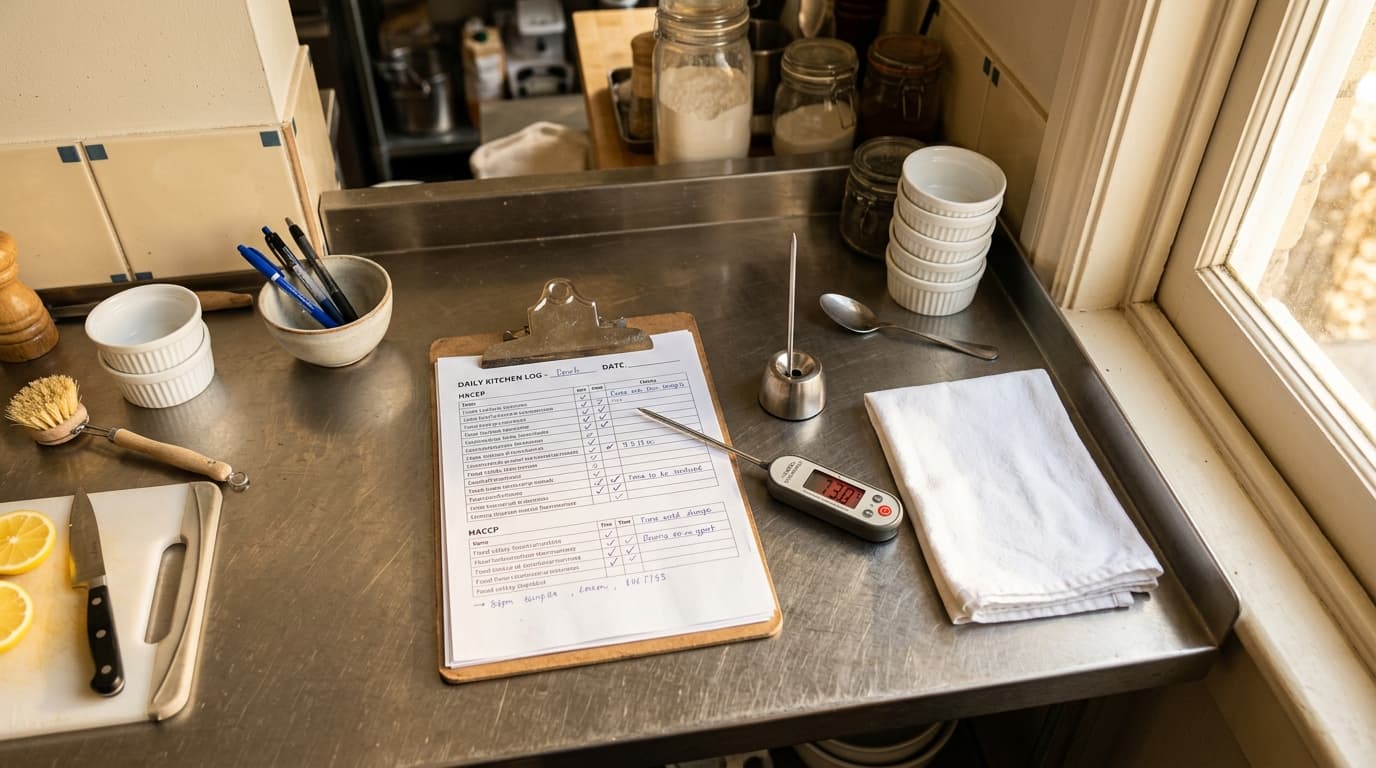
It's 10:42am on a Tuesday. The EHO walks in holding a clipboard, introduces themselves, and asks for the person in charge. Your kitchen is clean. Your fridges are at temperature. You're still about to lose a star, and you probably don't know why yet.
Most independent cafés think a food hygiene inspection is about how clean the place looks. It isn't. It's about whether an inspector believes you run a consistent, documented operation when they're not watching.
That belief has a name in the rulebook. It's called confidence in management, and it's where most 3-star cafés quietly bleed points.
How the Food Hygiene Rating Scheme actually scores you
The Food Standards Agency's scheme runs 0 to 5, with 5 being the top rating. Inspectors score you across three areas, each with its own points scale:
- Food hygiene and safety - how you handle, prepare, cook, reheat, cool, and store food
- Structural compliance - the cleanliness, layout, ventilation, pest control, and condition of your premises
- Confidence in management - your systems, records, training, and documented procedures
The trick is that the scheme doesn't average the three. Your final rating is pulled down by your weakest area. Score well on two and badly on one, and your final rating reflects the weak one.
That's the first thing worth sitting with. You can have a spotless kitchen and still get a 3.
Where 3-star cafés lose it
When I've compared notes with other café owners in Oxfordshire, the pattern is almost always the same. Hygiene score is fine. Structural is fine. Confidence in management is where the star disappears.
Here's what that looks like in practice:
- A fridge temperature diary with four entries in the last fortnight
- Cleaning schedules that were clearly filled in this morning, in the same pen, in the same handwriting
- No written procedure for what happens when a delivery arrives above 8°C
- A staff training folder with two induction forms from 2023 and nothing since
- An allergen matrix printed off once, never updated, now wrong in three places
None of this is dirty. None of it is dangerous on the day. But it tells the inspector you don't have a system. You have a vibe. And vibes don't pass audits.
The shift from paper to digital records matters here because paper is where gaps hide. A paper diary with missed days looks exactly like a paper diary with completed days, until someone flips through it.
What 5-star cafés do differently
The 5-star cafés I've been in aren't cleaner. Not really. They're more boring. Everything has a place, a frequency, and a person responsible.
A few things they do that 3-star cafés usually don't:
- Daily records that are actually daily. Fridge temps logged at open and close, every day, with the person's initials. Not 15 entries in a row from last Thursday.
- Exception handling. When something goes wrong - a fridge drifts, a delivery is warm, a probe fails - there's a note explaining what happened and what was done about it. Inspectors love this. It shows judgement, not just compliance.
- Documented SOPs. Opening, closing, cleaning, temperature checks, allergen handling. Written down. Short. Posted where the work happens.
- A training log. Every member of staff, every course, every refresher, with dates. Level 2 Food Safety for anyone handling food. Allergen training for anyone taking orders.
- A current allergen matrix. Not the one from when you opened. The one from this month, reflecting the recipe you changed three weeks ago. This got considerably more important after Natasha's Law came in, and inspectors know it.
- Closing checklists that someone signs. Not a tick box on a crumpled sheet. A record with a name on it. Accountability by default, which is the whole point of written closing procedures in the first place.
The common thread is evidence. 5-star cafés can prove, on demand, that what they say they do is what they actually do.
Six things to fix this week
If you're staring down an inspection and want to move the needle fast, here's where I'd start:
- Log fridge and freezer temperatures twice a day, every day, for the next two weeks. If you miss a day, write why. Honest gaps beat fake completeness.
- Write a one-page opening procedure and a one-page closing procedure. Laminate them. Put them up.
- Update your allergen matrix against your current menu. Every item, every allergen, right now. Not from memory.
- Get a written record of every staff member's food safety training. If someone hasn't done Level 2, book them in.
- Document what happens when something goes wrong. One sheet: fridge out of temp, delivery warm, probe broken, pest sighting. What to do, who to tell, where to record it.
- Do a dry-run inspection on yourself. Walk in as if you'd never seen the place. Open the fridge. Ask for the cleaning schedule. Ask when the last staff training was. Write down what you can't answer in under 30 seconds.
That last one is the single most useful exercise you'll do all year.
Where SafetyBrik fits
Confidence in management is the area where operators feel most stuck, because it's the area where a clipboard genuinely slows you down. Nobody enjoys filling in a paper diary at 7am. That's why the records look how they look.
SafetyBrik is the part of Brikly we've built specifically for this. It's a digital food safety diary, cleaning and opening/closing checklists, an allergen matrix that stays in sync with your recipes, and a training log - all in one place, with a timestamped audit trail that's there whether anyone asks for it or not.
It's also free. SafetyBrik is Brikly's free tool, not a paid add-on, and it launches soon. We built it free on purpose - food safety shouldn't be the thing a small operator economises on, and we'd rather you came to the rest of our modular toolkit because SafetyBrik earned your trust first.
It won't make you a 5-star café on its own. The work still has to happen. But it removes the main reason the work doesn't happen - that the recording of it is slow and annoying - and it gives you the evidence layer inspectors are actually looking for.
The takeaway
A 5-star rating isn't won on the day of the inspection. It's won on the eleven months before it, in the small, boring act of writing things down consistently.
If you're a 3-star café today, the gap to 5 is almost never about how clean your kitchen is. It's about whether you can prove, in paperwork an inspector trusts, that the clean kitchen is the rule and not the exception.
Fix the evidence. The rating follows.
Ed O'Brien has run Hunters Cake Company for 17 years across cafés in Witney, Burford, and a bakery in Carterton, Oxfordshire. He's building Brikly - modular tools that give independent café owners the same data the big chains have, without the big chain price tag.