
How many coffees a day do you need to sell to break even?
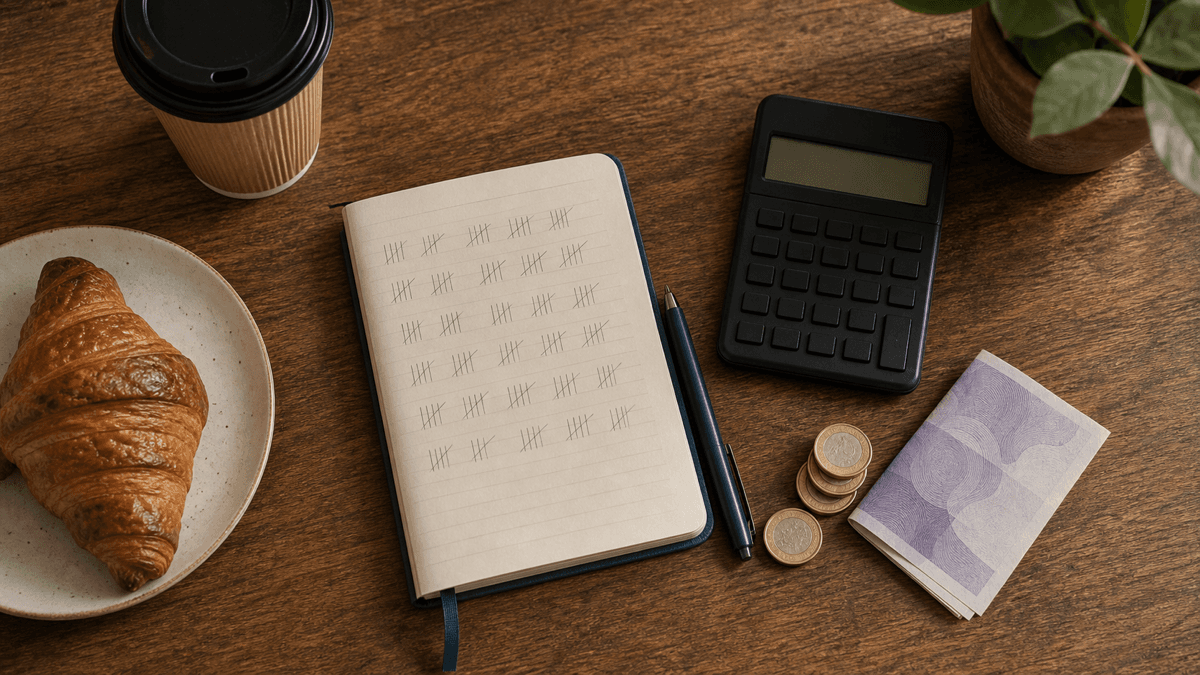
You glance at the bank balance, see a number that looks roughly fine, and carry on. Most of us have run a café like that at some point.
The trouble is the balance tells you what happened, not whether today is actually paying for itself. A good Friday can mask a quiet week. Money owed to suppliers hasn't left yet. VAT is sitting there pretending to be yours.
There's a far more useful number, and you can work it out on the back of a napkin: how many covers you need to sell each day just to break even. Once you know it, every shift has a target, and you stop guessing.
What break-even actually means
Break-even is the point where your sales exactly cover your costs. Not profit, not loss - the line in the sand.
Below it, you're paying to open the doors. Above it, you're finally getting paid. It's the number that turns a vague "are we doing alright?" into "we need 84 covers today, we did 91, good."
The reason it beats staring at the bank balance is that it's forward-looking and it's daily. You don't have to wait for the month-end to find out you were busy fooling yourself. You know by mid-afternoon whether today is on track.
The three inputs you need
You only need three things, and you almost certainly have all of them already.
1. Fixed costs per month
These are the costs that turn up whether you sell 10 coffees or 1,000. Rent, business rates, your core salaried wages, insurance, software, loan repayments, accountancy, the standing charge on your utilities.
Wages are the one people argue about. Some of your labour is genuinely fixed - you, a manager, the person who's rostered on regardless of how the day goes. The casual hours you flex up and down with trade behave more like a variable cost. For a first pass, put your baseline rota into fixed costs and don't overthink it. If you want to get sharper later, building rotas around demand rather than habit is where the variable side gets interesting.
Add it all up for a typical month. That's your fixed-cost number.
2. Average spend per cover
A "cover" is one customer. Average spend is your total takings divided by the number of customers over a period - say, last month.
If you took £24,000 across 6,000 transactions, your average spend is £4. Use your actual figures, not what you wish they were.
3. Contribution margin per cover
This is the one that does the heavy lifting, and it's simpler than it sounds.
Contribution per cover = average spend - variable cost per cover.
The variable cost is what each sale costs you to make: the coffee, the milk, the cup, the pastry. Roughly your cost of goods. If your average cover brings in £4 and costs you £1.20 in ingredients and packaging, your contribution is £2.80. That £2.80 is what's left over to chip away at your fixed costs.
A quick note on VAT. If you're VAT-registered, work in net figures throughout. The £4 a customer hands over includes VAT that was never yours to keep, so strip it out before you do any of this maths. Mixing gross sales with net costs is the most common way these sums go wrong.
The formula
Here it is, start to finish:
- Break-even covers per month = fixed costs ÷ contribution per cover
- Break-even covers per day = monthly break-even ÷ trading days in the month
That's the whole thing. Two divisions and you have a daily target your team can actually rally behind.
A worked example
Let's run a realistic UK café. Numbers are net of VAT.
Fixed costs per month:
- Rent: £2,200
- Business rates: £600
- Baseline wages (you plus core staff): £6,500
- Utilities, insurance, software, sundries: £1,400
That's £10,700 a month in fixed costs.
Per cover:
- Average spend: £4.20
- Variable cost (ingredients, milk, cups, packaging): £1.40
- Contribution per cover: £2.80
Now the maths:
- Break-even covers per month = £10,700 ÷ £2.80 = 3,822 covers
- Trading days = 26 (open six days a week)
- Break-even covers per day = 3,822 ÷ 26 = 147 covers a day
So this café needs roughly 147 customers a day before it makes a penny of profit. Customer 148 onwards is where the profit lives, and each one drops £2.80 straight to the bottom line.
That single number is more useful than a fortnight of fretting. Your team can see it. You can chalk it on a board out the back.
Why small changes move the target so much
Here's the part that catches people out. Because you're dividing by contribution per cover, a small change to the top or bottom of that fraction swings the target hard.
Stick with our café and nudge the price up by 30p, so average spend goes to £4.50 and contribution to £3.10:
- £10,700 ÷ £3.10 = 3,452 covers a month, or 133 a day.
A 30p price rise just knocked 14 covers a day off your break-even. Same costs, same effort, 14 fewer customers needed before you're in profit.
Now go the other way. Say a supplier price hike pushes your variable cost from £1.40 to £1.70, dropping contribution to £2.50:
- £10,700 ÷ £2.50 = 4,280 covers a month, or 165 a day.
That's 18 extra covers a day you now need just to stand still, and you might not even have noticed the invoices creeping up.
This is exactly why keeping recipe costs current matters. CostingBrik reads your supplier invoices and keeps each recipe's contribution margin up to date as prices change, so the break-even maths above stays honest instead of relying on a number you worked out 18 months ago. If you'd rather start by hand, our recipe costing tool walks one recipe through the same logic.
Turning it into a daily target
A monthly figure is for you and the accountant. A daily figure is for the floor.
"We need 147 covers today" is something a team can hold in their heads. It reframes the upsell, the extra flat white, the slice of cake with the coffee, as the thing that gets you past the line and into profit, rather than a vague nicety. If the number looks hard to reach on the seats you have, how quickly you turn tables and use each seat is often the lever that closes the gap.
A few ways to make it stick:
- Write the number down where the team can see it. Not the customers - the team.
- Split it across the day. If lunch usually does half your covers, you know by 2pm whether you're on track.
- Track covers, not just takings. Two quiet customers and one big group can land at the same till total but tell you very different things.
It also pairs neatly with the rest of your numbers. Break-even tells you the line; reading your café's P&L tells you whether you cleared it last month, and a 13-week cash flow forecast tells you whether you can survive the weeks you don't.
The mindset that matters
The single idea worth keeping: every cover past break-even is where your profit lives.
Before the line, you're working to keep the lights on. After it, the contribution stops paying off fixed costs and starts paying you. That's why two cafés with identical turnover can have wildly different profits - one creeps over its break-even and limps home, the other clears it by 3pm and banks the rest.
If your break-even feels uncomfortably high relative to what you actually do on a normal day, that's not a reason to look away. It's the clearest signal you'll get that something - price, food cost, or fixed overhead - needs attention. It's worth knowing how your figure compares to average café profit margins in the UK before you decide which lever to pull.
The takeaway
- Break-even is the number of covers you must sell to cover all your costs. It beats the bank balance because it's daily and forward-looking.
- You need three inputs: fixed costs per month, average spend per cover, and contribution per cover (average spend minus variable cost).
- The formula: fixed costs ÷ contribution per cover = monthly break-even, then ÷ trading days = your daily target.
- Work in net figures if you're VAT-registered. Mixing gross sales with net costs is the classic mistake.
- Small changes move the target a lot. A 30p price rise or a small food-cost creep can swing your daily break-even by 15 covers either way.
- Turn it into a daily target the team can see. Every cover past it is profit, not just another sale.
Grab last month's takings, transaction count, and a tally of your fixed costs, and you can have your own number in ten minutes. Then you'll know exactly what a good day looks like before it's over.
Ed O'Brien has run Hunters Cake Company for 17 years across cafés in Witney, Burford, and a bakery in Carterton, Oxfordshire. He's building Brikly - modular tools that give independent café owners the same data the big chains have, without the big chain price tag.