
When the espresso machine dies mid-rush: the real cost of skipping maintenance
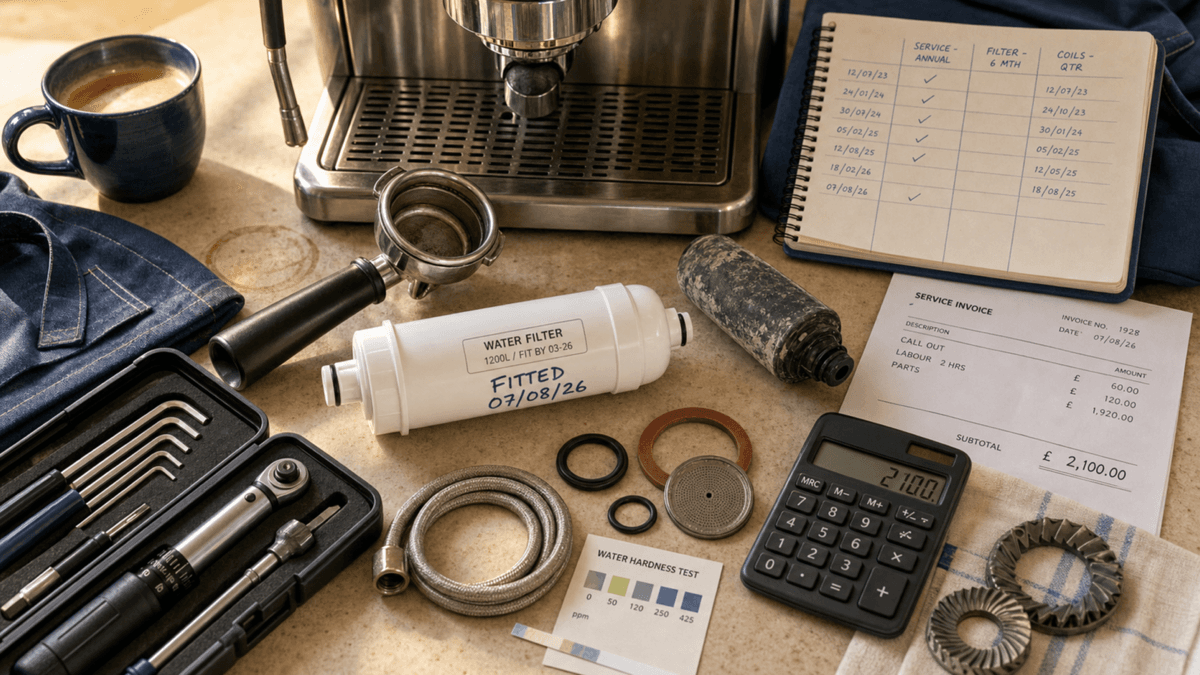
It is 9:40 on a Saturday. Eleven people in the queue. The machine makes a noise it has never made before, the pressure gauge drops, and that is that.
You do the maths in your head while you are still apologising. Filter coffee only. Half the queue leaves. The ones who stay do not order the pastry, because they were only ever here for the flat white.
By the time the engineer gets to you on Tuesday, that machine has cost you a great deal more than the invoice he hands over.
The bill you actually pay is the one nobody invoices
Let's put real numbers on it, because the repair cost is the small half of this.
Say a decent Saturday takes £2,000, Sunday £1,400 and Monday £900. Coffee is roughly 40% of turnover, so coffee across those three days is about £1,720.
Coffee runs at a gross margin of around 75% once you have paid for beans, milk and cups. So three days without espresso is roughly £1,290 of gross profit gone.
Then add the attached sales. A good chunk of the people who walk out for coffee were going to buy a croissant too. Call it another £400 of turnover and £270 of gross profit.
Now the repair. An emergency call-out is typically £150 to £250 before anyone touches a spanner, labour is often £70 to £95 an hour, and a pump or a group rebuild carries parts on top. Call the whole job £600.
Total damage: roughly £2,100. One machine, one weekend.
An annual service on a two-group machine typically runs £250 to £450. Filter cartridges are maybe another £120 a year. That is under £500 a year to make that weekend much less likely.
The maintenance ledger, machine by machine
Most operators have a vague sense that things need servicing. Almost nobody has it written down. Here is roughly what each piece of kit wants, with typical 2026 UK figures. Your dealer's numbers will vary. The intervals will not.
Espresso machine
Annual service, typically £250 to £450 for a two-group. Group seals, shower screens, boiler and element check, pressure and temperature calibration, safety valve. Larger pressurised boilers may also need a periodic statutory inspection under a written scheme of examination, so ask your engineer whether yours falls in scope.
Grinder
Burrs are a consumable, not a permanent fixture. Flat burrs typically want replacing somewhere around 400 to 600kg of coffee, conical burrs last considerably longer. A set is roughly £80 to £200 plus fitting.
Worn burrs do not announce themselves. Your grind time creeps up, your shots taste flat, and everyone blames the beans.
Fridges and freezers
The cheapest maintenance in the building and the most neglected. Condenser coils clogged with flour dust and grease make the compressor work harder, run hotter and die younger. Vacuum them quarterly and you will feel it on the electricity bill you keep opening with one eye shut, because a dirty coil is an energy tax you pay every day.
Door seals perish. Test one with a sheet of paper: close the door on it, and if it slides out easily the seal has gone. A replacement is usually £15 to £40 and takes ten minutes.
Dishwasher and glasswasher
Descale, wash arms, spray jets, door seals and detergent dosing. An annual service typically runs £120 to £200. In a hard water area the jets scale up within months and you start rewashing everything, which quietly doubles your water, chemical and labour cost per rack.
Ovens
Door seals, fan motors, thermostat calibration. Annual service is usually £150 to £300, more for a combi, which needs its own water treatment. A thermostat drifting 15 degrees is not a breakdown. It is just weeks of inconsistent bakes and a rising waste figure you blame on the recipe.
Extraction canopy
Deep cleaned by a certified contractor, typically every six to twelve months depending on how much frying you do, and typically £250 to £600. Your insurer may well ask for the certificate after a fire. Skipping this one does not cost you a repair, it costs you a claim.
Water is what actually kills your kit
If you only change one habit after reading this, make it this one.
Scale is a leading cause of expensive espresso machine failures in the UK, and most of England sits in a hard or very hard water area. Limescale coats the heating element, the element works harder to hit temperature, and eventually it fails. A heavily scaled boiler is sometimes a £400-plus descale job and sometimes a write-off.
Filter cartridges typically need changing every six to twelve months, or by volume of water through them, whichever comes first. They cost roughly £60 to £150. They are also the most commonly skipped item on any maintenance list, because nothing appears to go wrong when you skip them. Right up until it does.
Test your water hardness with a strip from your dealer. It takes thirty seconds and it tells you whether your filter interval should be twelve months or six.
Service contract or pay as you go?
There is no universal answer, so let's do the honest maths.
A typical espresso machine service contract runs somewhere around £40 to £90 a month per site. Call it £65, so £780 a year, usually bundling the annual service, priority response and sometimes parts and labour.
Pay as you go for the same machine: £350 annual service, plus a call-out if something goes wrong. One call-out at £250 all-in puts you at £600.
On pure cost, pay as you go wins until you are averaging more than about one call-out a year. What you are really buying with a contract is not the money, it is the response time. If you go down, are you at the front of the queue or the back?
Pay as you go tends to win when: you run one site, the kit is reasonably new, your daily habits are good, and you could survive a day on batch brew.
A contract tends to win when: you run several sites, the kit is ageing, or coffee is such a large share of your turnover that a day down is genuinely painful.
The habits that cost nothing
Most breakdowns are not bad luck. They are six months of skipped ten-minute jobs arriving all at once.
Every day:
- Backflush the espresso machine with water through the shift, and with detergent at close
- Purge and wipe the steam wands before and after every use
- Brush out the grinder chamber, never leave stale beans sitting in the hopper overnight
- Log fridge and freezer temperatures twice a day
- Strip and rinse the dishwasher filters
Every week:
- Soak portafilters, baskets and shower screens in detergent
- Wipe fridge door seals and check them with the paper test
- Clear scale from dishwasher spray jets with a pin
- Wipe oven door seals rather than letting sugar bake onto them
None of that costs a penny. All of it extends the life of kit that costs thousands.
A maintenance calendar you can copy
Stick this inside the office cupboard door, and put the quarterly and annual items in your phone calendar with a reminder a fortnight ahead.
- Daily: backflush, wand purge, grinder brush-out, temperature log, dishwasher filters
- Weekly: portafilter soak, seal checks, spray jet check, oven seal wipe
- Monthly: vacuum condenser coils, check grinder dose against scales, deep clean the ice machine
- Quarterly: descale the dishwasher, check extraction filters, review call-out history
- Every six to twelve months: water filter cartridges, canopy deep clean, grinder burr check
- Annually: espresso machine, oven and dishwasher services, gas safety check, seal replacements
The specific dates matter less than the fact they exist somewhere other than your head. When the service invoices land they belong in your overheads with everything else, and if you already push supplier invoices through CostingBrik they land in the same pile rather than a drawer.
When to stop repairing and replace
At some point the sensible thing is to stop feeding a machine and buy a new one. A rough rule that has served me well:
If the repair costs more than half the replacement price, and the machine is past half its expected life, replace it.
Typical expected lives, well maintained: an espresso machine eight to twelve years, a commercial fridge seven to ten, a dishwasher five to eight, an oven ten to fifteen.
Three other things belong in that decision:
- Parts availability. If the model is obsolete and your engineer is sourcing bits from eBay, the clock has already run out
- Energy. A ten-year-old fridge can cost meaningfully more to run than a modern one, and that gap compounds daily
- Frequency. Three call-outs in twelve months is not bad luck, it is the machine telling you something
If the replacement cost is what is stopping you, that is a financing question rather than a maintenance one, and working out whether to buy the kit outright or spread it over hire purchase beats another emergency call-out. If you are still at the planning stage, build a maintenance line into your budget from day one, because it rarely appears in the standard breakdown of what it actually costs to open a café in 2026.
The takeaway
- Downtime, not the repair bill, is the real cost. Three days without espresso can be £1,500 of gross profit before the engineer invoices you
- An annual service plus filter changes typically costs under £500 a year, the cheapest insurance in the building
- Water treatment is the item everyone skips and the item that voids warranties. Change the cartridge, write the date on it
- Contracts buy response time, not savings. Do the maths on your own call-out history, and check whether Saturdays are covered
- The daily habits are free and they prevent most failures
- When repair costs pass half the replacement price on a machine past half its life, stop patching
Book your espresso machine service this week. Pick the quietest month you have, not the month it finally breaks.
Ed O'Brien has run Hunters Cake Company for 17 years across cafés in Witney, Burford, and a bakery in Carterton, Oxfordshire. He's building Brikly - modular tools that give independent café owners the same data the big chains have, without the big chain price tag.