Lease or Buy? Financing Café Equipment Without Crippling Cash Flow
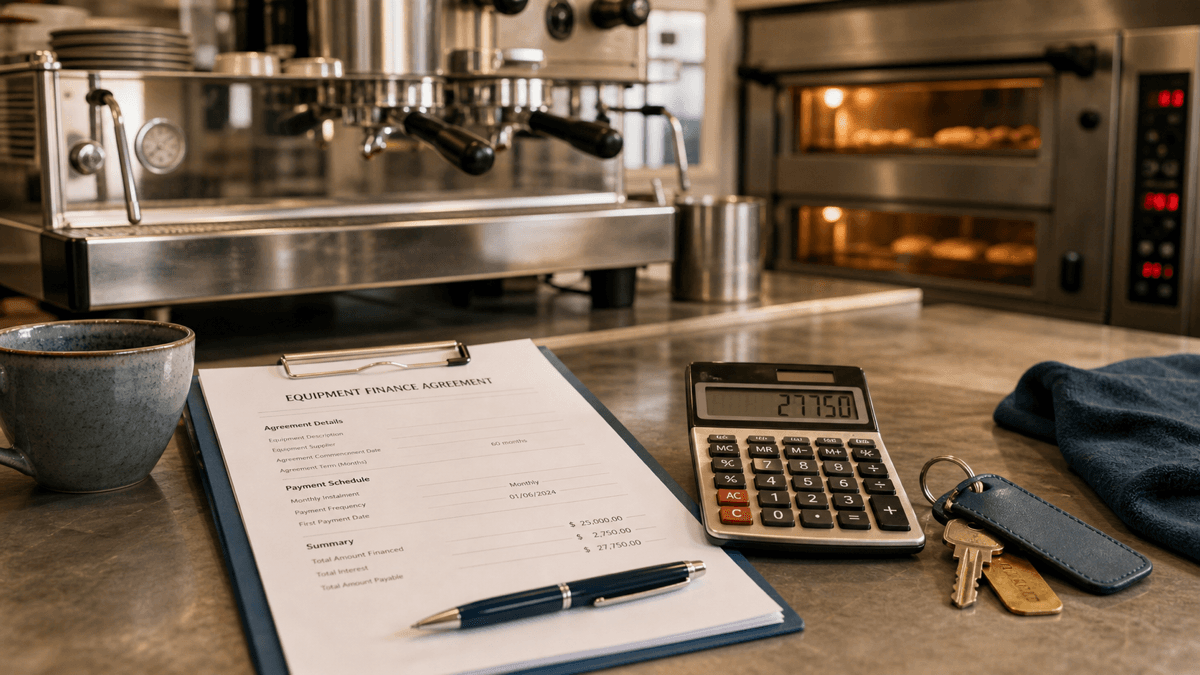
A new espresso machine is a five-figure decision. A deck oven, a walk-in fridge, a glasswasher - the same. And most café owners make that call on gut feel, in a showroom, with a salesperson watching the tap of a card machine. If you're kitting out a first site, equipment is just one line of the full cost of opening a café in 2026 - this piece is about how to pay for that line without hurting yourself.
Here's the part nobody tells you. The financing choice can matter as much as the kit choice. Pick the wrong machine and you're stuck with a temperamental brewer. Pick the wrong way to pay for it and you can quietly hand a chunk of your margin to a finance company for the next five years - or worse, strangle your cash the week the VAT bill lands.
I've done this both ways across 17 years. I've bought outright and felt the bank balance flinch. I've financed and watched the standing order go out every month long after the gloss wore off. So here's the honest version of how to think about it.
One thing up front: this is general information from an operator, not financial or tax advice. The numbers and the structure that suit your business depend on your accounts. Run any real decision past your accountant before you sign.
The options, plainly
There are really four routes. Most operators only seriously consider one or two, which is how people end up overpaying.
Buy outright (cash)
You pay the full price, you own the kit, it's done. Over the life of the asset this is almost always the cheapest route - no interest, no fees, nothing to settle.
The catch is obvious. A £12,000 espresso machine is £12,000 that's no longer in your account. That's working capital gone - the cash that covers wages, stock and the quiet January. Cheapest over the life of the asset is not the same as cheapest right now.
Hire purchase (HP)
You put down a deposit, pay fixed monthly instalments, and you own the kit outright at the end. Interest applies, so you pay more in total than the cash price - but you've spread the hit across the months the machine is actually earning for you.
For most independents buying a piece of core kit they'll keep for years, HP is the sensible middle ground. You end up owning it, and the asset usually shows up on your balance sheet.
Finance lease, operating lease or equipment rental
These are rentals dressed up in different clothes. Lower upfront cost, sometimes nothing to pay on day one, and the monthly figure often bundles in servicing and maintenance. Attractive when cash is tight.
The trade-offs are real. You may never own the kit - at the end you hand it back, pay a fee to keep using it, or upgrade onto a fresh agreement. And over the full term you'll usually pay the most of any route. You're renting flexibility and protecting cash, and that costs a premium.
Second-hand, refurbished or ex-demo
The most underrated option on the list. A well-serviced refurbished espresso machine or an ex-demo oven can save you thousands and run perfectly well for years. Commercial kit is built to last - a three-year-old machine from a reputable refurbisher is not the gamble people imagine.
Just go in with your eyes open. Check what warranty comes with it, who services it, and whether parts are still available. A cheap machine that no engineer will touch is not a saving.
The true cost of finance
The headline monthly figure is designed to look small. Your job is to work out what it actually costs you across the whole agreement.
A few things to pin down before you sign:
- Flat rate vs APR. Finance is often quoted as a "flat rate" - say 5% a year on the original amount. That sounds cheap. But because you're paying the balance down over time while still being charged on the full original sum, the real cost (the APR) is often close to double the flat rate. Always ask for the APR and compare like with like.
- Total amount repayable. Add up every payment plus the deposit and any fees. That's the real price of the kit. Compare it against the cash price and you'll see exactly what the finance is costing you.
- What you own at the end. With HP, you own it. With a lease, you might own nothing - check whether there's a balloon payment, a peppercorn purchase option, or a hand-back.
- Early-settlement terms. Life changes. If you want to pay it off early or close the site, what does it cost? Some agreements charge interest you haven't even incurred yet.
The salesperson is paid on the deal closing, not on it being right for you. None of these questions are rude. They're the questions a sensible operator asks. The same discipline applies to borrowing that has nothing to do with kit: merchant cash advances and the other ways cafés raise money are priced specifically to resist this kind of comparison.
Tax and VAT (check this with your accountant)
This is where the structure genuinely matters, and where I'll be careful, because the right answer depends on your accounts and your accountant's view.
As a general rule of thumb:
- Buying outright or on HP usually means the kit is treated as an asset you own, so it typically qualifies for capital allowances - including the Annual Investment Allowance, which lets many businesses write off the full cost against profit in the year of purchase. That can be a meaningful tax saving in a good year.
- Lease and rental payments are usually treated differently - often as an allowable business expense you deduct as you pay it, rather than claiming the asset cost up front.
Which of those works in your favour depends on your profit this year, your VAT position, and whether you're a sole trader or a limited company. The treatment can differ between the two, which is one more reason the sole trader vs limited company decision quietly shapes a lot more than just how you're taxed on profit.
The cash-flow trade-off
This is the heart of it, and it's where I see good operators come unstuck.
Buying outright is cheapest over the asset's life. But the cash you spend today is the cash that protects you when a fridge dies, a slow month bites, or the VAT lands in the wrong week. Finance costs you a premium, but it keeps that cushion intact.
There's no universal right answer. There's only your cash position, today, and the weeks ahead.
This is exactly the kind of decision a 13-week cash flow forecast is built for. Before you commit to any payment route, drop the proposed monthly figure - or the full cash hit - into your forecast and look at the closing balance line across the next quarter. If buying outright pushes you below your minimum cushion in week seven when the VAT bill arrives, you have your answer: spread the cost, protect the runway, pay the premium with open eyes.
I've talked myself out of paying cash for kit more than once simply by looking at the forecast first. The machine I wanted was affordable. The week I'd have bought it in was not.
The running cost nobody puts on the quote
The price tag is the start of the conversation, not the end. The cheapest machine on paper can be the most expensive one in your kitchen.
Two running costs decide that:
- Energy. A worn, inefficient espresso machine or an oven that leaks heat will quietly add to your bill every single day it's switched on. Over a five-year life, the difference between an efficient machine and a thirsty one can dwarf the price gap at purchase. It's worth weighing against everything else hitting your café energy bill.
- Servicing and breakdowns. Kit that's down is kit that costs you sales. An espresso machine out of action on a Saturday is a full day of flat whites you can't make, and the real cost of skipping maintenance shows up as lost turnover long before the repair bill does. Factor in a service contract, and check whether a lease bundles servicing in - sometimes that bundled maintenance is the real value, not the financing.
A machine that's cheaper to buy but guzzles energy and breaks down is not cheaper. It just hides the bill where you won't see it until later.
A simple decision framework
When I'm weighing a piece of kit now, I run through the same five questions. No spreadsheet required - just honest answers.
- What's my cash position? Can I pay outright without dropping below the cushion I need to sleep at night across the next quarter? If yes, that's a strong case for cash or HP. If no, the conversation is about how to spread it.
- How long will this kit last me? Core kit I'll keep for a decade - an espresso machine, an oven - leans towards owning it. Buy it, own it, run it into the ground.
- How fast will it date? Tech that moves quickly, or kit I might outgrow as the business changes, leans towards a lease so I'm not married to it.
- Is servicing bundled? If a lease includes maintenance and a clear breakdown response, that has real value for kit I can't run the business without.
- What's the real all-in cost of each route? Cash price vs total repayable, plus energy and servicing, across the whole life. Compare the true numbers, not the headline monthly.
Run a piece of kit through those five and the answer usually picks itself.
The bottom line
The kit decision feels like the big one. Often the financing decision is the one that actually moves your margin.
Before you sign anything, answer these:
- What does this cost me in total, all in, across its whole life - not per month?
- Do I own it at the end, and if not, what then?
- What happens if I want out early?
- What does the energy and servicing add over five years?
- And the big one: does paying for it this way keep my cash cushion intact across the next 13 weeks?
Get those answered honestly, run the real numbers past your accountant, and you'll make the call with your eyes open instead of in a showroom on a Tuesday afternoon. The right machine on the wrong finance can still sink you. The plain machine on the right finance keeps you trading.
Ed O'Brien has run Hunters Cake Company for 17 years across cafés in Witney, Burford, and a bakery in Carterton, Oxfordshire. He's building Brikly - modular tools that give independent café owners the same data the big chains have, without the big chain price tag.