
How to choose a coffee roaster for your café
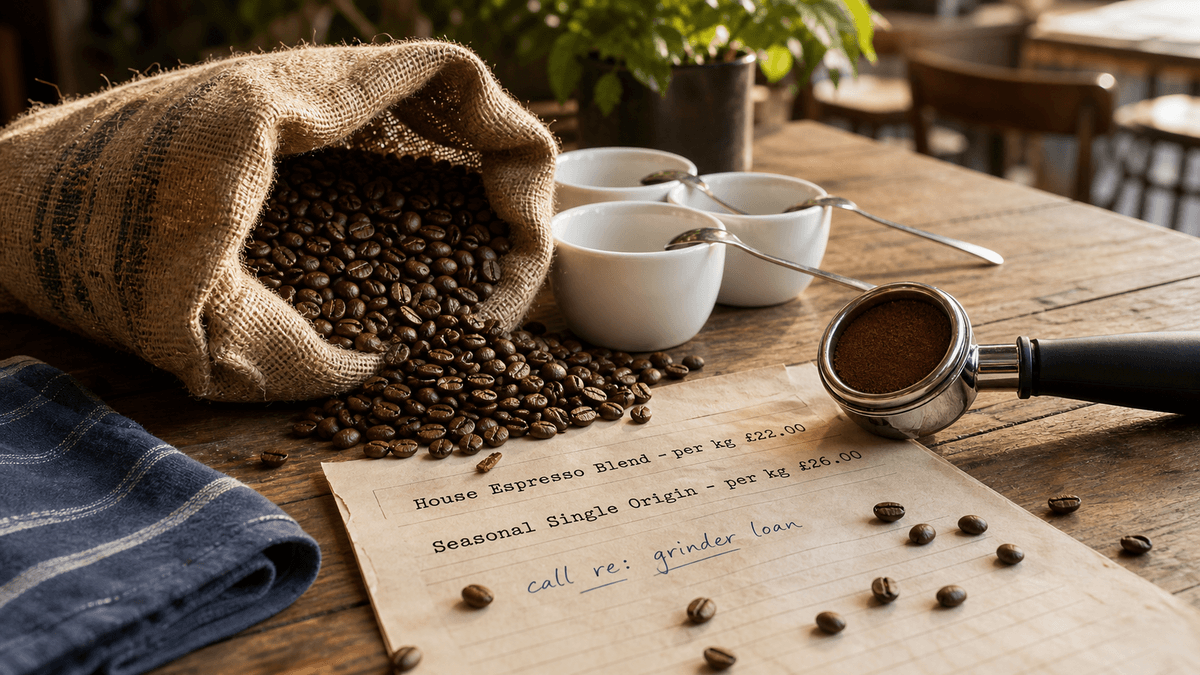
Your roaster is the one supplier you can't quietly swap out mid-service. If your flour supplier lets you down, you can grab a bag from the cash and carry and nobody notices. If your coffee changes, every regular tastes it in the first sip.
So it's odd how often the decision gets made on a single number: the price per kilo on the front of the wholesale sheet. That number matters, but it's the smallest part of what you're actually buying. You're buying a relationship that touches your busiest product, every day, for years.
Here's how to choose one properly, and how to leave one without upsetting the counter.
Price per kilo is the wrong headline
Every roaster leads with a price per kilo, because it's the easy thing to compare. It's also the thing that tells you the least about what a drink actually costs you.
A kilo of beans makes a fixed-ish number of shots, so what you care about is the pence in the cup, not the pounds on the invoice. Work it through and the "expensive" roaster is often a few pence a drink dearer, on a drink you sell for well over three quid.
Say you're comparing two roasters on the house espresso:
- Roaster A: £22/kg. An 18g double is roughly 55 doubles per kilo, so about 40p of coffee per drink.
- Roaster B: £26/kg. Same dose, same maths, about 47p per drink.
That £4/kg gap looks like 18% more coffee cost. Per serve it's 7p. On 120 milk drinks a day that's around £250 a month, which is real, but it's a number you can move more easily by tightening your dose than by chasing the cheapest bag. Converting a headline kilo price into a true cost per serve is the same exercise we ran on the real cost of a flat white, and it's the only comparison worth making.
And beans are only one line in the cup. The milk, the cup, the lid and the energy all sit on top, which is why whether to charge an oat milk surcharge moves your margin as much as a bean price ever will. Pick the roaster on the coffee and the partnership. Then negotiate the price.
What a good wholesale package actually includes
The bean is the product. The package around it is where a good roaster earns their margin over the cheap bag down the road. Before you sign anything, work out what's in the deal beyond the coffee.
Barista training. A proper roaster will train your team, on your machine, in your café, and come back when you take someone new on. That's worth real money you'd otherwise spend on a course, and it directly protects the quality of the drink you're selling.
Dialling-in support. Beans move as they age and as the seasons change. A good roaster helps you re-dial when a new batch tastes different, either over the phone or in person. Without that, you're guessing at the grinder during a morning rush.
Equipment loans or servicing. Many roasters will loan you a grinder, or even an espresso machine, on a coffee-supply agreement, or fold servicing into the deal. A machine service runs a few hundred pounds a year and a decent grinder is a four-figure outlay, so this can be worth more than the entire per-kilo difference between two roasters.
Emergency cover. Ask the blunt question: the machine dies on a Saturday, or you run dry on a bank holiday, what happens? A roaster who'll courier you a bag or lend a loan machine while yours is fixed is worth paying a little more for. That's the day the relationship pays for itself.
Add those up and the "expensive" roaster with training, a loan grinder and next-day cover is often the cheaper choice once you count everything. The cheap bag with none of it is only cheap on the invoice.
Read the contract before you fall for the coffee
Coffee supply agreements are usually fair, but they're written by the roaster, and there are three clauses that catch operators out. Read them before the tasting has charmed you into signing.
Minimum volumes
Many deals, especially ones with loaned kit, commit you to a minimum monthly or annual volume of beans. Be honest about your covers before you agree a number. Sign up to 20kg a month when you realistically use 12, and you're either paying for coffee you don't need or breaching the agreement by month three.
Kit clawbacks
If there's a machine or grinder on loan, understand exactly what happens if you leave or fall below the minimum. Some agreements let the roaster reclaim the kit, some convert it to a purchase at a set price, some charge a penalty. None of that is unreasonable, but you want to know it going in, not discover it when you're trying to move on.
Notice periods
Check how much notice you have to give to end the agreement, and whether it auto-renews. A 12-month term that silently rolls into another 12 unless you cancel in a specific window is common. Put the renewal date in your calendar the day you sign.
Taste it properly, not once
Nobody signs a roaster after a single espresso, but plenty sign after a single good one. That's not enough to commit your signature drink to for the next year.
- Taste the drinks you actually sell. If most of your covers are milk-based, judge the beans as a flat white and a latte, not just as a black espresso the sales rep pulls perfectly. Some beans that sing on their own get lost under milk.
- Taste over several days. One session tells you the rep can pull a good shot. A week with a sample bag on your own machine, dialled in by your own team, tells you whether it works in your café.
- Get your baristas tasting too. They're the ones making it 200 times a day. If they can't get it consistent, or they don't rate it, that shows up in the cup long before you notice it in the numbers.
- Try the house blend, not just the flashy single-origin. For milk drinks the seasonal house espresso is usually keener on price and easier to keep consistent, and most customers genuinely can't tell it from the showpiece.
Coffee is your hero product. Spend a fortnight on this decision, not an afternoon.
How to switch without unsettling your regulars
Say you've decided to move. The coffee's the easy part. The regulars are the risk, because the drink they buy every morning is about to taste different, and people are quietly loyal to their coffee.
Do it deliberately.
Run them in parallel. Order a few kilos of the new bean before you drop the old one. Dial it in properly on your grinder, on a quiet morning, with time to get it right, so the new coffee is genuinely good on day one and not a wobbly work-in-progress served to a queue.
Get the team fluent first. Your baristas should have tasted it, dialled it and made a stack of drinks with it before a single customer does. A confident "we've moved to a new roaster, it's lovely, let me make you one" lands completely differently from a shrug and a worse-than-usual latte.
Tell customers the right way, or not at all. For a small tweak you often don't need to announce anything. For a proper change, a short honest line works: a card by the till, a word to the regulars, framed as an upgrade you're proud of, not an apology. People forgive a change they were let in on. They resent one that's sprung on them.
Watch the numbers, not just the chat. Keep an eye on your coffee sales through the switch. A dip that doesn't recover after a fortnight means something's off, whether it's the bean, the dial-in or the training, and it's cheaper to catch it early than to explain a quiet quarter later.
Keep watching the price after you've signed
Choosing well is the start, not the end. Bean prices move, and your roaster's wholesale rate moves with them, usually with a lag and usually stickier on the way up than the way down. When that happens, the relationship you chose carefully is exactly what gives you room to talk, which is the whole argument in protecting your espresso margins when bean prices rise.
The trap is not noticing. A quiet 8% increase on your house bean drifts your flat white margin without anyone flagging it, and you find out at the quarterly accounts. This is the gap CostingBrik closes: when the new invoice lands, your bean cost updates and every coffee recipe recosts in the background, so the drift shows up the week it happens, not the season after.
The takeaway
- Don't choose a roaster on price per kilo. Convert it to cost per serve, and it's usually a few pence a drink between decent options.
- The package is where the real value sits: training, dialling-in support, equipment and servicing, emergency cover. Price the whole thing, not the bag.
- Read the contract for minimum volumes, kit clawbacks and notice periods before the coffee wins you over.
- Taste it over a fortnight, on your machine, as the drinks you actually sell, with your baristas involved.
- Switch in parallel, get your team fluent first, and tell regulars honestly or not at all.
- Keep watching the price after you sign, and keep one credible alternative warm.
Choose the partner first. Then negotiate the price. Get that order right and coffee stops being the supplier you worry about and becomes the one you rely on.
Ed O'Brien has run Hunters Cake Company for 17 years across cafés in Witney, Burford, and a bakery in Carterton, Oxfordshire. He's building Brikly - modular tools that give independent café owners the same data the big chains have, without the big chain price tag.