
Heatwave food safety: protecting your cold chain, hygiene rating and waste line
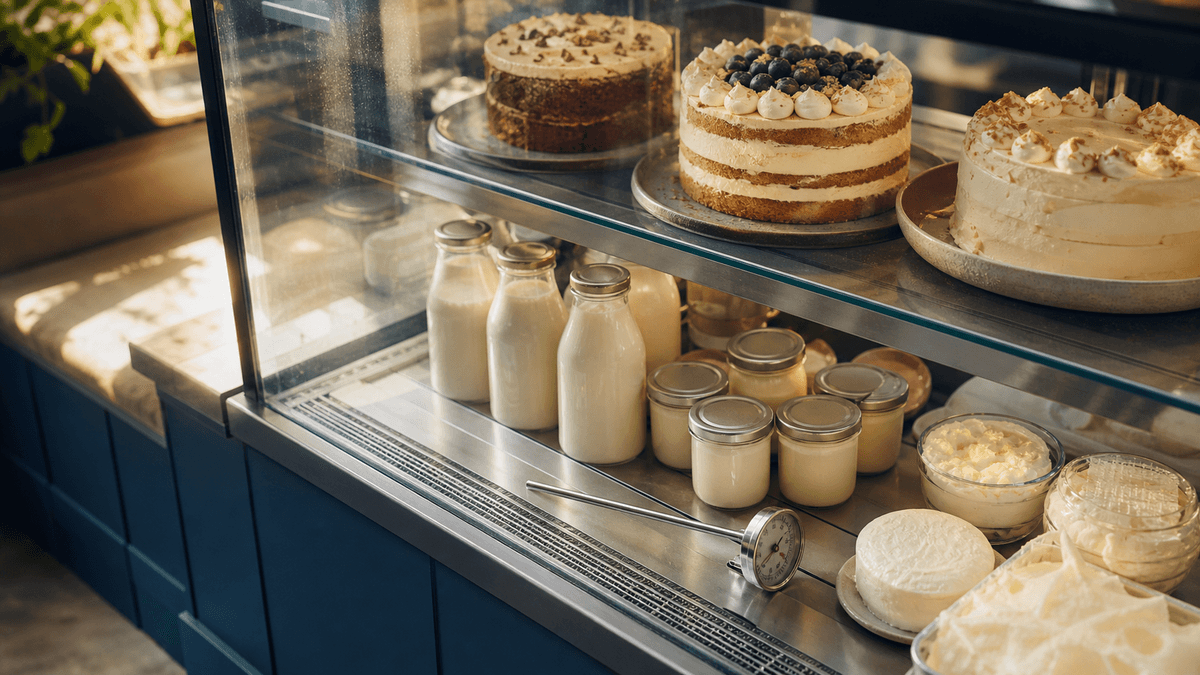
The first proper hot week of summer is lovely for turnover and quietly brutal for your fridges. The iced drinks fly out, the terrace fills up, and somewhere in the back a chilled unit that has coped fine all winter is now running flat out and losing the fight.
England has just come through another run of record heat, and if you run a café you'll know the feeling: doors opening constantly, the kitchen warming up, and a fresh-cream display that suddenly feels like a liability rather than a hero product.
Here's the thing most guides skip. In a heatwave, food safety and your margin are the same problem wearing two hats. Get the cold chain wrong and you either bin a load of stock, which is money in the bin, or you serve something you shouldn't have, which puts your rating and your customers at risk. Both hurt. Let's keep both from happening.
Heat is a margin problem, not just a safety one
Spoiled stock does not show up as a dramatic event. It shows up as a slightly fuller bin, a few cakes pulled at close, milk that turned before its date. None of it feels like much on the day. Add it across a two-week hot spell and it's a real number.
And the safety side is unforgiving. A slip that a busy Environmental Health Officer spots on a hot Tuesday can knock your rating, and your rating is public. If you want the full picture of what actually moves your food hygiene rating up or down, that's worth ten minutes, because temperature control is one of the biggest levers on it.
Your cold chain under stress
Bacteria that make people ill grow fastest between 8C and 63C. The FSA calls that range the danger zone, and in hot weather your kitchen spends a lot more of the day sitting right in the middle of it. Everything below is about keeping food out of that band.
Know your target temperatures. In England, Wales and Northern Ireland it's a legal requirement to keep chilled food at 8C or below, but the FSA recommends running your fridge at 5C or below, which gives you headroom for exactly the kind of day we're talking about. Freezers should be at -18C or below. That headroom is the whole point: on a 30C afternoon, a fridge set to 5C can drift a couple of degrees and still be legal, whereas one set to 8C has nowhere to go.
Stop opening the door so much. Every time a fridge door opens on a hot day, warm air pours in and the compressor has to claw the temperature back down. During service that adds up fast. Pull a tray of milk or a batch of fillings out in one trip rather than five, and keep the door shut between grabs. It sounds obvious. It's also the single cheapest fix you have.
Don't overload it. A rammed fridge feels efficient and works against you. Air has to circulate for the unit to hold temperature, so cramming every shelf and blocking the vents means the middle of the load never gets properly cold. Leave gaps. Resist the urge to use the fridge as overflow storage just because you over-ordered for the weekend.
Give the condenser some air. Most under-counter and display units breathe through a grille or coils, and when those clog with dust and grease the unit runs hot and struggles. In a heatwave a choked condenser is often the difference between coping and failing. A quick clean of the grille, and making sure nothing is shoved against the back of the unit, buys you real resilience for five minutes' work.
Deliveries: the weak link nobody watches
Your cold chain is only as strong as the moment a chilled delivery lands on a hot loading area and sits there while you finish serving.
Probe chilled deliveries as they arrive, or at least check the temperature of the load, and don't be shy about rejecting anything that turns up warm. A supplier's van that has been baking in traffic is not your problem to absorb. If dairy, cooked meats or fresh cream come in above 8C, you're within your rights to send them back, and you should.
Then get it away fast. The worst thing you can do on a hot day is sign for a chilled delivery and leave it stacked by the back door while the rush dies down. Straight into the fridge, tray by tray. The clock starts the second it leaves the van's cold chain.
Display decisions when it's baking
The counter is where heat and temptation meet. Fresh-cream cakes, filled sandwiches, jugs of milk left out for the coffee machine: all of them are perfectly fine in a cool room and genuinely risky in a hot one.
The rule worth memorising is this. You can keep chilled food out of refrigeration for display for a single period of up to four hours. After that you either put it back in the fridge to use later, which you can only do once, or you throw it away. You cannot keep shuttling the same tray of cream slices in and out all day and pretend the clock resets.
In practice, for a heatwave that means:
- Display small batches. Bring out an hour's worth of cream cakes, not the whole tray. What's not on the counter is safe in the fridge, and you waste far less.
- Time-mark what comes out. Write the time it left the fridge on the tray, the container or in your diary. When you're slammed, memory is not a food safety system.
- Move the marginal stuff. Milk for the coffee station lives in a small jug you refresh often, not a two-litre bottle sweating on the counter all morning. Keep the bulk in the fridge and pour little and often.
- Pull it early if in doubt. A cream cake that's been out too long on a scorching afternoon comes off sale. Better a small write-off than a bad afternoon for a customer and a worse one for you.
Log the temperatures, twice a day, every day
The FSA suggests checking fridge temperatures at least once a day. In a heatwave I'd do it at least twice, morning and mid-afternoon, because the afternoon check is the one that catches a unit losing its grip at the worst point of the day.
Two reasons to bother. First, a logged record is exactly what an EHO wants to see, and a consistent one quietly tells them you run a tight ship. Second, and more useful day to day, a run of readings creeping upward warns you a fridge is on its way out while there's still time to move the stock and call the engineer, rather than lose the lot.
Paper diaries technically do the job, but they get soggy, get skipped when it's busy, and tell you nothing until an inspector reads them back. There's a strong case for moving your temperature checks to digital records that timestamp themselves and flag a missed or out-of-range reading while you can still act on it.
Put a number on what the heat costs you
Most cafés never do this part. When the hot week is over, add up what it actually cost: the binned dairy, the cream cakes pulled early, the wilted salad, the milk that turned. Not to feel bad about it, but to size it.
Once spoilage is a number rather than a feeling, you can manage it. Order tighter into the next hot spell, batch display more carefully, and know whether it's a rounding error or a genuine leak. Milk alone is a bigger drain than most operators realise, and it's worth understanding how milk and coffee waste quietly eats your margin line before the next heatwave, not after.
Your this-week checklist
If you do nothing else before the next hot spell, do these:
- Drop your fridges to 5C or below and confirm freezers are holding -18C, giving yourself headroom for the hot afternoons.
- Clean the condenser grilles and clear anything crowding the back of each unit so they can breathe.
- Log temperatures twice a day, morning and mid-afternoon, and write the readings down or record them digitally.
- Probe or check chilled deliveries on arrival, reject anything warm, and get it into the fridge straight away.
- Time-mark and small-batch your display, especially fresh cream and filled sandwiches, and pull anything past its four hours.
- Total up the spoilage at the end of the hot week so it becomes a number you can actually manage.
None of this is glamorous, and none of it costs much. It's just the boring discipline that stands between a busy, profitable summer and a spoilage bill with a hygiene wobble on top. Get the cold chain right and the heatwave stays what it should be: your best fortnight of the year.
Ed O'Brien has run Hunters Cake Company for 17 years across cafés in Witney, Burford, and a bakery in Carterton, Oxfordshire. He's building Brikly - modular tools that give independent café owners the same data the big chains have, without the big chain price tag.