
Summer Trading: How to Shift Your Café's Mix When the Weather Turns
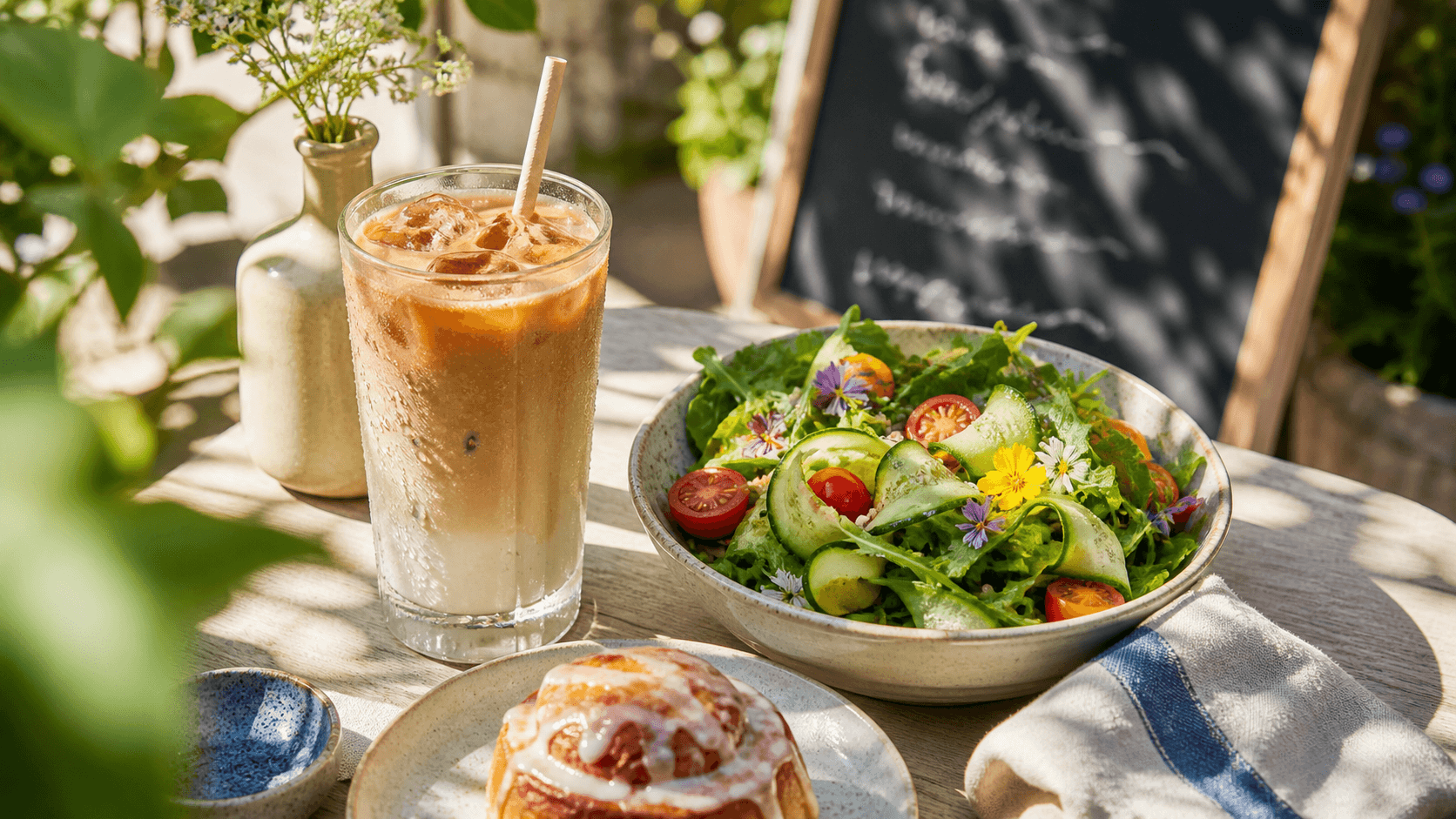
You notice it on a Tuesday. The hot chocolate sales have fallen off a cliff and the soup of the day is sitting in the bain-marie at 2pm, untouched. You scroll back through the till data and realise the shift started two weeks ago. Summer is already here, and your menu is still in February.
This is the moment most independents lose money they did not need to lose. Not because summer is hard, but because they reacted to it instead of planning for it.
The cafés that win summer plan the shift in May. Cold drinks SKUs in by 1 June. Outdoor seating sorted before the first warm weekend. A "summer special" board running. Winter items quietly retired. By the time the heatwave hits, the kitchen and the bar are already pointed in the right direction.
Here is the operational playbook.
The summer mix shift, in numbers
Across a typical UK independent café, the June to August window looks roughly like this:
- Hot drink volume drops 20 to 30 percent versus the spring baseline
- Cold drink volume grows 40 to 60 percent
- Outdoor cover capacity, if you have any, lifts daily seat turns by 30 to 50 percent on the right days
- The lunch mix swings from hot plates and soups to salads, cold sandwiches and lighter shares
The financial weight of this is bigger than people think. A three-month summer trading window can swing your annual revenue by 10 to 15 percent either way. Get it right, and the second half of your trading year carries the first. Get it wrong, and you spend autumn trying to claw back what June, July and August quietly took.
For where this fits in the broader margin picture, see café gross profit margin benchmarks.
The cold drinks line-up to nail by 1 June
You do not need ten cold drink SKUs. You need the right six or seven, costed properly, and trained into the team.
Here is the core line-up:
- Iced latte. Non-negotiable. Espresso, cold milk, ice, served over a clear cup so the ice is part of the visual.
- Cold brew. Brewed overnight, served on its own or with milk. Higher margin than iced latte, lower labour at the bar.
- Iced matcha. Matcha plus milk plus ice. Premium price point, premium perceived value, low cost to make.
- Iced tea. Brewed properly, not from a syrup. House blend or a fruit infusion. The lowest cost SKU on the board.
- Frappé or blended drink. One indulgence option. High ticket, slow to make, so price it accordingly.
- Fresh juice. One or two options, ideally local supplier. Premium price.
- Bottled water and a sparkling option. People do not always want coffee in 28 degrees.
That is enough. More than this and you are adding training load, fridge space, and SKU complexity for diminishing returns. The argument for a tight menu is the same in summer as it is in winter, see why smaller menus make more money.
A quick costing reference. An iced latte costs you roughly £0.45 to make: an espresso shot, a serve of milk, ice, a clear cup and a straw. Sold at £4.20, that is a sub-12 percent food cost and a margin most hot drinks would envy. The full picture of cold versus hot drink margins is laid out in the real cost of a flat white.
When you add new SKUs, cost them properly before you put them on the board. How to price every dish properly walks through the mechanics, and how to set menu prices to protect margins covers what to charge.
The hidden modifier cost
Iced drinks come with hidden packaging cost. Clear cups are more expensive than paper takeaway cups. Straws, lids, sleeves, the stickers if you do takeaway labels. A £0.45 ingredient cost can quietly become a £0.70 served cost once you count the cup. Track it. The pattern is the same as syrups and milk swaps, see the hidden cost of modifier extras.
The ice problem
Ice is not free. People forget this. Ice is water, plus electricity to freeze it, plus wear on a machine that runs harder in summer than at any other point in the year.
A busy café can go through 20 to 40kg of ice a day in peak summer. That is real money on the utility bill, and a real maintenance bill if your ice machine fails in mid-July (it will, because it is the moment it always does).
Budget ice as a real cost line, not as "tap water". Your energy bill is going to climb anyway, see the café energy bill, what you can do.
Outdoor seating: the multiplier nobody plans for properly
If you have any outdoor capacity, summer is when it earns its keep. A four-table terrace can lift daily covers by 30 to 50 percent on a good day. That is a structural revenue lift, not a marketing one.
A few things to sort before June:
- Licensing. Check your pavement licence is valid and up to date. Renewals catch people out. Council websites are fiddly, do it in May. The full walkthrough on pavement licence renewals for summer 2026 covers fees, common rejection reasons, and the payback maths on extra outdoor covers.
- Weather contingency. A sudden downpour at 2pm should not write off your afternoon. Stack the chairs, get the cushions in, have a plan that one team member owns.
- Awning or umbrellas. UK summer is not just sun, it is also rain at 1pm and sun at 3pm. Movable umbrellas beat a fixed awning for most independents.
- Heaters. The question is whether you keep them out. My answer is yes, for the chilly evenings and the shoulder weeks in May and September. Your insurance must be up to date if you do.
- Drinks-only or full menu outside. Decide. A drinks-only outdoor service is much easier to run with one extra pair of hands.
The labour load of outdoor service is the bit that catches people. You need a runner, not just the same staff stretched thinner. This connects directly to hiring summer staff for cafés, which you should be doing in April and May, not in the panic of late June.
The lunch shift
Hot lunch volume drops in summer. People do not want a bowl of stew when it is 26 degrees outside. They want something they can eat in a park, on a bench, walking back to the office.
Reweight the lunch menu:
- More grab-and-go salads. Pre-portioned, in a clear bowl, in the chiller. Visible from the queue.
- More cold sandwiches. Less of the toasted, hot-pressed stuff that takes a panini grill at peak.
- Lighter hot plates. A grain bowl, a frittata slice, a quiche with salad. Not a heavy curry.
- Sharing boards. Especially if you have outdoor tables. People eat slower and order another drink.
Pull back on the heavy stews, the soups, the rich curry plates. Run them less often, in smaller batches, and be willing to delist them entirely on the hottest weeks.
The data side of this is straightforward. Your top 20 percent of items will shift in summer, and the items that earn their place change with the weather. The Pareto framing for that is in sales mix Pareto and menu engineering.
The bakery shift
Same logic, different cabinet. Dense rich bakes do not move in summer. Light, fruity, fresh bakes do.
Lean into:
- Iced buns
- Fruit tarts and seasonal fruit scones
- Plain scones with cream and jam
- Fruit traybakes (lemon drizzle, raspberry and almond)
- Meringues and pavlovas
Pull back on the heavy chocolate cakes, the sticky toffee pudding, the dense brownies. They are still on the menu, just in smaller batches. Bake to demand, not to habit.
The "summer special" board
A rotating three-item summer special board is one of the highest-leverage things you can do in June. It does three jobs at once:
- Gives you a headline. Something on a chalkboard, on Instagram, on the A-board outside.
- Lets you use seasonal ingredients at their cheapest and best (strawberries, peas, broad beans, peaches, courgettes).
- Gives the team something to talk about, which is the easiest upsell on a quiet Wednesday.
Three items, rotating every two to three weeks, with a clear price point. One drink, one savoury, one sweet is a clean format.
The winter items to delist by mid-June
This is the part most independents avoid because it feels like reducing choice. It is not. It is freeing up cabinet space, fridge space, prep time and mental load for the SKUs that actually sell in summer.
Off the menu by mid-June:
- Hot chocolate (or down to one option, not three)
- Mulled drinks of any kind
- Heavy soups
- Heavy curry plates
- Dense, rich winter bakes (sticky toffee, treacle tart, etc.)
- Pumpkin, apple, cinnamon-led seasonal items
Clear the stock, freeze what you can, donate or staff-meal the rest. Do not let it sit there at half pace dragging margin.
The supplier conversation in May
Your produce suppliers know this shift is coming. The conversation in May is what locks in your June and July margin.
What to lock in:
- Cold-pressed juice. Local supplier if you can. Volume commitment in exchange for a better wholesale price.
- Salad greens. Local growers come into season in May and June. Fresh, lower cost, better story.
- Soft fruit. Strawberries, raspberries, blueberries from a local grower. Seasonality is your friend on price.
- Iced tea base. Either a tea wholesaler you trust or your own house blend recipe.
- Cup and packaging supplier. Clear cups, straws, lids. Pre-order in May, do not wait until you are out in July.
Have the conversation with each supplier early. The growers in particular have limited capacity and they allocate it to the cafés that ask first.
Energy management
Your fridges work harder in summer. Your espresso machine runs warmer. The lights might be on less but the cooling load is much higher. Expect your energy bill to move 10 to 20 percent in peak summer months versus shoulder season.
Things to check in May:
- Fridge door seals (a worn seal is 15 percent more energy)
- Ice machine service
- Espresso machine descale and service
- Air conditioning service if you have it
The full breakdown on energy is in what you can do about your café energy bill.
The till setup and the VAT angle
If you are VAT-registered, the seasonal mix shift has a real VAT consequence. Iced coffee taken away is treated differently to iced coffee sat in. Cake takeaway is VAT-free, hot food takeaway is not. The summer trade leans more takeaway than the winter trade does, which means the VAT mix on your till can swing materially.
Set the till buttons up properly before June, train the team, and the cash impact is real. The full breakdown is in the iced coffee, takeaway cake, summer VAT angle and worth reading if you are VAT-registered.
One summer VAT story to not lose sleep over is the temporary children's-meal cut. It grabs headlines, but for most indies it is built for the chains and not worth reshaping your menu around.
The staffing implication
Summer is the season cafés most often understaff. Half-term weeks, school holidays, the odd heatwave that turns Tuesday into Saturday, your existing team taking their own holidays. And the heatwaves are getting less "odd" by the year - June 2026 broke England's temperature records, and the trade data showed heat moving sales between venues, dayparts and products at speed. The maths does not work without bringing on seasonal cover.
Plan the hiring in April. Onboard in May. Run them on the rota by end of May. The full piece on this is hiring summer staff for cafés.
A May to September calendar
Here is the rough sequence I run, condensed.
| Month | Key actions |
|---|---|
| Early May | Service ice machine, fridges, espresso machine. Hire seasonal staff. Renew pavement licence. Talk to produce suppliers. |
| Mid May | Cost new cold drink SKUs. Order packaging (clear cups, straws, lids). Set up till buttons. Onboard new hires. |
| Late May | Train the team on the cold drink line. Soft launch summer menu items. Set up the outdoor area. |
| 1 June | Full summer menu live. Winter items off. Summer specials board running. Outdoor service open. |
| June through August | Watch the mix weekly. Rotate summer specials every 2 to 3 weeks. Manage rota around heatwaves and school holidays. |
| Mid August | Start planning the autumn shift. Order soup base ingredients. Plan the September staff exit. |
| Early September | Start fading cold drinks back. Reintroduce one or two warming items. Plan the autumn menu launch. |
The last two rows run this whole playbook in reverse, and planning your September menu in August covers that side of the year in the same detail.
It is not complicated. It is just deliberate.
Where Brikly fits
The reason most cafés react late is that they cannot see the mix shift in the data until it has already happened. By the time the monthly P&L lands, you are six weeks behind.
MenuBrik shows you the mix shift week over week, by item and by category, so you can see the cold drink uplift building before it becomes obvious in the till total. You spot the swing in week one, not week six.
CostingBrik costs new SKUs in minutes, not hours. When you want to add an iced matcha, a watermelon cooler, or a new salad bowl, you cost it properly first and price it to your target margin, rather than guessing.
PulseBrik tracks your summer revenue versus last summer, week by week, so you know whether the new menu is actually working. If June is tracking 8 percent behind last year, you find out in week two of June, not in October.
StaffBrik sits underneath the seasonal hiring, the rota for outdoor service, and the labour cost picture across the heatwave weeks.
The point of all of this is to take a season that runs cafés, and put the café back in charge of the season.
Ed O'Brien has run Hunters Cake Company for 17 years across cafés in Witney, Burford, and a bakery in Carterton, Oxfordshire. He's building Brikly - modular tools that give independent café owners the same data the big chains have, without the big chain price tag.