
Are You Charging Enough for Oat Milk, Syrups and Extra Shots? (Probably Not)
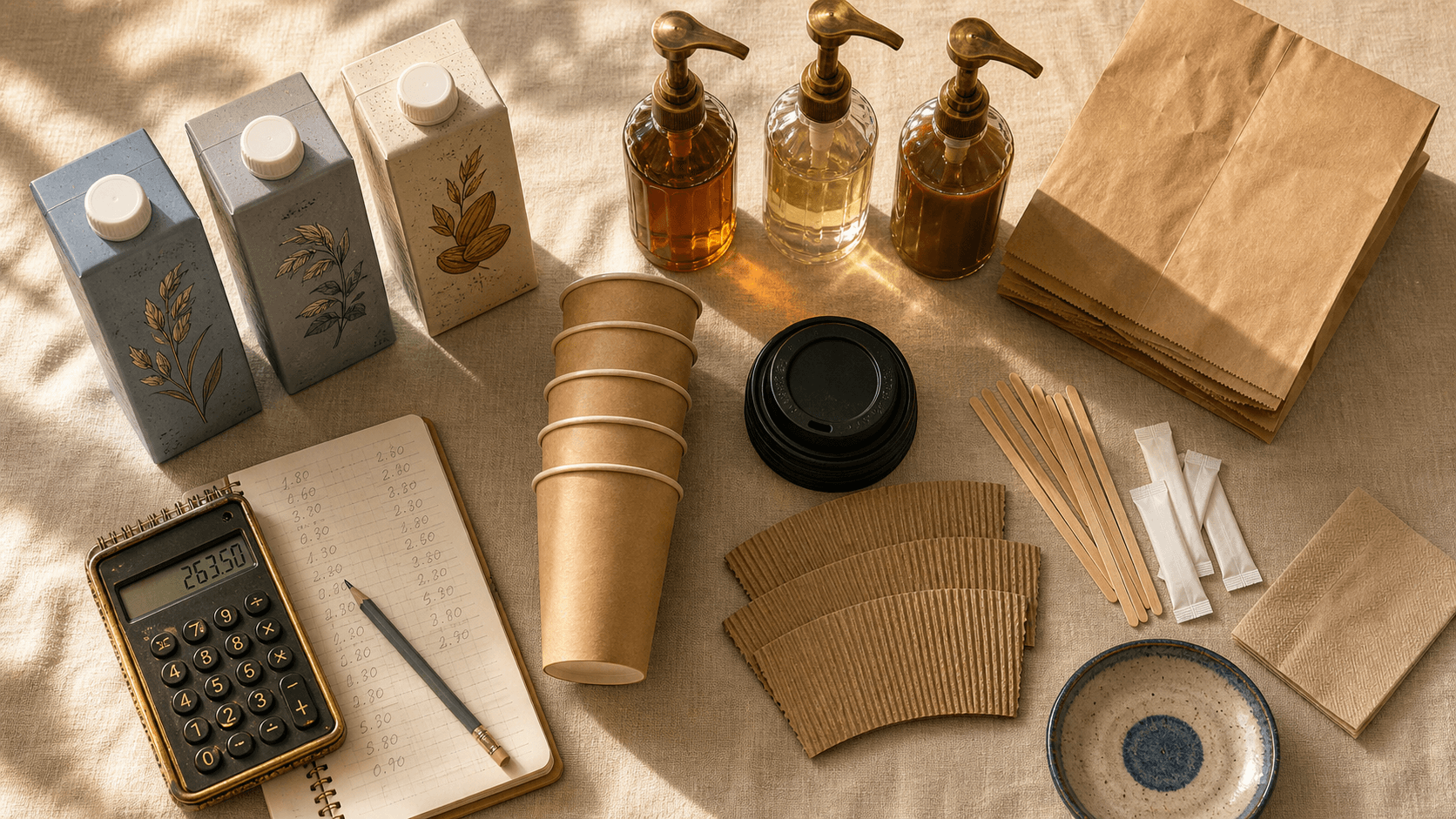
A customer walks in. Flat white with oat, vanilla shot, extra shot, takeaway please.
You ring it up. £4.00 for the flat white. The oat? Maybe 40p, maybe nothing if your team forgets. The vanilla? Set at 50p three years ago, never reviewed. The extra shot? Half the time it doesn't make it onto the till at all. They wave a card and leave.
Feels like a healthy ticket. Often it isn't.
The 40p oat surcharge was set three years ago when wholesale was different. The 50p vanilla pump was set when you launched syrups and has not been touched since. The extra shot is on the menu somewhere but the new starter does not know where to find it on the till. By the time the drink walks out the door you are routinely capturing less margin than the maths supports, sometimes by a long way.
This is a pricing decision you have already made, whether you meant to or not. Every uncharged modifier is a price set at zero. Every "vibe-based" surcharge is a price set without inputs. The question this post forces you to answer is: are those the prices you would actually choose, if you knew the numbers?
Almost always, no. Here is what to charge instead.
Why Most Cafés Underprice Modifiers
When you cost a flat white, you cost a flat white. You weigh the beans, you measure the milk, you pull a number. Maybe you have it in a spreadsheet.
What you almost certainly have not done is cost the eight different versions of that flat white that actually leave your counter.
Oat instead of dairy. A vanilla pump. An extra shot. A decaf swap. A 12oz over a 6oz. Each of these is a tiny pricing decision, and most cafés have ducked most of them.
The result is a menu where the headline recipes are profitable and the actual transactions, with all their real-world variants, are quietly underpriced. You have priced the theory. The practice is something else.
This is a different problem to the one I covered in the full P&L breakdown of a £4 flat white. That post showed how labour, rent and overheads chew into a clean ceramic flat white. This one is about what you should be ringing up when the customer adds three extras and walks out the door.
What to Charge: a Per-Modifier Reckoning
Here is a worked breakdown of the most common modifiers and packaging items, with realistic UK wholesale prices in early 2026. Figures are illustrative and your supplier will vary, but the orders of magnitude are right.
The "current typical" column is what most independents charge today. The "recommended" column is what the maths supports.
| Extra | Real cost to you | Current typical charge | Recommended charge |
|---|---|---|---|
| Oat milk swap (180ml flat white) | ~20p effective (incl. waste) | 40p | 40-50p |
| Oat milk swap (12oz iced or large latte) | ~35-40p effective | 40p | 60-70p |
| Almond milk swap | ~18p effective | 40p | 40-50p |
| Soy milk swap | ~12p effective | 40p | 40-50p |
| Vanilla / caramel / hazelnut syrup pump | 6-8p ingredient | 50p | 50p (already right) |
| Extra espresso shot | 26p (ingredient + labour) | 50p | 50-60p |
| Decaf swap | 18-22p ingredient differential | 0p (most cafés) | 30p minimum |
| Reusable cup discount | -19-26p saved on packaging | 0p | -25-30p |
| 8oz cup + lid + sleeve (takeaway) | 19-26p combined | absorbed | absorb, but factor into base drink price |
| Paper bag, stirrer, sugar, napkins | 8-13p combined | absorbed | absorb, but track |
Look at the "current typical" column. The decaf swap line is the loudest one - most independents charge nothing for it, on a category where the cost is materially higher than house beans. The large iced oat line is next: a flat 40p surcharge that was right for a 6oz flat white is genuinely undercharging by 20-30p the moment you go to a 12oz iced latte.
Walking Through One Real Transaction
Let's go back to the customer at the start. Flat white, oat, vanilla, extra shot.
The arithmetic if everything goes right on your current pricing: £4.00 + 40p oat + 50p syrup + 50p extra shot = £5.40. Lovely.
Now look at what actually happens across 100 of these tickets in a real café. Roughly 1 in 5 oat surcharges does not get rung up because the customer added it at the last minute and the order was already on the screen. Roughly 1 in 4 extra shots gets pulled but never charged because the till sequence on extras is buried two menus deep and a busy barista just makes the drink. The vanilla almost always lands, because syrups are visible on the screen.
Across 100 tickets, the maths says you should bill £540. You actually bill closer to £500 to £510. That is 30 to 40p of margin per ticket disappearing before you even get to the question of whether the underlying surcharges are right.
Now the second leak. Half of the same drinks the next day are ordered as 12oz iced oat lattes in summer. The 40p surcharge stays the same, but your oat differential just doubled to 35-40p, so the surcharge has stopped contributing. On those drinks you are not undercapturing margin - you are subsidising the customer.
On a café doing 200 modifier transactions a day, capturing the surcharges you have already set, plus uplifting the large oat lines, is comfortably £40-60 a day, £14,000-£20,000 a year of recovered margin. No price increase the customer would notice. Just the prices you have already chosen, actually being applied. It is one of the cleanest ways of lifting average spend per customer without adding a single new item to the menu.
That is not a hypothetical. That is sitting in the gap between your current modifier prices and the prices your inputs actually justify.
Where the 40p Milk Surcharge Falls Short
Most cafés land on 40p for plant milk because the café down the road charges 40p. It is a vibe. It is not a number anyone has worked from inputs, which is why whether to charge extra for oat milk deserves its own reckoning - charge it, absorb it, or blend it into the base price, but decide on purpose.
For a 6oz flat white, 40p is roughly defensible. The differential vs dairy is around 18-22p once you factor in the higher waste rate (oat splits more, baristas dump more pitchers, the carton is harder to use to the last drop). 40p covers that and contributes margin.
Where it breaks down is in three specific situations - and these are exactly where you should reprice.
- Iced lattes and large oat lattes. A 12oz iced oat latte uses nearly twice the milk of a 6oz flat white. The 40p surcharge stays the same. Your differential cost just doubled. Charge 60-70p on any drink with double milk volume. The size step underneath the modifier deserves the same scrutiny, because what 40p to go large actually earns you varies enormously by drink.
- Surcharges that have not been reviewed since 2023. Oat wholesale moved meaningfully across 2024 and 2025. If your 40p was set when oat was £1.40 a litre and it is now £2.00+ a litre, the surcharge stopped covering its differential a long time ago. Pull a recent invoice and re-derive the number from inputs, not memory.
- Decaf swaps. Decaf beans cost 20-30% more than house. A "free" decaf swap is a quiet 20p hit on every order, on a category your customer is happy to pay for. Charge 30p minimum. Most customers expect to pay it.
If you want a deeper view on why "food cost percentage" alone misleads you on these decisions, the food cost percentage guide walks through where the metric breaks down on variants.
Packaging Is Probably Not a Surcharge - But Don't Pretend It's Free
A quick note on takeaway packaging, because every post like this attracts the suggestion to "just charge 30p for the cup" and most independents instinctively know that is the wrong move.
In an indie café, slapping a packaging surcharge onto a £4 takeaway flat white is a customer-trust hit you usually cannot afford. Pret can do it. The chain on the corner can do it. Your local regulars will quietly start going somewhere that doesn't.
But ignoring the cost is also wrong. Compostable 8oz cups have crept up to 12-15p. Lids 4-6p. Sleeves 3-5p. A paper bag is another 5-8p. You are handing over 20-30p of packaging on every takeaway, and on a site doing 200 takeaways a day that is roughly £14,000 to £20,000 a year of cost sitting outside most people's recipe spreadsheet. On delivery orders it is worse again, because the packaging and a 25-35% platform commission stack on top - we pull that apart in the real cost of Deliveroo and Uber Eats for a café.
Two realistic levers, neither of which involves a surcharge:
- Factor packaging into your base drink price when you next review the menu. If your takeaway-heavy site has a 70% takeaway mix and 25p of packaging per drink, that is roughly 17p of cost per average drink that needs to be in the price. Most independents have not done this calculation in years.
- A reusable cup discount. Same maths from the other side. 25-30p off if they bring their own. The customer feels rewarded, you save the packaging cost, and the message is "we're rewarding good behaviour" rather than "we're surcharging you for existing."
Whatever you do, get the cost on paper. Pull a disposables invoice, divide by units, and write the number down. Suppliers have pushed prices on cups hard in 2025-26, often without operators noticing because the line item is buried in a "disposables" total. There's a practical guide to handling supplier price increases that goes into this.
There is also a VAT angle on takeaway food and hot drinks that catches a lot of operators, especially through summer when iced drinks and takeaway cake spike. Worth understanding the VAT rules around iced coffee, takeaway cake and summer margin before you reprice anything else.
When "Free" Is the Right Answer (And When It Isn't)
Sometimes the right answer is "no surcharge." Free oat milk is a marketing position. Free decaf swaps are a hospitality choice. Free packaging is, well, increasingly rare but still a choice.
The trap is not choosing not to charge. The trap is not knowing the cost of the policy you are running.
If you offer free oat milk and 35% of your drinks are now oat (which is roughly where many independents are sitting in 2026), that is a margin policy worth £6,000 to £12,000 a year on a typical café. That is fine if you have decided to spend it. It is catastrophic if you have not.
Pick the modifiers you absorb deliberately, and price the ones you do not.
A defensible "absorbed but tracked" list for most cafés:
- Sugar sachets, stirrers, napkins (small per-unit, high goodwill)
- Takeaway packaging (price it into the base drink instead of surcharging)
- Single shot of decaf at the same price as house (only if your decaf cost is genuinely close)
A defensible "paid" list:
- All plant milks
- All syrups
- Extra shots
- Decaf when you have done the maths and your beans are 20-30% dearer
- A reusable cup discount (it pays for itself, and customers love the framing)
If You Reprice and Don't Train, You Capture Nothing
Even if your prices are right, you are losing roughly 5-10% of modifier revenue because baristas do not ring them in.
It happens like this. Counter is busy. Customer says "oat please" while paying. The barista nods, makes the drink with oat, but the till already shows the basic flat white because the customer ordered it 30 seconds earlier. The 40p surcharge never gets added. Every fifth oat drink is invisible.
You will find this in your data if you go looking. Compare oat milk litres purchased to oat surcharges rung up. The gap is real.
Two fixes that work:
- POS modifiers as required steps, not optional. If the drink type is "latte," the till asks "milk?" before the order can be sent to the bar. No skipping.
- Weekly modifier reconciliation. Pull oat surcharges by week, divide by oat drinks expected from milk usage. Anything below 90% capture is a training conversation, not a blame conversation.
This kind of variance only shows up if you are looking at sales mix properly. The Pareto approach to sales mix and menu engineering covers this in more depth. The other half of the leak is the free-pour itself, where loose portioning quietly erodes margin even with no theft at all.
A Framework for Repricing Extras This Month
If you have read this far and your modifiers have not been touched in 18 months, here is a tight plan you can run in two evenings.
Step 1: Pull invoices for the last 90 days. Identify every milk, syrup, cup, lid, sleeve, bag, stirrer and sachet. Calculate the per-unit cost from the most recent invoice, not the oldest.
Step 2: Build a single "modifiers and packaging" sheet. One row per item, columns for cost, current charge, new charge. Don't try to redo your entire menu, just this one slice.
Step 3: Reprice anything with a cost differential over 10p. Don't be greedy. The aim is not to extract more from each customer. It is to stop subsidising the customer who orders three extras at the cost of the customer who orders none.
Step 4: Get packaging into your COGS, even if you absorb it. Add cups, lids, sleeves and bags as costed ingredients on your takeaway recipes so the cost shows up in your margin maths. Decide separately whether to introduce a reusable cup discount.
Step 5: Reconfigure your POS to require modifier selection. No "skip" option on milk, syrups or cup type. This is where the real revenue leak gets plugged.
Step 6: Communicate the change to staff before customers. They need to understand why, not just what. A 30-minute briefing pays for itself in a week.
For the deeper recipe work behind this (treating each variant as its own costed item rather than an afterthought), there is a full guide to recipe costing for UK cafés that pairs naturally with this exercise. And if you want to test the maths before you commit, there is a free recipe costing tool you can run a few variants through in ten minutes. This matters more than ever as functional add-ons like protein cold foam and adaptogen shots move onto cafe menus - we covered why they are a margin opportunity only if you price them cleanly in the 1 June Weekly Grind.
Where Brikly Fits
Modifiers and packaging are a data problem before they are a pricing problem. You cannot reprice what you cannot see.
CostingBrik treats every variant of every recipe as its own costed line. An oat flat white is a different recipe to a dairy flat white. A takeaway oat flat white with a sleeve and a bag is a different recipe again. When you upload an invoice, the cost on every variant updates automatically: oat milk price moves up 8p a litre, every drink that uses oat repriced overnight, with the margin impact flagged.
Packaging gets its own ingredient category, so cups, lids, sleeves and bags show up in your COGS the way they should - not buried in a "disposables" lump that nobody opens.
MenuBrik then pulls sales mix from your POS and tells you which modifiers are actually being rung up versus which ones should be, based on the milk you are ordering. If you bought 40 litres of oat last week and rang 92 oat surcharges, MenuBrik will tell you the 30 to 40 surcharges that walked out the door uncharged.
PulseBrik rolls all of it into your weekly P&L view, so the day after you reprice extras you can see whether margin actually moved.
The work in this post is doable on a spreadsheet over a weekend. The work to keep it accurate, week after week, as supplier prices drift and oat market share grows, is what software should do for you.
Ed O'Brien has run Hunters Cake Company for 17 years across cafés in Witney, Burford, and a bakery in Carterton, Oxfordshire. He's building Brikly - modular tools that give independent café owners the same data the big chains have, without the big chain price tag.