
Tea Is Your Best-Margin Drink - So Why Is It an Afterthought?
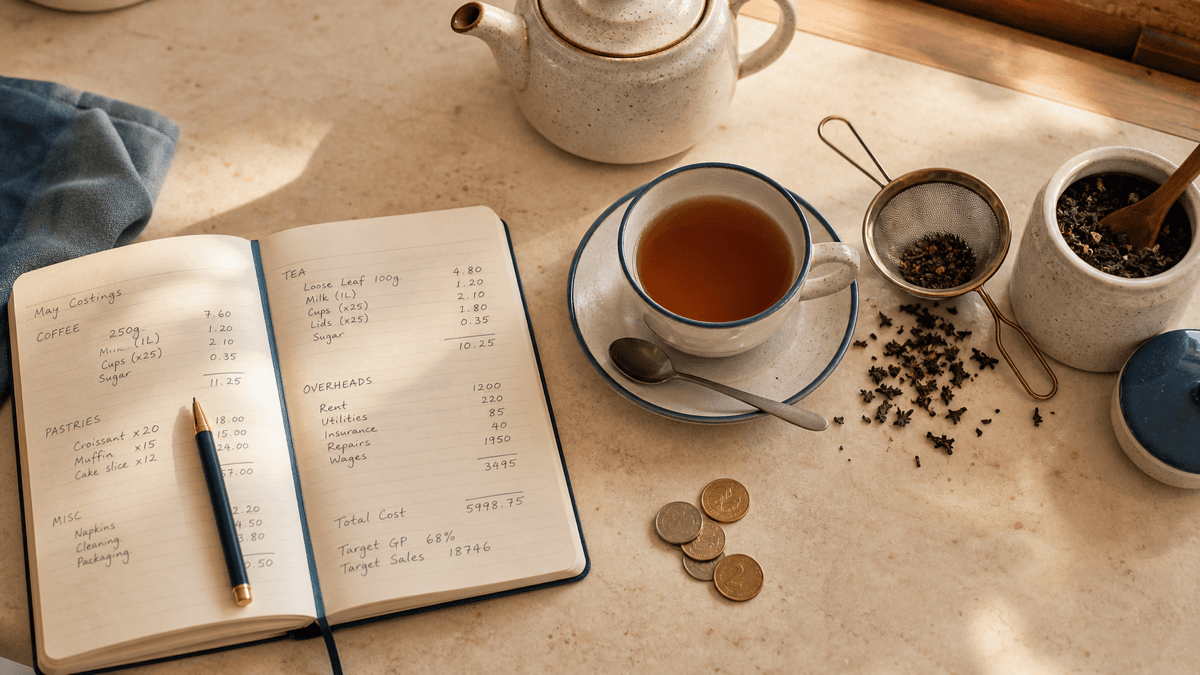
You can probably tell me your coffee margin to the penny. You've weighed your dose, argued with your roaster about price, fretted over milk wastage and yield.
Now tell me what you make on a pot of tea.
Most operators go quiet at that point. Tea is the drink nobody costs. It gets a flat price, picked years ago, and then it sits there - quietly throwing off the best gross profit on your entire menu while you stare at the espresso machine.
Let's fix that.
The drink you stopped looking at
A standard pot of tea is one or two teabags, or three to four grams of loose leaf. Hot water. Maybe a splash of milk.
That's it. There's no portafilter to dial in, no steam wand to clean, no 18g dose to weigh. The ingredient cost is rounding-error small.
Yet the pot still sells for the same kind of money as a coffee. The result is a margin that, frankly, looks too good to be true. It isn't. You've just never put it on paper.
So let's put it on paper.
The real numbers
Take a pot of English breakfast made with two bags. Decent catering teabags run somewhere around 1.5 to 4.5p each at wholesale, so call the tea 3 to 9p. We'll use 6p to be safe.
It sells for £3.20 over the counter.
That £3.20 is VAT-inclusive. Hot drinks consumed in are standard-rated, so you pull the VAT out first - every figure below is ex-VAT, the only honest way to read a margin.
- Ex-VAT turnover: £3.20 / 1.2 = £2.67
- Ingredient cost: £0.06
- Ex-VAT gross profit: £2.67 - £0.06 = £2.61
- Gross margin: £2.61 / £2.67 = 97.8%
A near-98% ingredient gross margin. On a drink you barely think about.
Tea versus the flat white, line by line
Here's the comparison that should change how you see your menu. Both drinks priced at £3.20 in, both figures ex-VAT, both showing ingredient cost only. Numbers are illustrative UK 2026 figures - swap in your own.
| Per drink (ex-VAT) | Pot of tea | Flat white |
|---|---|---|
| Menu price (inc. VAT) | £3.20 | £3.20 |
| Ex-VAT turnover | £2.67 | £2.67 |
| Coffee / tea cost | £0.06 | £0.32 |
| Milk cost | - | £0.18 |
| Total ingredient cost | £0.06 | £0.50 |
| Ex-VAT gross profit | £2.61 | £2.17 |
| Ingredient GP margin | 97.8% | 81.3% |
The flat white is a strong drink - I broke down exactly where a coffee's money goes and 81% ingredient margin is healthy. But the teapot beats it by over 16 points and nearly 44p of cash gross profit per serve.
Let's be honest about the catch. Tea has lower throughput - fewer people order it, and a pot tends to occupy a table longer while someone reads the paper. So it earns its margin more slowly per cover.
But the labour to make it is almost nothing. Bag, pot, hot water, done. No skill, no shrinkage, no 30-second milk routine. On a cash-per-minute-of-staff-time basis, tea quietly holds its own.
Leaf versus bag, and why it matters
The maths above used teabags. Loose leaf changes the story in your favour, not against you.
Three to four grams of a good loose-leaf tea might cost 8 to 15p a serve at wholesale - more than a bag, but still trivial. The difference is what it lets you charge.
A "pot of loose-leaf Assam, served with a strainer and a timer" reads as a considered product. A teabag in a metal pot reads as an afterthought. Same near-zero ingredient cost, but one justifies £3.50 and the other gets apologised for at £2.20.
The under-pricing habit
Here's the bit that actually costs you money. Walk into most cafés and you'll see coffee at £3.20 and tea at £2.20.
There's no costing behind that gap. It's habit, and a bit of guilt - tea feels like it should be cheaper because it's "just" hot water and a bag.
But your customer isn't buying ingredients. They're buying a warm drink, a seat and ten minutes. That's worth the same whether it's coffee or tea in the cup.
Charging £2.20 for a pot of tea instead of £3.00 - both menu prices including VAT - hands back about 67p of pure gross profit ex-VAT on every single pot. Across a year of tea orders that's a meaningful number, and it cost you nothing to leave on the table except a pricing decision you never made. Pricing by deliberate margin rather than by habit is the single cheapest profit lever you have.
Tea can sit much closer to your coffee price than you think. Most operators are pleasantly surprised how little resistance a 20p uplift on tea actually meets.
Herbal and fruit infusions: cheaper still
Peppermint, chamomile, berry infusions - these are often cheaper per serve than black tea, because there's no milk and the leaf weight is small.
Yet they carry a "wellness" feel that lets you price them the same as your standard tea, or higher. A £3.50 fresh mint tea (actual mint leaves, hot water, a few pence of ingredient) is one of the best-margin lines you can put on a menu.
If you've got fresh herbs in the kitchen anyway, the marginal cost of a fresh infusion rounds to nothing.
Where the margin quietly leaks
A 98% margin gives you room to be generous - and that's exactly how it leaks away if you're not paying attention.
- Pot-for-two and free top-ups. A pot you refill twice with hot water costs you nothing extra in tea, so top-ups are basically free margin. But a "pot for two" served as two bags for the price of one pot is giving away a whole serve. Decide which it is.
- Milk. A jug of milk on the side is pennies, but it's pennies you should account for. The same "small extras add up" logic that makes modifiers and add-ons quietly eat your margin on coffee applies to the milk jug too.
- Refill policy. Free refills on a £3 tea sound generous and harmless. They are harmless on ingredient cost, but they extend table time without extra spend - the hidden cost is the cover, not the cup.
None of these will sink you. The point is to make them decisions, not accidents.
The one place tea actually wins on waste
Brewed-and-binned tea is almost nothing. A pot that goes cold and gets tipped costs you a few pence of leaf and some hot water.
Compare that to coffee, where every textured-but-unused milk jug, every pulled-and-dumped shot, is real money down the drain. Tea's waste profile is about as forgiving as it gets in this trade. One more quiet point in its favour.
What to do this week
You don't need a project. You need four small decisions.
- Cost your teas properly. Weigh the leaf, note the pot size and any milk, and write down the actual ingredient cost per serve. It'll be tiny - that's the point.
- Re-price deliberately. If your tea sits well below your coffee, close the gap. Pull the VAT out and set the price on what the drink is worth, not on what the bag cost.
- Build a small, considered range. A few good teas and a couple of infusions, presented with a bit of care, beats a long list nobody reads.
- Tell your staff to suggest it. "We've got a lovely loose-leaf Assam" turns a near-zero-cost product into turnover. Tea sells itself once someone mentions it.
Where Brikly fits
The reason tea gets ignored is that nobody ever costs it - it feels too small to bother with. That's exactly backwards, and it's the kind of blind spot tooling is good at fixing.
CostingBrik lets you cost each tea as a proper recipe - leaf weight, pot size, milk on the side - so you stop guessing on the one drink with your best margin. If you just want to see the maths for yourself first, the free recipe costing tool will run a pot of tea against a coffee in a couple of minutes.
Then MenuBrik shows tea inside your actual POS sales mix, so you can see how much of your turnover the teapot is quietly carrying. Once you can see it sitting there - high margin, low waste, treated as an afterthought - you'll never under-price it again.
The takeaway: tea is the highest-margin drink in most cafés and the least-examined. Spend twenty minutes costing it and re-pricing it deliberately, and you'll find profit that was sitting in your teapot the whole time.
Ed O'Brien has run Hunters Cake Company for 17 years across cafés in Witney, Burford, and a bakery in Carterton, Oxfordshire. He's building Brikly - modular tools that give independent café owners the same data the big chains have, without the big chain price tag.