
Cocoa up 130%: how indie cafés are protecting brownie and mocha margins
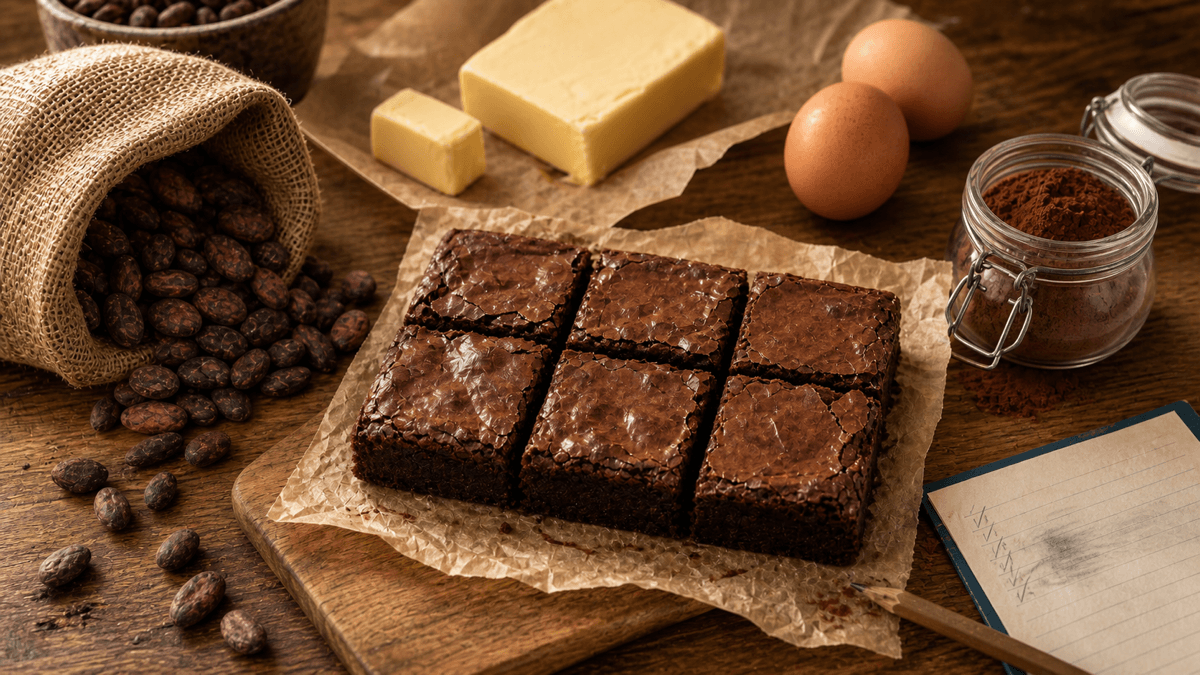
Cocoa futures sat around $2,400 a tonne in 2023. They blew past $11,000 in 2024, and even after easing through 2025 and into 2026, they're still well above any historic norm you'd have planned around.
That matters because most indie cafés costed their brownie, their mocha, their chocolate cake when chocolate was cheap. If you haven't touched those recipes since, the maths has quietly turned against you on every chocolate-heavy item on your menu.
This isn't a doom piece. It's a practical playbook for getting margin back without scaring off customers or gutting your menu.
What actually happened to cocoa
Two short paragraphs of context, then we get to the response.
West Africa grows around 70% of the world's cocoa. Ivory Coast and Ghana had back-to-back poor harvests driven by erratic rainfall, ageing trees, and the spread of cocoa swollen-shoot virus. Supply tightened sharply while global chocolate demand kept climbing.
The futures market did what futures markets do and overshot. Wholesale prices for couverture, cocoa powder, and chocolate chips followed with a lag. Most UK bakers' suppliers have pushed through multi-pound-per-kilo increases since early 2024, with another round through 2025. Some lines have come back a little in 2026, but nothing close to pre-2024 levels.
Where it hits your menu
Anything cocoa-touching is in scope. The usual suspects:
- Brownies and blondies (especially double-chocolate)
- Mochas and hot chocolates
- Chocolate cake, ganache toppings, frostings
- Chocolate chip cookies, choc-chunk cookies
- Tiffin, rocky road, chocolate-dipped biscotti
- Anything finished with a chocolate drizzle, dusting, or shaving
Drinks are sneaky too. A mocha that uses 25g of chocolate sauce or 15g of powder per serve eats margin quietly across hundreds of cups a week. Multiply by the number of mochas you sell and the impact is usually bigger than the brownie line.
The 15-minute audit
Before you change anything, you need to know which items are still pulling their weight and which aren't. This part is short and unglamorous.
- List every menu item that contains cocoa, chocolate, couverture, cocoa powder, or chocolate sauce.
- Pull your most recent invoice price for each chocolate ingredient. Not last quarter's, not the price you remember - the one on the most recent delivery.
- Recost each recipe at today's prices.
- Compare the gross margin now to what you originally targeted.
You'll usually find two or three items doing badly and one or two that have quietly become loss-leaders. If you're calculating food cost percentage the same way you always have, the recost will look painful but honest.
If you're doing this manually, give yourself a morning. If you're using recipe costing software that already tracks supplier prices, it's closer to fifteen minutes because the prices are current and the maths is done.
The four response options
Once you know which items are bleeding, you have four levers. Most operators end up using two or three together, not just one.
1. Recipe reformulation
The cheapest lever to pull, and the one most operators ignore for too long.
- Swap 70% couverture for 55% on lines where the chocolate isn't the hero (cookies, tiffin, rocky road). The cost difference per kilo is meaningful and most customers won't notice.
- Use good cocoa powder instead of melted chocolate where the recipe allows. Brownies are surprisingly forgiving here.
- Reduce chocolate chunks slightly and bulk with chopped nuts, oats, or fruit. A brownie with a few well-placed chunks reads as more indulgent than one with a high uniform chunk count.
- For mochas, audit your chocolate sauce yield per serve. Most cafés over-pour by 20-30%.
Pros: invisible to the customer if done well, preserves your price point, keeps margin. Cons: takes a bake-off session to get right, and you need to be honest about which lines tolerate it and which don't.
2. Portion adjustment
A 50g brownie square at £3.50 and a 35g brownie square at £3.50 are both viable products. The question is whether your customer would clock the difference.
- For traybakes, a 10-15% portion reduction is usually invisible if the visual presentation stays generous.
- For mochas and hot chocolates, standardise your sauce or powder pump. Eyeballing is where the real leak is.
- Don't shrink a hero product to the point it looks mean. A tired-looking brownie damages the whole counter.
Pros: fast to implement, no recipe change. Cons: has a ceiling - past a certain point customers notice and resent it.
3. Raise the price
The lever everyone is most nervous about and the one that usually works fine when done well.
If your brownie has gone from a 68% gross margin to a 48% gross margin, a 30p increase doesn't just claw back margin - it signals confidence. Done with a small menu refresh and a steady hand, raising café prices without losing customers is a non-event for most regulars.
Pros: directly restores margin, doesn't compromise the product. Cons: psychological barriers (yours more than theirs, usually), and you can only do it cleanly once or twice a year.
4. Sub or rotate
Sometimes the right answer is "not right now". Drop the double-chocolate cookie for a quarter and lean into a seasonal alternative. Run the chocolate cake as a weekend-only special. Replace the mocha with a hazelnut latte that uses cheaper inputs.
Pros: zero margin risk, can refresh the look of your counter. Cons: you lose the regulars who came in for that specific item. Use sparingly and tell customers it's coming back.
Negotiating at indie scale
You don't have a chain's volume, but you have more leverage than you think.
- Talk to your account manager directly. Most bakers' suppliers have indie account managers who'd rather hold a customer than win one. Ask what their best price is on a 13-week forward commitment.
- Split between two suppliers. Carrying a secondary supplier for cocoa products gives you a real price comparison every week and a hedge if one of them takes a sharp increase. It also gives your primary supplier a reason to sharpen their pencil.
- Forward order if you trust the price. If your supplier will lock in a price for 8 to 12 weeks, that's a real cost benefit and a planning win.
- Ask about own-label or contract pack lines. Many suppliers have a value couverture that performs identically to the branded line at 15-20% less.
There's more on this in the supplier price increase negotiation guide - the principles apply directly to cocoa.
The systems piece
Here's the thing about a cocoa spike: there will be another one. Maybe coffee next time, maybe dairy, maybe oils, maybe eggs, which sit in almost every line on a brunch menu at once - and in fact it took less than two months for this prediction to land, when cocoa futures jumped 14% in a day on El Nino crop fears in July 2026. Indie operators who got caught flat-footed in 2024 mostly got caught because they didn't have a system that surfaced the price drift early.
This is the gap CostingBrik exists to close. Every invoice that comes in updates ingredient prices automatically, every recipe using that ingredient recosts in the background, and margin drift on each menu item is visible on a dashboard you can scan in thirty seconds.
It means the next time a key ingredient moves 30% in a quarter, you see it the week it happens, not six months later when you finally do a manual recost and realise three of your top sellers are now losing money.
Bake the new normal in
The instinct after a price spike is to wait it out. With cocoa, that instinct is wrong. Even if futures soften further through 2026, you're not getting back to 2023 prices on a five-year view. Climate pressure on West African cocoa belts isn't going anywhere, and demand isn't either.
The operators who'll come out of this in good shape are the ones who treat the new price as the price, recost everything against it, and rebuild their menu maths from there. The ones who hope it'll come back are the ones who'll still be quietly losing margin twelve months from now.
If you want a broader view of how food inflation is moving across categories this year, the 9% food inflation in 2026 piece covers what else to keep an eye on.
The takeaway
- Cocoa is roughly 3x its 2023 baseline and not coming back any time soon.
- Every chocolate-heavy item on your menu needs recosting if you haven't done it recently.
- You have four levers: reformulate, reportion, reprice, rotate. Most cafés need two of them.
- Negotiate harder than you think you're allowed to. Split suppliers if you can.
- Build a system that catches the next one early, because there will be a next one.
Spend an hour on this next week. The brownie alone will pay you back by the end of the month.
Ed O'Brien has run Hunters Cake Company for 17 years across cafés in Witney, Burford, and a bakery in Carterton, Oxfordshire. He's building Brikly - modular tools that give independent café owners the same data the big chains have, without the big chain price tag.