
How to Cost a Cake Properly: Yield, Slices and the Traybake Margin Most Cafés Guess At
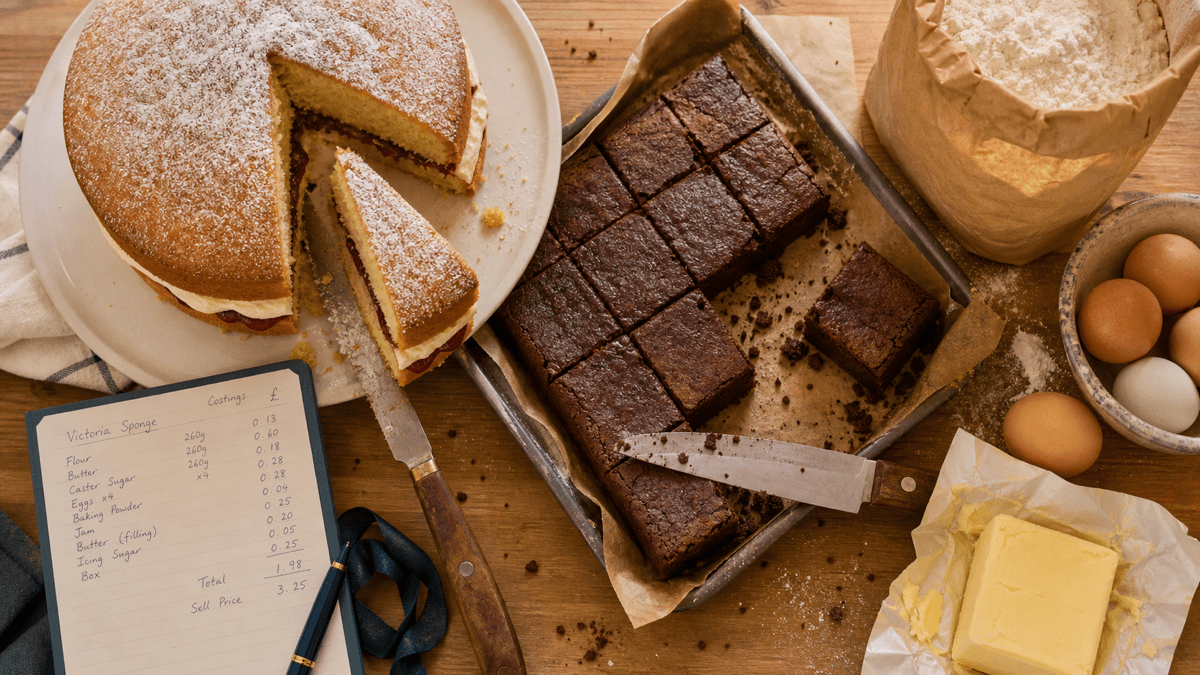
Ask most café owners what their flat white makes and they'll tell you to the penny. Ask them what a slice of Victoria sponge makes and you get a pause, then a guess.
I've run Hunters Cake Company for 17 years, and for a long time I was that owner. We costed coffee like surgeons and costed cake like we were doing someone a favour. The cake sold, the counter looked full, and nobody asked the awkward question: is this slice actually making money, or just making the place look nice?
Cake is where the soft margins hide. A whole sponge costs more than you think, and you sell fewer slices off it than you planned. Get both wrong and a cabinet that feels like a profit centre quietly leaks all day.
Here's how to cost a cake properly - whole recipe first, then down to the slice.
The Real Scenario: One Victoria Sponge
Let's cost a classic two-layer Victoria sponge, the kind that sits proudly in the cabinet at 9am.
It's a simple bake, which makes it a good teacher. There's nothing exotic to hide behind - just flour, butter, sugar, eggs, jam, cream and a dusting of icing sugar. If you can't make money on a sponge, the fancy stuff won't save you.
All the numbers below are illustrative UK 2026 trade prices, ex-VAT. Your suppliers will differ, but the method is the point.
Here's a typical recipe for one 8-inch sponge:
- 400g self-raising flour
- 400g unsalted butter
- 400g caster sugar
- 8 medium eggs
- 150g raspberry jam (filling)
- 200ml double cream (filling)
- 20g icing sugar (dusting)
- A splash of vanilla
Costing the Whole Cake, Line by Line
Most ingredients come in bulk, so you cost the portion used, not the pack you bought. This is the same line-by-line discipline behind costing any dish on your menu - cake is no different, it just has more layers.
| Ingredient | Quantity used | Trade pack (ex-VAT) | Cost used (ex-VAT) |
|---|---|---|---|
| Self-raising flour | 400g | £0.65 / kg | £0.26 |
| Unsalted butter | 400g | £7.20 / kg | £2.88 |
| Caster sugar | 400g | £1.10 / kg | £0.44 |
| Medium eggs | 8 | £2.80 / dozen | £1.87 |
| Raspberry jam | 150g | £4.50 / kg | £0.68 |
| Double cream | 200ml | £3.40 / litre | £0.68 |
| Icing sugar | 20g | £1.40 / kg | £0.03 |
| Vanilla | splash | - | £0.10 |
| Total ingredient cost per cake | £6.94 |
So one whole sponge costs roughly £6.94 in ingredients. Notice butter and eggs alone are £4.75 of that - nearly 70%. When your invoice shows butter creeping up, this is the cake that feels it first, which is exactly why a cake margin you set last spring is probably already wrong.
The Yield Trap: 12 Slices on Paper, 10 in the Till
Here's the bit almost everyone gets wrong.
You cut the sponge into 12. So you divide £6.94 by 12 and call your slice cost 58p. Tidy. Also untrue.
You don't sell 12 slices. You sell what's left after reality takes its cut:
- The two end pieces are smaller and people leave them
- The first slice is always a bit wonky and goes to staff or the bin
- A slice or two crumbles when the sponge is fresh and soft
- You cut the odd sample for a regular deciding what to have
- And yes, staff pick at the offcuts (be honest)
Realistically, off a "12-slice" sponge you sell about 10 clean slices. That's your sellable yield, and it's the number that actually matters.
So the honest maths is £6.94 divided by 10, not 12.
Cost Per Slice, Price and GP
Now we can build the real picture. Say you sell a slice at £4.20 on the counter.
Pull the VAT out first. Eat-in cake is standard-rated, so divide by 1.20 to get the ex-VAT price: £4.20 ÷ 1.20 = £3.50 ex-VAT.
| Line | Figure (ex-VAT) |
|---|---|
| Ingredient cost per cake | £6.94 |
| Sellable slices | 10 |
| Ingredient cost per slice | £0.69 |
| Slice price (£4.20 inc VAT ÷ 1.20) | £3.50 |
| Gross profit per slice | £2.81 |
| Gross margin | 80% |
An 80% ingredient-only GP looks fantastic - and on paper it is. But "ingredient-only" is doing a lot of heavy lifting in that sentence. We haven't paid the baker or the oven yet, and we haven't counted what didn't sell.
If you want to sense-check this against the rest of your menu, an ingredient-only food cost percentage of around 20% is healthy for cake - but treat it as a starting line, not a finish line.
Traybakes: Cost the Tray, Count the Real Cuts
Brownies, flapjack and millionaire's shortbread follow the same logic, with one twist: the trimmed edges.
Take a tray of brownies. Illustrative ingredient cost for the whole tray, ex-VAT:
| Ingredient | Cost used (ex-VAT) |
|---|---|
| Dark chocolate | £3.60 |
| Butter | £2.50 |
| Sugar | £0.60 |
| Eggs | £1.40 |
| Flour & cocoa | £0.55 |
| Total per tray | £8.65 |
You'd cut that tray into 15 squares. But you trim the crispy edges off all four sides to get clean squares for the counter, and the corners are never quite right. Real saleable count: about 12 good squares.
- £8.65 ÷ 15 (cut count) = £0.58 per square - the comfortable lie
- £8.65 ÷ 12 (saleable) = £0.72 per square - the truth
At £3.60 a brownie inc VAT, that's £3.00 ex-VAT, so £3.00 - £0.72 = £2.28 GP per square on ingredients. Still strong, but 14p a square lower than the cut-count fantasy. Across a busy weekend that gap is real money.
Keeping the squares a consistent size matters here too - a tray cut by eye drifts, and inconsistent portions quietly distort your margins and annoy regulars who notice today's slice is meaner than last week's.
Labour and Oven Energy: The Costs Nobody Cuts In
Baking labour is real, and it's lumpy. A sponge isn't a flat white you pull in 30 seconds. Someone weighs, creams, fills tins, watches the oven, cools, fills and dusts.
Say that sponge takes 20 minutes of hands-on baker time, spread across the bake. At a fully-loaded baker cost of around £18/hour (wage plus employer NI and pension), that's £6.00 of labour for one cake, or 60p per sellable slice.
Suddenly the picture shifts:
- Ingredient cost per slice: £0.69
- Labour per slice: £0.60
- True cost before energy: £1.29 per slice
Then there's the oven. A commercial oven on for a long bake might draw a couple of kilowatt-hours; at illustrative 2026 rates that's perhaps 30-40p of energy per bake, call it 4p a slice. Small per slice, but you're running that oven all morning across every cake.
Properly costing the baker's time per cake matters because the wage is only the start of it - employer NI, pension and holiday accrual all sit on top of the hourly rate.
Waste and Shelf Life: The Margin Killer at Close
Cake doesn't keep. A sponge with fresh cream is a one-day product. Brownies stretch to two if you're lucky.
So the slices you don't sell aren't break-even - they're a straight loss against everything that did sell. If you make a sponge a day and routinely bin two slices, you've lost £7 of price (ex-VAT) a day off that one line - the thick end of £40 across a six-day week, straight out of your real margin.
The fix isn't to stop baking. It's to bake to demand and plan the tail end of the day - smaller afternoon bakes and sensible day-two markdowns, so a slice sells at a discount rather than dies at full price.
When you plan your week, assume a realistic sell-through, not a hopeful one. If you sell 10 of 12 and waste 1, your true sellable yield for pricing purposes is closer to 9. Build that in and your numbers stop lying to you.
Sellable yield is one loss; the bake itself is another. A sponge leaves the oven lighter than the batter that went in, and that same shrink applies right across a kitchen, from roasts to reduced sauces. The general method for costing on finished cooked yield works the same way you've priced the slice here.
Bought-In vs Made-In-House: An Honest Look
Not every cake has to come out of your oven. A quick, honest comparison:
Made in-house
- Lower ingredient cost, higher GP on paper
- Real labour and oven cost you must account for
- Full control of quality, size and story ("we bake it here")
- Waste and consistency are entirely your problem
Bought-in
- Higher unit cost, lower headline GP
- Zero baking labour, predictable portions, longer shelf life
- Less waste risk if it's frozen-to-order
- Harder to differentiate - your neighbour may sell the same slice
There's no universal right answer. A signature bake that draws people in earns its labour. A slow-selling line you make from scratch out of habit might make more money bought-in frozen, baked off as needed, with far less waste.
What to Do This Week
You don't need a spreadsheet weekend. Start with your three best-selling cakes:
- Cost each one by recipe - every ingredient, costed on the amount used, ex-VAT.
- Set a realistic sellable yield - count what you actually sell off a cake, not the cut count.
- Price per slice for a target GP - decide your margin, then back into the price (remember to add VAT on at the end).
- Account for labour and oven time - even roughly, so you know the true cost, not just the ingredient cost.
- Track waste - count binned slices for one week. That number will change how you bake.
Do that for three cakes and you'll learn more about your cabinet's real profit than you have in years. And if one of those three is your gluten-free brownie or a vegan bake, cost it as its own product - free-from lines carry very different costs and deserve their own price.
Where Brikly Fits
This is exactly the maths CostingBrik is built for. You enter the cake recipe once and set the sellable yield - 10 slices, not 12 - and it gives you cost per slice, GP and margin, all ex-VAT, without you touching a calculator.
The part that saves you most is what happens next. When your butter, egg or flour prices change on an uploaded invoice, CostingBrik recalculates the affected recipes automatically. Your cake margin is never six months out of date, because the moment the dairy invoice lands, every sponge and brownie reflects the new cost.
If you just want a quick first pass on one cake before committing to anything, the free recipe costing tool will get you a cost-per-slice figure in a couple of minutes. Start there, see the gap between what you charge and what it really costs, and go from gut feel to actual numbers.
Your coffee GP has been watched like a hawk for years. Your cake deserves the same.
Ed O'Brien has run Hunters Cake Company for 17 years across cafés in Witney, Burford, and a bakery in Carterton, Oxfordshire. He's building Brikly - modular tools that give independent café owners the same data the big chains have, without the big chain price tag.