
The Summer VAT Cut Isn't Really a Hospitality Policy
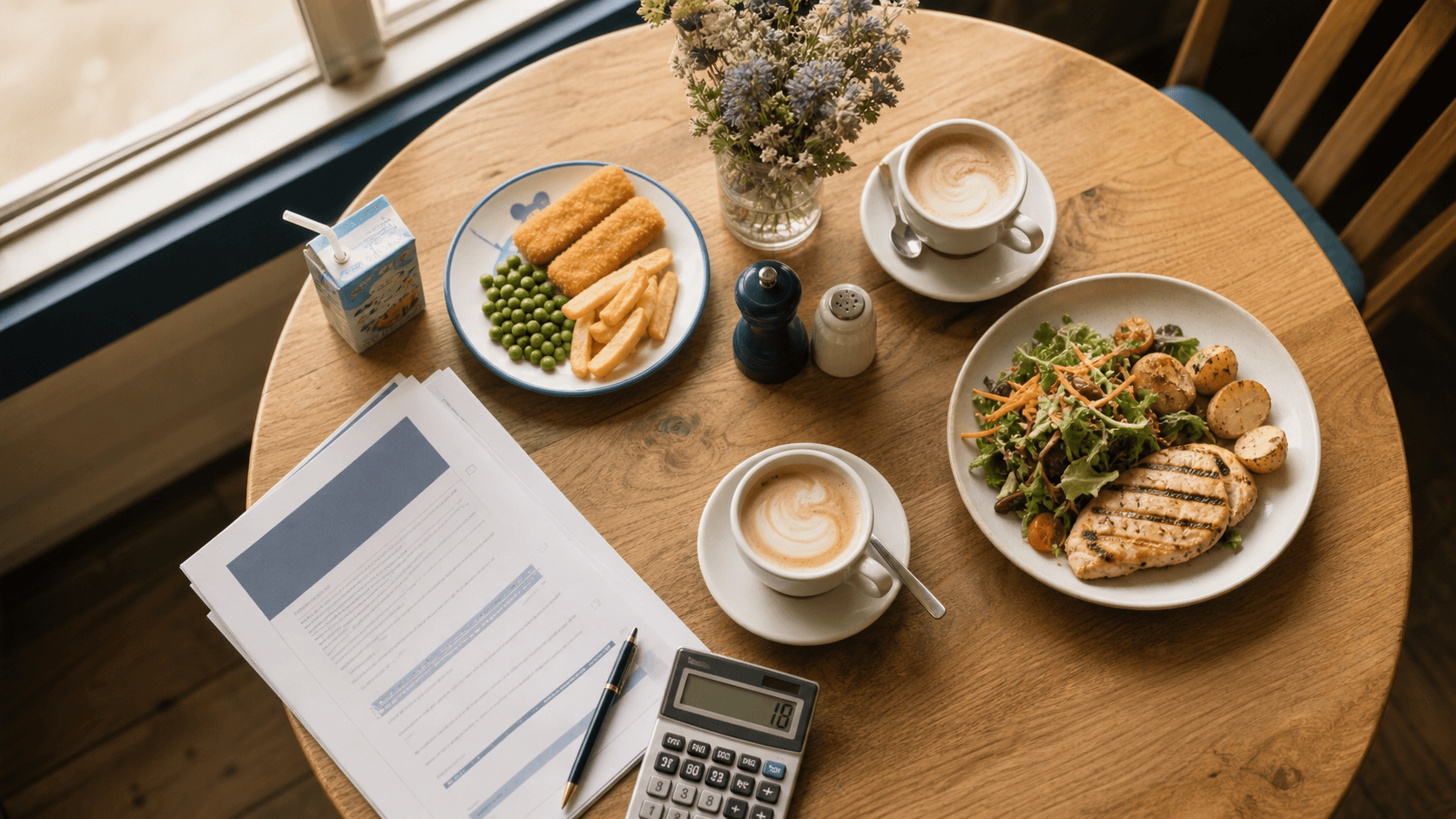
By next Friday there will be 200 blog posts telling you how to claim the new summer VAT cut. Accountancy firms, trade press, the chains' own marketing teams - everyone is about to publish the same "here's how to reconfigure your till" piece.
This is not that post.
We've read the brief so you don't have to, and here is the honest version: for most independent cafés, the right response to this policy is to understand it, nod, and carry on exactly as you were. Not because you're missing a trick, but because the trick was never written for you.
Let me show you why.
What the policy actually is
On 25 June 2026, a temporary reduced rate of VAT comes in. It runs until 1 September 2026 - roughly ten weeks of summer trading. It's set out in Revenue and Customs Brief 5 (2026).
It does two things:
- Cuts VAT from the standard 20% to 5% on qualifying children's meals eaten in
- Cuts VAT to 5% on admission tickets to family attractions and children's tickets for theatres, cinemas, concerts and shows
That's it. It's a temporary, targeted reduced rate. Not a zero rate, not a blanket hospitality cut like the 2020 to 2021 emergency measure. Just children's meals and family days out, for ten weeks.
Read the eligibility rules and you'll see who it's for
This is where it gets interesting. To qualify for the 5% rate, a children's meal has to clear two tests. The brief's wording:
- The meal is "held out for sale only as a meal for children"
- The meal is "supplied as part of catering services... for consumption on the premises" - so eat-in only
And it explicitly excludes:
- Meals "marketed as smaller portions" of adult dishes
- "Lower-calorie options" and "discounted versions of adult meals"
- "Shared meals intended for both adults and children"
- Anything taken away
- Anything including alcoholic drinks
HMRC is clear that what matters is "how it is marketed, presented and priced rather than who consumes it" - the example they give is a meal "being included on a distinct children's menu."
Now read that list again and picture the business it describes. A distinct, separately printed children's menu. Eat-in only. No takeaway. Not just a half portion of the adult dish. A formalised, ring-fenced kids' offer with its own pricing and its own menu real estate.
That's a Wetherspoons. That's a Harvester, a Brewers Fayre, a Beefeater. It is not your average Cotswold coffee shop, where "the kids' option" is a smaller portion of the pasta or beans on half a slice of toast, made up on the spot by whoever's on the pass.
This isn't an accident or an oversight. Treasury writes policy for the operators it can see, and the operators it can see are the chains - the ones with national menu structures, dual VAT coding already built into head-office EPOS, and a finance team who can absorb a ten-week rule change without breaking sweat. The eligibility criteria are essentially a description of how a mid-market chain restaurant already operates.
The maths, on a £46 family bill
Let's say a family of four comes in for lunch. Two adults, two kids, eat-in. The bill comes to £46:
- Two adult mains and two coffees and a slice of cake: £33
- Two children's meals at £6.50: £13
Only the £13 could ever qualify. The £33 of adult food and drink stays at 20%, summer or not.
So what's the prize on that £13?
- Today, at 20%, that £13 contains £2.17 of VAT. You keep £10.83.
- At 5%, if you hold the menu price, the VAT drops to £0.62. You keep £12.38 - about £1.55 of extra margin per family.
- At 5%, if you pass it on, the family pays £11.38 instead of £13. They save about £1.63.
That's the whole opportunity. A pound and a half on a £46 bill. To even get the saving up to a clean £2, you'd need the children to put away more than £16 of qualifying food in one sitting - a lot of fish fingers.
And that's before you've spent a penny capturing it. Nothing about this number meaningfully moves your unit economics. It is rounding-error margin, available for ten weeks, on one slice of one type of transaction.
Why the chains will own the summer story (and why that's fine)
The chains will market the daylights out of this, and good luck to them. They've been running "kids eat for £1" promotions for years. This just hands them a louder, government-shaped PR hook to bolt onto a thing they were already doing. Expect "kids eat for less this summer" plastered across every retail park in the country by July.
Here's the thing: you were never competing for that custom anyway. The family doing the school-holiday circuit of soft play and chain carvery is not the same customer as the regular who comes to you for a proper flat white and a quiet half hour. Letting the chains own the £1.50-a-table summer narrative costs you nothing, because that narrative was never aimed at your tables.
Trying to muscle into it, on the other hand, can cost you quite a lot.
The trap: don't bolt on a kids' menu to chase £1.50
Here's the move to resist. You read about the relief, you think "I should introduce a proper children's menu to capture this," and suddenly a ten-week, pound-and-a-half opportunity has triggered a permanent change to your operation.
Count the real cost of qualifying:
- Reprinting menus to carry a distinct, separately priced children's section
- Retraining staff to ring children's meals through on a different VAT code, and to know which items qualify, on top of the standing risk that a menu change quietly drops the eat-in VAT rule off a till item
- Reconfiguring your EPOS for dual-rate coding on a sub-category - the same fiddly eat-in versus takeaway coding work I cover in the complete guide to café VAT, but for a category you may not even want
- Brand drift - pulling a calm, grown-up café format toward a customer mix you deliberately didn't build for
You'd carry all of that, permanently, to chase 30p to 60p a cover for ten weeks. The setup cost and ongoing complexity dwarf the upside, and the format change outlasts the policy by years. For the overwhelming majority of indies, this is a textbook case of effort flowing to the thing that's in the news rather than the thing that makes money. If anything, this is a summer to look hard at why a tighter menu makes more, not less.
The real summer VAT lever for a café isn't kids' meals at all. It's the eat-in versus takeaway split on iced drinks and cake, which genuinely moves margin as your mix shifts in the heat. I've written about that one separately, because unlike this, it's worth your attention.
Where it does actually matter
There's one group of operators who should pay attention, and it's a specific one: destination cafés sitting next to a family attraction.
If you're the coffee stop by the soft play, the café inside the garden centre, the kiosk at the zoo or the farm park, this policy will reach you - just indirectly. The 5% cut on attraction tickets means families have a bit more left in the day's budget after a cheaper day out. Cheaper admission tends to mean a slightly looser hand at the on-site café afterwards. You won't claim a penny of the relief yourself, but you may feel it in summer footfall and average spend.
If that's you, the move isn't to chase the VAT code. It's to make sure you're positioned to catch the families coming off a cheaper attraction with money still to spend - the right grab-and-go range, the right pacing at peak, enough cold drinks stock. That's an operations question, not a tax one, and it's exactly what turning the school holidays into family trade without denting your margin walks through for the August weeks.
The real summer question
Strip away the headline and this policy is a families-with-kids cost-of-living measure, delivered through chain restaurant infrastructure, wearing a hospitality badge. It's the same shape as the broader campaign to cut hospitality VAT to 10%: as the awkward maths of who actually benefits shows, the biggest cheques go to the biggest chains and nearly half of venues get nothing at all. For the business most of my readers run, the operator-correct response is to understand the structure and stay in your lane.
Your summer plan should be built around your actual customers - the regulars, the locals, the people who'd come back whether or not there was £1.50 on the table. Get the summer mix shift right, get your cold-drink margins working, get your best people on during the busy weeks. That's where your summer is won or lost, not in a temporary VAT sub-clause written for someone else's business model.
Spend your summer thinking about your regulars, not your VAT codes.
Ed O'Brien has run Hunters Cake Company for 17 years across cafés in Witney, Burford, and a bakery in Carterton, Oxfordshire. He's building Brikly - modular tools that give independent café owners the same data the big chains have, without the big chain price tag.