
Catering and corporate orders: the margin-rich turnover most cafés ignore
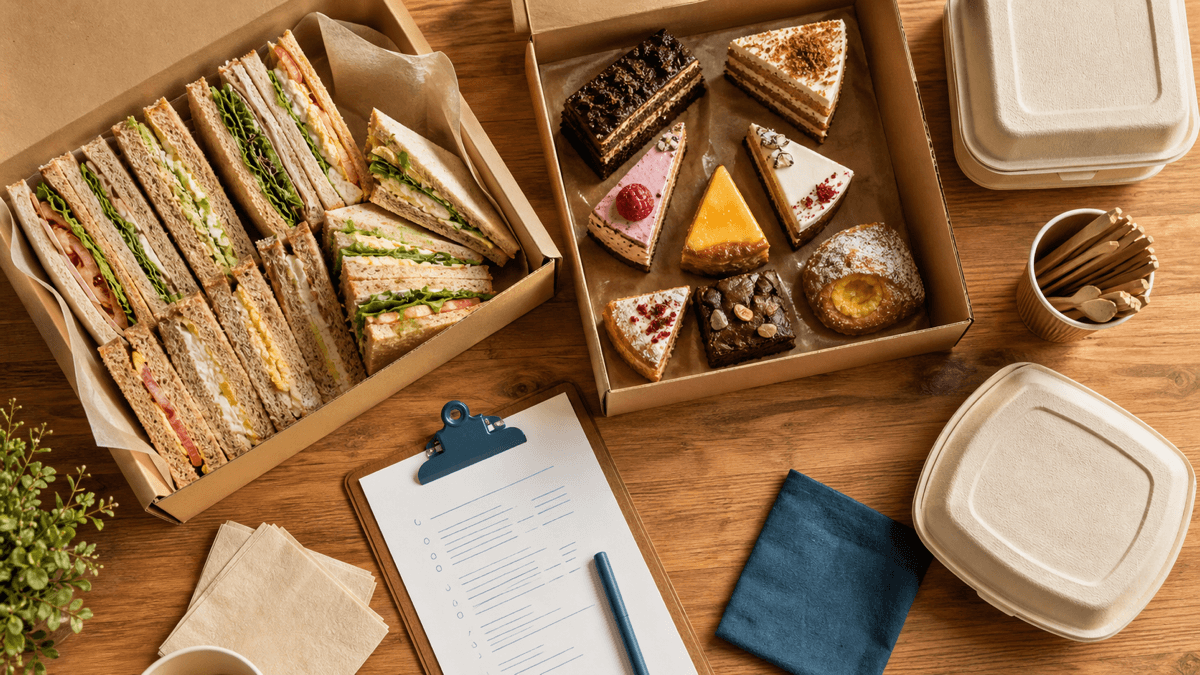
A solicitor's office two streets over rings every Thursday. Sandwich platter for twelve, a tray of cut cakes, flat whites to follow. One phone call, one delivery, one invoice. Settled monthly.
That single standing order is worth more to you than it looks. The platter and cakes alone run to £80-100. The same turnover across your counter is roughly twenty separate walk-in covers, twenty card taps, twenty conversations, twenty chances for the queue to put someone off.
This is the bit of the trade most independent cafés never lean into. And it is sitting right there, often made in the dead hours between the breakfast rush and lunch, using kit and skills you already own.
If you are a cake-led café, you are holding a winning hand and not playing it.
Why catering is the quiet growth lever
Walk-in trade is the business you can see. Someone comes in, buys a coffee, leaves. Lovely, but capped by your covers, your footfall, and the hours your door is open.
Catering breaks most of those limits at once.
- Higher average order value. A single office platter clears in one transaction what a dozen flat whites take all morning to earn.
- Predictable and often recurring. A standing weekly order is turnover you can forecast. You can buy for it, roster for it, and bank on it.
- Made in quiet hours. Most catering preps mid-morning or the afternoon before, when your kitchen is idle and your staff are already on the clock. That same idle capacity is what makes wholesale supply to other cafés, farm shops and delis worth a look once catering is running smoothly.
- No new kit. You have the oven, the fridges, the prep bench, the bakers. Catering sweats assets you have already paid for.
- Your product already fits. Cakes travel. Traybakes travel. Sandwiches and savouries travel. A cake-led café has the perfect catering range without inventing a single new line, and the same range can open up retail sales of beans, bakes and merch as another margin-rich revenue line alongside it.
The forward-looking version of this is a café that is no longer purely at the mercy of footfall and weather. Catering is one of the cleanest routes to a business that earns more without simply being busier - the same instinct behind building a café that runs without you.
But there is a catch, and it is the reason most operators who dabble in catering quietly give up. A big order that looks brilliant on the order pad can be barely profitable once you do the real maths. So let's do the real maths.
How to cost a catering menu properly
Here is the mistake nearly everyone makes first: they take their retail menu prices and multiply by quantity.
Twelve sandwiches at your £4.50 counter price, so £54. A tray of cakes, call it £30. Job done.
It isn't. Retail prices are built for someone walking in and serving themselves out the door. A catering order carries costs your counter price never has to.
Catering pricing has to absorb at least five things your retail price ignores:
- Assembly labour. Building a platter, cutting and arranging cake, packing it so it survives a car boot. This is real, paid time, and it is not the same time you spend handing a coffee across the counter.
- Packaging and disposables. Platter trays, boxes, greaseproof, lids, labels, napkins, serviettes, maybe disposable plates. Per-head it adds up fast and it never appears on a retail recipe.
- Delivery. Someone drives there and back. That is wages, fuel and the opportunity cost of pulling a person off the floor for half an hour.
- A minimum order. Below a certain size, the fixed costs of prep and delivery eat any margin. You need a floor.
- A deposit on big or bespoke jobs. Not a cost exactly, but the thing that stops a £400 wedding order evaporating the day before and leaving you holding the ingredients.
If you have already done the groundwork of costing every dish on your retail menu, you are most of the way there. A catering item is just a recipe with extra cost lines bolted on - packaging, an assembly allowance, a slice of delivery.
A worked example: the order that looked great
Let's take that Thursday office order and cost it honestly.
The order: sandwich platter for twelve, plus a tray of sixteen cake portions. Delivered.
First, the lazy version. Retail prices times quantity.
- 12 rounds of sandwiches at £4.50 retail = £54
- 16 cake portions at £3.20 retail = £51.20
- Headline: £105.20. Feels like a great order.
Now the real version. We start from food cost, not retail price, then add what catering actually costs.
| Line | Real cost to you |
|---|---|
| Sandwich ingredients (12 rounds, ~95p food cost each) | £11.40 |
| Cake portions (16 at ~80p food cost each) | £12.80 |
| Packaging - platter tray, box, greaseproof, labels, napkins | £6.50 |
| Assembly labour - 45 min building and packing at ~£13/hr loaded | £9.75 |
| Delivery - 25 min round trip, driver wages + fuel | £6.50 |
| Total real cost | £46.95 |
So your true cost to fulfil this order is roughly £47, not the £24 of bare food cost the retail-multiplied version implicitly assumed.
If you priced this order on true margin rather than markup, and you wanted a gross margin of 60% on the order, you would price it at around £117 (cost ÷ 0.40). At that price you net about £70 on a job that took roughly an hour and twenty of staff time across prep, assembly and delivery.
Now watch what happens if you sleepwalk into "just charge retail." At £105 you have a margin that looks healthy but is quietly thin, and the moment delivery is across town instead of two streets away, or assembly runs long because it is a fiddly bespoke spread, that £70 of profit can halve. The order still looks like £100-plus turnover. The profit tells a different story.
Pricing for the channel
Here is the good news that balances all that caution. Catering is a convenience purchase, and convenience commands a premium.
The office ordering that Thursday platter is not price-shopping sandwiches. They are buying the fact that lunch for twelve arrives sorted, on time, no one has to leave the building, and the invoice is clean. That is worth paying for, and they know it.
So you can usually price catering above the food-cost-plus-margin floor, not just at it. The constraint is not what the customer will pay. The constraint is your own labour and delivery, which is exactly why you cost those properly first.
A few principles that hold up:
- Set a minimum order. Most cafés land somewhere between £30 and £50. Below that, prep and delivery overheads make the job not worth doing. A minimum is not rude, it is how you stay solvent.
- Charge delivery, or build it in. Either a flat delivery fee, or free delivery above a threshold with the cost already absorbed into your per-head pricing. What you must not do is deliver for free and forget you did.
- Price per head, simply. Operators and offices think in heads. "£9 a head for the working lunch platter" is easier to sell and easier to cost than a fiddly à la carte list.
- Premium for bespoke. Standard menu items are efficient. One-off custom requests eat time. Price the bespoke jobs higher, or they will be your worst-margin work.
The general discipline here is the same one that protects your counter margins. If you have read how to set menu prices that protect margins, apply the exact same thinking to catering, just with the extra cost lines in the model.
Practical operations
Catering falls over on logistics far more often than on food. Get the operational scaffolding right and the rest is just baking.
Lead times and cut-offs. Decide how much notice you need and hold the line. Forty-eight hours for standard platters, longer for big or bespoke jobs. Publish an order cut-off, for example "orders for next-day by 3pm." This is what stops a 4pm phone call wrecking tomorrow's prep plan.
A simple catering menu and order form. You do not need a glossy brochure. One clean page or PDF: a handful of platters and trays, priced per head, with your minimum order, lead time and delivery terms stated plainly. A short order form, even a Google Form or a WhatsApp template, captures the essentials: date, headcount, items, delivery address, contact, any allergens.
Deposits on big orders. For anything sizeable or bespoke, take a deposit up front. A 50% deposit on a £400 order means a last-minute cancellation does not leave you out of pocket on ingredients you have already bought.
Keep the range tight. A short, repeatable catering menu is efficient and consistent. A sprawling one is a margin trap. Resist the urge to say yes to every custom request, especially early on.
How to win the orders
You do not need a marketing budget. You need to tell the people already within a short walk of your door that you do this.
- Local offices. Solicitors, accountants, estate agents, dental practices, anyone who holds meetings and feeds people. A flyer through the door or a short email introducing your catering menu is often all it takes. Their Christmas bookings are the seasonal peak of this channel, and the cafés that win them start planning in July.
- Schools and nurseries. Staff training days, governor meetings, parent events. These are recurring and often loyal once you are the known option.
- Your existing regulars. The most underused channel of all. The customer who buys a flat white every morning also works somewhere that orders lunch for meetings. Tell them. A small card by the till - "We cater. Ask us about office platters." - turns footfall into leads for free.
- Repeat clients are the prize. One won standing order, the Thursday platter, is worth more than ten one-offs. Once someone trusts you to deliver on time, the relationship runs for years. Look after the recurring clients harder than you chase new ones.
A simple flyer or email to ten local offices, plus a card by the till, costs almost nothing and can seed the whole channel. This is organic, relationship-led growth, which suits an independent café far better than competing on ad spend.
Be honest about the pitfalls
Catering is genuinely additive margin when it is run well. It becomes expensive busywork when it isn't. The honest risks:
- Under-costed delivery and labour. Covered above, and it is the big one. A delivery across town in traffic can quietly turn a profitable order into a break-even favour.
- One-off bespoke orders that eat time. The "can you just do something special for..." requests feel flattering and pay badly. Price them properly or steer customers to standard items.
- Disruption to service. A catering prep that overruns into the lunch rush hurts your bread-and-butter trade. Catering must fit into quiet hours, not muscle into peak.
- Saying yes to everything. The path to a busy, unprofitable catering operation is paved with orders you should have declined or priced higher.
The goal is not to be busy. The goal is genuinely additive margin. If an order does not clear that bar once you have costed it honestly, you are allowed to say no.
Where Brikly Fits
Catering is a costing problem before it is a sales problem. The reason most cafés get it wrong is that they have no easy way to see an order's real margin before they commit to it.
CostingBrik lets you build each catering item as its own costed recipe. A platter for twelve is not your retail sandwich times twelve - it is a recipe with its own ingredient lines, plus a packaging allowance and a labour-and-delivery allowance built in. So when an office rings on Thursday, you can see the real margin on the order before you say yes, not work it out sadly three weeks later.
MenuBrik then pulls the picture together over time, showing you which catering lines actually pay and which ones are quietly costing you. If your bespoke spreads are eating hours for thin margin while the standard platters carry the channel, MenuBrik will tell you, so you can lean into the work that earns.
The maths in this post is doable on paper for one order. Keeping it honest across a growing catering book, as ingredient and packaging costs drift, is the part worth handing to software.
Ed O'Brien has run Hunters Cake Company for 17 years across cafés in Witney, Burford, and a bakery in Carterton, Oxfordshire. He's building Brikly - modular tools that give independent café owners the same data the big chains have, without the big chain price tag.