
Selling retail: beans, bakes and merch as a second margin line
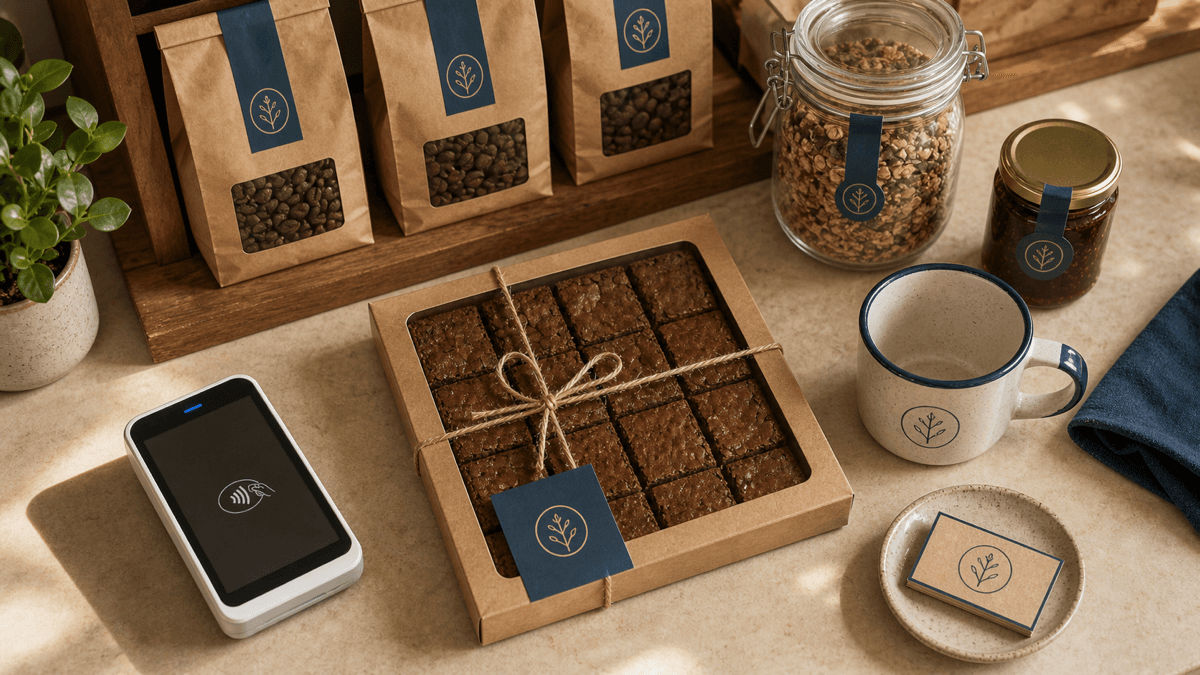
Every day, people walk past your counter who already trust your coffee and your baking. Some of them would happily take a bit of it home, if you gave them the chance.
Most cafés never give them the chance. The till is the last thing a customer touches before they leave, and it's usually surrounded by nothing but a card machine.
Retail fixes that. A bag of your beans, a boxed traybake, a jar of granola, a branded mug - it's a second margin line that runs off footfall you've already paid for. You're not finding new customers. You're letting the ones you have spend a little more on the way out.
The opportunity you already own
The expensive part of any café is getting someone through the door. Rent, marketing, the hours you spend making the place somewhere people want to be. Once they're standing at your till, the cost of selling them one more thing is close to nothing.
Retail captures spend that would otherwise walk straight out the door. It also travels. A flat white can't leave the building, but a bag of beans goes home, gets brewed for a fortnight, and reminds someone of you every morning. Boxed bakes and jars of something nice make easy gifts, which is why they sell so well near Christmas and on the way to a dinner party.
You don't need a farm shop. One or two lines done properly will do more than a cluttered shelf of things nobody picks up.
How the margin actually works
Retail margin is not the same shape as the margin on what you serve to eat in, and it helps to be honest about that.
The good news: there's no table service at the point of sale. Nobody carries it over, clears it, or wipes down after it. That labour cost, which quietly eats into your eat-in margin, mostly disappears.
The catch: you still carry the production cost, the packaging, and the risk. A bag has to be weighed, filled, sealed and labelled. A traybake has to be cut and boxed. And anything on a shelf has a shelf life - if it doesn't sell, you've made it for nothing. That waste risk is real and it belongs in your sums.
So retail often lands at a lower margin percentage than a coffee, but it's incremental turnover with very little extra service cost attached. The way to keep it sensible is to price on a clear markup with the full cost in front of you, the same discipline you'd use anywhere else. If you've not nailed that down yet, the difference between markup and margin is exactly where retail pricing goes wrong.
The VAT bit you can't skip
This is the part that quietly decides whether your retail line is worth doing, because getting the VAT wrong eats the margin you just worked out.
The short version: how you sell something can change its VAT rate, even when it's the same product.
The practical upshot: a slice of cake eaten in at a table carries 20% VAT, while the same cake boxed up to take home is usually zero-rated. Your till needs to know the difference, or you'll either overcharge customers or quietly hand HMRC money out of your own margin. This is fiddly enough that it's worth reading the full guide to VAT on food and drink for UK cafés before you set your retail prices, rather than after.
Cost it like a recipe
A retail product deserves the same treatment as anything on your menu. Cost it properly, then set the price deliberately.
That means counting everything:
- Ingredients or wholesale cost - what the beans, the bake, or the contents actually cost you.
- Packaging - the bag, box, jar, label, tie, sticker. It's small per unit and easy to forget, and it adds up.
- Labour to produce - the few minutes to weigh, fill, seal and label. Not zero, even if it feels like it.
Add those up to get your true unit cost, then decide your price on the margin you want, not on a round number that feels about right. This is the same costing discipline as a dish, which is why I cost retail lines in CostingBrik exactly the way I cost recipes - ingredients, packaging and labour in, price and margin out.
A worked example (illustrative numbers)
Say you box four brownies as a take-home traybake:
- Brownie ingredients for four: £1.60
- Box, greaseproof and sticker: £0.55
- Labour to cut, box and label: £0.45
- Total cost: £2.60
Sell it at £7.00 (zero-rated, take-home cake) and your margin is (£7.00 - £2.60) ÷ £7.00 = around 63%. That's a healthy second line for something made from the same batch you're already baking.
A retail bag of beans usually lands lower, often around 40% margin once you've covered the wholesale cost and the bag. Lower, but still found money on footfall you've already got. The point is to know the number before you price, not guess after.
Put it where people pay
A retail line only works if people see it at the moment they're reaching for their card.
- At the till, as an impulse buy. The shelf by the card machine is the most valuable retail space you own. Use it.
- Stocked and tidy. A gappy, dusty shelf says "don't bother." A full, neat one says "go on, then."
- Rotated for shelf life. Date your bakes and bags, sell oldest first, and don't let waste creep in behind the nice display.
- Tied to spend. A quiet "fancy a bag of these for home?" at the till is one of the cheapest ways of lifting average spend per customer you have.
Retail isn't the only line you can run off the business you already have, either. Take-home shelves and corporate and catering orders work on the same logic: more margin from the customers and kitchen you've already got. The step beyond your own counter is selling your bakes wholesale to other businesses - the same bakes out of the same oven, just on somebody else's shelf.
The takeaway
Retail is the rare thing in hospitality that costs almost nothing to start and compounds quietly once it's working.
Pick one or two lines you can stand behind - your beans, a boxed bake, a jar of something. Cost each one properly, ingredients and packaging and labour included. Check the VAT treatment so the margin you priced is the margin you keep. Then put it where people pay and keep it looking like you mean it.
One shelf, done with the same care as your menu, can add a margin line you'll wonder how you ever ran without.
Ed O'Brien has run Hunters Cake Company for 17 years across cafés in Witney, Burford, and a bakery in Carterton, Oxfordshire. He's building Brikly - modular tools that give independent café owners the same data the big chains have, without the big chain price tag.