
Making tourist season pay: pricing and menu tweaks for visitor-town cafés
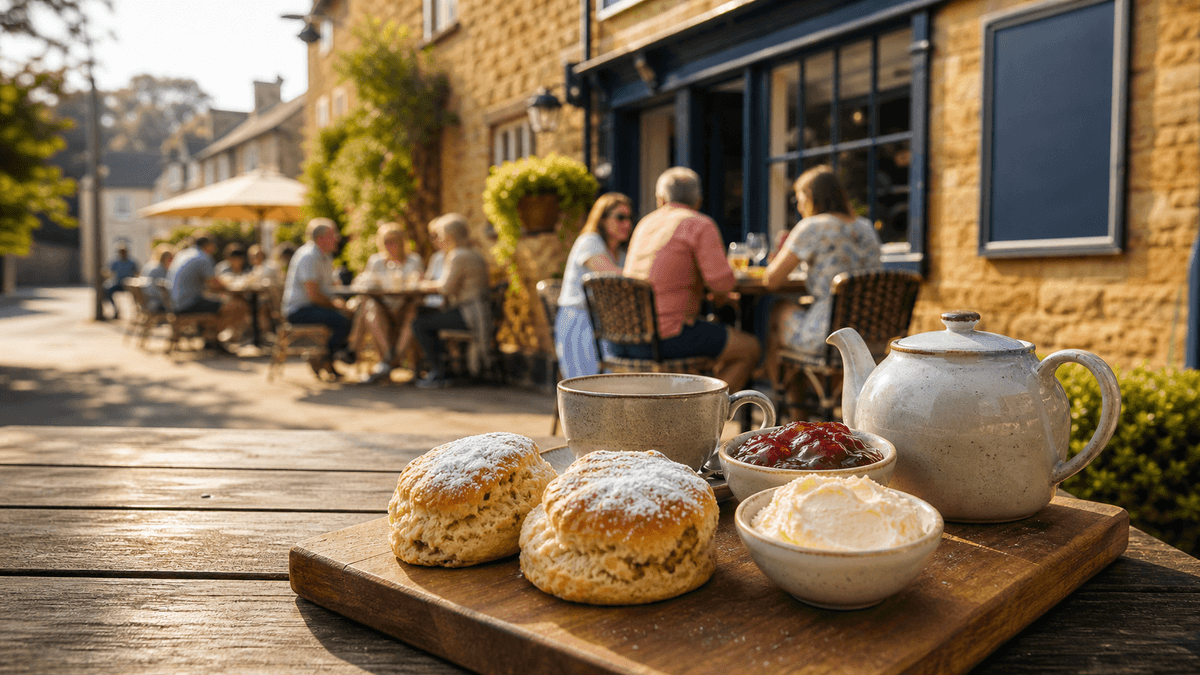
Stand behind the counter in Burford on a Saturday in July and look at the queue. Coaches in the car park, a wall of people in walking boots and sunhats, a till that will not stop. It feels like the best kind of problem to have.
Then it dawns on you: you will never see most of these people again in your life. They are here for one afternoon, one scone, one photo, and then they are back on the road to somewhere else.
That single fact changes the maths of your whole summer. The playbook that keeps regulars coming back all winter is not the playbook that gets the most out of a stranger who is walking through your door exactly once.
When nobody comes back, the maths changes
Everything you normally do to build loyalty is wasted on a day-tripper. The stamp card, the "usual" you remember, the little extra you slip a regular to keep them sweet - none of it earns you a second visit, because there is no second visit.
What you get from a one-time visitor is three things, and only three:
- What they spend on this one visit
- How fast you can serve them so the next group can sit down
- The review or photo they leave behind, which brings you the next stranger
That is the entire return. So the question stops being "how do I get them back" and becomes "how do I make this one visit worth more, without slowing the queue." Getting your average spend per customer up is not a nice-to-have in tourist season. It is the whole game, because spend per visit is very nearly all the revenue that person will ever give you, and if they are visiting from abroad, the card they hand over can cost 86% more to process.
Shrink the menu they actually choose from
A regular already knows what they want before they reach the till. A visitor stands there and reads. Every extra line on your board is another few seconds of a stranger deciding, and in high season those seconds are the difference between a queue that flows and a queue that gives up and walks to the pub.
Big menus feel generous. In a busy visitor town they quietly cost you covers. People faced with too much choice slow down, second-guess, and often default to the cheapest safe thing rather than the item you actually make money on.
Tighten the visible offer for the summer. A clear, confident, short board - a handful of drinks, a few cakes, one or two hot options - moves people through faster and steers them toward the things you want them to order. You can keep the full range for regulars who ask. The point is what a first-timer sees first.
Let a fixed set do the heavy lifting
This is where a cream tea, or an afternoon set at one price, earns its keep. Scone, jam, clotted cream, pot of tea, one number. Or a "lunch plate" that bundles a sandwich, a bake and a drink.
A fixed set does four useful things at once:
- Predictable margin. You have costed it once and you know exactly what you make every time it goes out, instead of guessing across a dozen à la carte combinations.
- Faster service. One decision instead of five. The order lands quicker and the kitchen builds the same thing every time.
- Easy upsell. "Add an extra scone" or "make the tea a prosecco" is a natural, low-effort yes that lifts the ticket.
- It photographs beautifully. A cream tea on a nice board is the single most Instagrammed thing a Cotswolds café can put on a table, and that photo is doing your marketing for free.
Price it so the set is genuinely good value and better for you than the same items ordered separately. If you have not costed each component properly, you cannot know that. A set is only a good idea once you have worked out the true cost of every part of it.
Follow the mix on a sunny day
Warm weather does not just bring more people. It changes what they buy. The mix tips hard toward cold and takeaway drinks, hand-held food, and things people can carry off to a bench by the river. Fewer sit-down pots of tea, more iced lattes walking out the door.
Two things follow from that.
First, make sure your high-margin grab-and-go items are the visible ones. If the cold drinks and the hand-held bakes are the ones people want on a hot day, put them where the eye lands - front of the counter, top of the board, in the fridge at the till, not buried on a menu nobody in a hurry is reading.
Second, know your VAT. It genuinely moves your margin here.
None of this means dropping table service. It means noticing that in August a chunk of your best money is walking, not sitting, and setting up the counter so the walkers spend well and spend fast.
Sell them something to carry home
Here is the bit most cafés leave on the table. A visitor who will never come back for another flat white will happily buy a bag of your beans, a box of your bakes, or a jar of local jam to take home as a souvenir.
Regulars almost never do this. They can come back tomorrow, so there is no urgency. A tourist standing in a pretty village on holiday is in exactly the frame of mind to buy something to remember it by, and to give as a gift. The same shelf that gathers dust in February sells out in July.
Beans, branded bags, jams and chutneys, a slab of something wrapped for the journey, local goods on a small consignment - this is close to pure margin and it needs no extra service time at peak. It is worth setting up a proper retail corner to sell beans, bakes and merch before the season, not halfway through it. Put it by the till where the queue has nothing to do but look.
Turn the tables while the sun is out
When the queue is out the door, a table sat on for two hours by two people nursing one pot of tea is costing you real money. In quiet months you would never begrudge it. In peak season, every seat is inventory, and slow tables are lost covers.
You do not fix this by being rude. You fix it with pace: clearing quickly the moment plates are empty, resetting fast, keeping the flow moving so people feel looked after rather than parked. A clean, cleared table also just turns over quicker because the next group can sit straight down.
This is the season to actually look at your table turns and covers per seat and ask an honest question: on your busiest August afternoons, does full table service earn its keep, or would a lighter, order-at-the-counter setup put more paying visitors through the same room? For a lot of visitor-town cafés the answer flips with the seasons, and there is no shame in running summer differently from winter.
Then check what actually worked
All of this is guesswork until you look at what visitors genuinely bought. Your sales mix is the receipt. It tells you which items flew, which sets sold, whether the grab-and-go shift really happened, and which lines just sat there taking up board space.
At the end of a busy stretch, pull the mix and see it plainly. A free menu profit tool lets you stack your dishes side by side and spot which ones actually earned their place on the board and which were popular but barely paid their way. Popular and profitable are not the same thing, and tourist season is exactly when that gap gets expensive.
Tourist season is short and it is loud, and it is tempting to just survive it. But a honeypot town hands you a stream of people who will spend generously, once, if you make it easy for them. Tighten the board, put a fixed set at the front, get the high-margin grab-and-go where the eye lands, sell them something to take home, and keep the tables moving.
Then look at the mix, keep what worked, and go into next summer knowing rather than guessing. The strangers in the queue are only strangers once. Make the once count.
Ed O'Brien has run Hunters Cake Company for 17 years across cafés in Witney, Burford, and a bakery in Carterton, Oxfordshire. He's building Brikly - modular tools that give independent café owners the same data the big chains have, without the big chain price tag.