
The staff Christmas party: the £150 rule, the £50 gift and the cash bonus
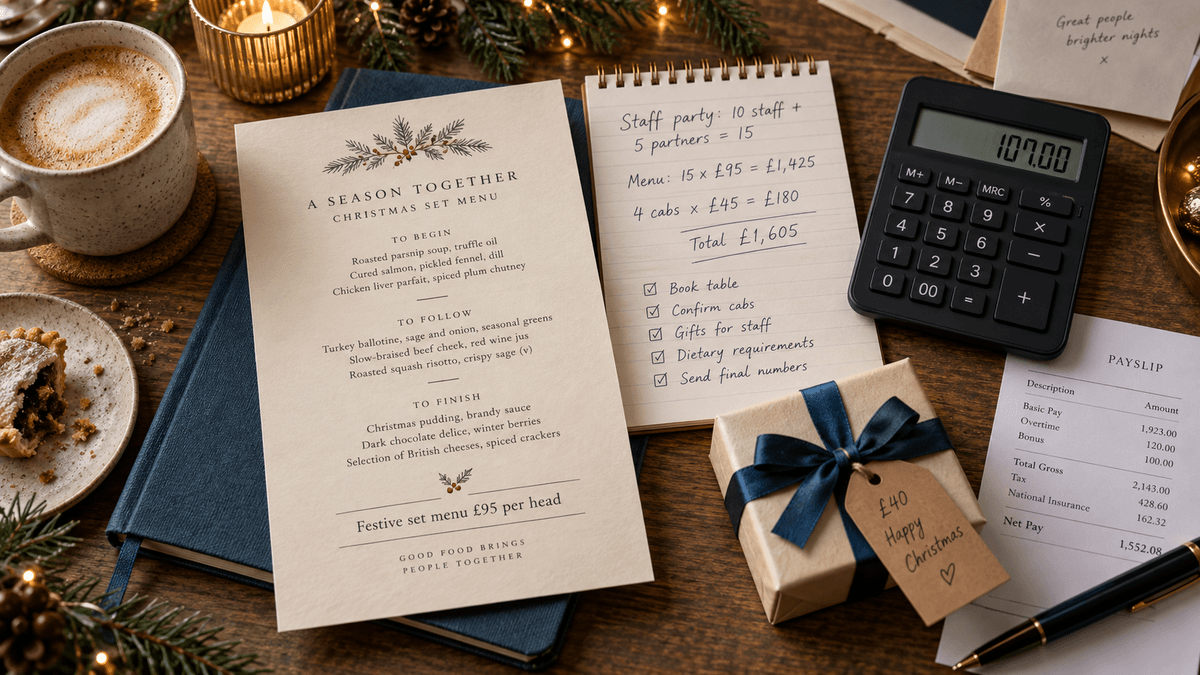
The restaurant's Christmas menu is on the office desk. £95 a head, ten staff, partners welcome, cabs home for everyone. And you are weighing £100 in everyone's December pay against a £40 gift each.
Three tax rules decide what that thank-you costs, and two of them hide a cliff edge. Book in October and you still choose which side you land on.
The £150 rule is a cliff edge, not an allowance
Section 264 of ITEPA 2003 exempts an annual party or similar annual function open to your employees generally, or to everyone at one site. A Christmas party or summer barbecue counts. A one-off, such as HMRC's 25th anniversary example, does not.
The test is cost per head. Take the total cost including VAT, add any transport or accommodation you lay on, and divide by everyone who attends, guests included. At £150 or less, nobody pays tax and you report nothing.
HMRC's manual is blunt: "The figure of £150 is not an allowance." At £151 a head the whole cost becomes taxable, not the £1 over, and each employee is also taxed on their guest's share.
Two things never qualify: a directors-only dinner (taxable, though the staff party stays exempt) and anything offered through salary sacrifice or instead of cash pay.
Ten staff, five partners, one restaurant
Illustrative numbers. Ten staff, five of whom bring a partner, so 15 people. Food and drink at £95 a head including VAT, and four shared cabs home at £45 each, assumed to carry no VAT.
| Line | Working | Amount |
|---|---|---|
| Food and drink | 15 x £95 | £1,425.00 |
| Taxis | 4 x £45 | £180.00 |
| Total cost | £1,605.00 | |
| Cost per head | £1,605 ÷ 15 | £107.00 |
On its own, it is exempt with £43 a head of headroom.
What £1 over looks like
Now say you chose a £139 menu, same people, same cabs. 15 x £139 = £2,085, plus £180, is £2,265, and £2,265 ÷ 15 = £151.00 a head. The exemption is gone for everyone.
An employee who brought a partner is now taxed on 2 x £151 = £302, unless you pay it for them through a PAYE Settlement Agreement (PSA). Assuming basic-rate staff:
- On their P11D, the annual benefits form due by 6 July. They pay 20% tax, £60.40, usually through their tax code. You pay Class 1A NI, the employer NI on benefits, at 15%: £45.30.
- Under a PSA. You pay their tax, grossed up: £60.40 ÷ 0.8 = £75.50. Then Class 1B, the employer NI on a PSA, at 15% on the benefit plus that tax: (£302 + £75.50) x 0.15 = £56.63. That is £132.13 per couple, and the employee pays nothing.
Across the whole party, grossed-up tax is £2,265 x 0.25 = £566.25 (20% grossed up is 25%) and Class 1B is (£2,265 + £566.25) x 0.15 = £424.69: £990.94 for going £1 a head over.
For a PSA on a December 2026 party, apply by 5 July 2027 and pay by 22 October 2027, or 19 October by post. It can cover small gifts and non-exempt staff entertainment, but never cash bonuses.
Two parties, one £150
The £150 is shared across every annual function in the tax year. Say you ran a staff-only barbecue in July at £50 a head for the same ten. £50 + £107 = £157, over the line.
HMRC says "whichever functions best utilise the £150 are exempt, the others taxable". So you choose. Under a PSA:
| Choice | Taxable | Tax grossed up | Class 1B | PSA cost |
|---|---|---|---|---|
| Exempt Christmas, tax the barbecue | 10 x £50 = £500 | £125.00 | £93.75 | £218.75 |
| Exempt the barbecue, tax Christmas | £1,605, guests included | £401.25 | £300.94 | £702.19 |
Exempt whichever event leaves the smaller taxable total, as HMRC's worked example does: here, Christmas. Better still, plan now. After the barbecue, your Christmas budget is £150 - £50 = £100 a head. At £107 you are £7 over. Trim the menu to £85, and 15 x £85 + £180 = £1,455, or £97 a head: both events exempt, with £3 to spare.
VAT: reclaimable for staff, not for guests
If you are VAT registered, the VAT you pay on a staff party is reclaimable input tax, the other side of the VAT you charge on food and drink. The catch is guests. VAT Notice 700/65: "You can only recover as input tax the VAT you incur on entertaining your employees." Staff's partners and former staff count as guests; directors and business partners attending with staff count as staff.
At 20%, VAT is one sixth of a VAT-inclusive price: £1,425 ÷ 6 = £237.50. Ten of the 15 attendees are staff:
- £237.50 x 10/15 = £158.33 recovered
- £79.17 left, blocked as the guests' share
The £150 test still uses £107, reclaim or not: the statute says the cost "includes any value added tax".
A dinner just for directors, or for the partners who own the business, gets no VAT back: HMRC says that VAT "is not input tax".
Your own tax bill
For corporation tax or income tax, a staff Christmas party "is not disallowed" (BIM45033), and staff gifts are deductible (BIM45074) unless the same gifts also go to customers or suppliers. Sole traders and partnerships: ask whoever does your return whether your own plate counts.
The £50 gift with nothing on top
A trivial benefit is free of tax and NI, with nothing to report, if it:
- costs £50 or less, including VAT
- is not cash or a cash voucher
- is not in their contract, or given through salary sacrifice
- is not a reward for their work or performance
The last one is easy to fail: HMRC's example of a £30 Christmas gift given to everyone each year, "regardless of their performance", is exempt. Vouchers for hitting targets are not. So the card says Happy Christmas, not thanks for smashing the numbers.
The £50 is its own cliff. A £60 hamper is taxable in full, not the £10 over: £12 of tax for the employee and £9 of Class 1A for you.
Gift cards: one you can spend but not swap for cash can qualify. One that can be swapped for cash cannot, however small. A card you keep topping up is one gift, so eight £10 loads are £80 and not exempt.
Run your own limited company? It is almost certainly a close company, broadly one controlled by five or fewer people, so as a director you are capped at £300 a tax year of trivial benefits, including gifts to family who do not work for it.
The £100 bonus that costs £115
Cash is pay, so it goes through payroll, whether you run café payroll yourself or outsource it.
Illustrative: a basic-rate taxpayer aged 21 or over, already over the NI thresholds that month and not in the workplace pension, with your Employment Allowance used up. Gift costed including VAT:
| £40 gift | £100 bonus | |
|---|---|---|
| Income tax at 20% | £0 | £20.00 |
| Employee NI at 8% | £0 | £8.00 |
| In their pocket | £40.00 | £72.00 |
| Employer NI at 15% | £0 | £15.00 |
| Cost to you | £40.00 | £115.00 |
Across ten staff the bonus costs £1,150, and £720 reaches them: £430 goes on tax and NI. To put £40 in someone's pocket as cash, you would pay £40 ÷ 0.72 = £55.56 gross, plus £8.33 of employer NI: £63.89, about 60% more than the gift.
Why assume the allowance is used up? Employment Allowance is £10,500 for 2026 to 2027 and offsets Class 1 employer NI only, never Class 1A or 1B. A full-timer on the £12.71 National Living Wage, 40 hours for 52 weeks, earns £26,436.80 and costs (£26,436.80 - £5,000) x 15% = £3,215.52 in employer NI, so the allowance covers about three. Beyond that, the £15 is real.
For staff under 21, and apprentices under 25, there is no employer NI on earnings up to £50,270: the bonus costs £100, and £40 in pocket costs £55.56.
A bonus counts towards minimum wage pay almost entirely in the pay period you pay it, so it cannot make up for earlier months paid short. If bonuses become regular, check holiday pay.
None of this argues against cash, or for spending less. Replacing one full-time team member costs about £3,000 to £3,500, so a good night and a gift are cheap. Just choose cash on purpose.
Hosting it in your own café
Host it after close and the arithmetic may change. For benefits generally, HMRC values what you provide in-house at the extra cost to the business, not menu price: ingredients, drink, and wages for anyone you pay to work the evening. Sales lost by closing early are real money, but not part of HMRC's measure.
Illustrative, same 15 people and cabs, with two people paid to serve for 4.5 hours at the loaded £15.93 hour from what opening the café for an evening costs:
- Food and drink at cost, say £20 a head including VAT: 15 x £20 = £300.00
- Staff: 2 x 4.5 x £15.93 = £143.37
- Energy, an assumption: £12.00
- Taxis: £180.00
- Total £635.37 ÷ 15 = £42.36 a head, against £107 at the restaurant
Same logic as costing staff meals at cost price: a flat white is 51p of ingredients, not £3.60. The caveat: the party exemption just says "cost", and HMRC's guidance on it is silent on in-house events. Ask your accountant before you rely on it.
This week
- List every annual staff event since 6 April open to all staff. They share one £150; one-offs never qualify.
- Get a per-head quote including VAT and cabs and divide by everyone attending. Leave headroom for the bar tab and for no-shows you pay for, which raise everyone else's cost per head.
- Choose the gift and write the card. £50 or under including VAT, not cash, the same for everyone.
- Decide gift or cash on purpose. If cash, tell payroll before the December run.
- Put 5 July 2027 in the diary, in case the night runs over.
It is a thank-you. Knowing the rules is how it lands as one, rather than as a P11D in the summer.
Ed O'Brien has run Hunters Cake Company for 17 years across cafés in Witney, Burford, and a bakery in Carterton, Oxfordshire. He's building Brikly - modular tools that give independent café owners the same data the big chains have, without the big chain price tag.