
Can your café sell wine? TENs, licences and whether evenings pay
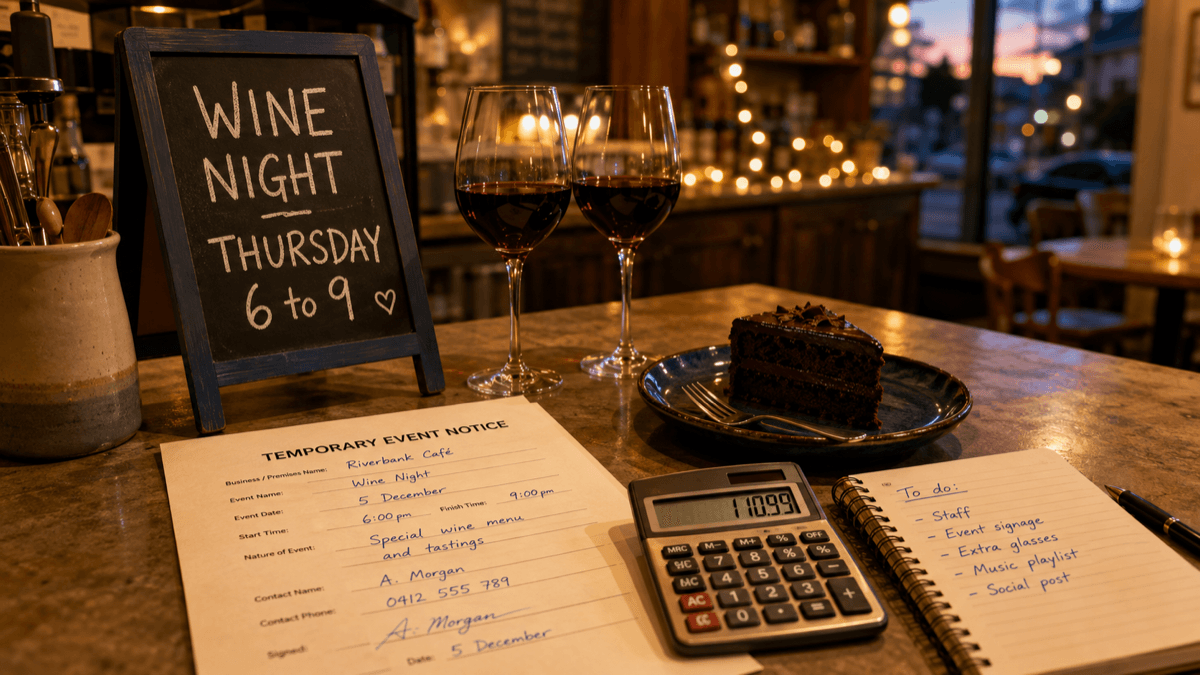
The idea always arrives in September. Trade is steady, the evenings are drawing in, and someone says what if we opened late one Thursday for wine and small plates. It sounds lovely, and it sounds like a November problem.
It isn't. The alcohol licence question has two answers, one for a single evening and one for every evening, and the cheap answer has a lead time that collides with the weeks you want to trade. Here is what you need, what it costs and whether the evening pays. England and Wales, under the Licensing Act 2003, with Scotland and Northern Ireland at the end.
Can a café sell alcohol without a licence, and what about a late licence?
No. Selling alcohol is a licensable activity, and doing it without authorisation is a criminal offence, not a paperwork slip.
"Sale" is broader than most people assume. It covers the obvious £7.50 glass of red, and alcohol bundled into a ticket price, because the customer pays and gets alcohol. Free fizz nobody has paid for is different, but the moment there is a ticket, a cover charge or a set price for the evening, you are selling.
A second activity catches cafés out. Late night refreshment is the supply of hot food or hot drink to the public between 11pm and 5am, whether you charge for it or not, and licensable in its own right, with or without alcohol. A dry late opening serving coffee and toasties past eleven still needs authorisation. Finish at 10.30pm and the question never arises.
The full list of licences and registrations you need to open a UK café covers the rest of the paperwork.
The temporary event notice: cost, limits and the December deadline
For a café testing an evening, a temporary event notice is almost always the right first move. It is not a licence but a notification to your council that you intend to carry on licensable activities for a short period.
The temporary event notice cost is £21, set in regulations. That is the whole fee.
The rules, from gov.uk:
- Fewer than 500 people on site at all times, including your staff
- Each event runs for no more than 168 hours, which is 7 days
- You can give 5 TENs a year as an individual, or 50 a year if you hold a personal licence
- Any one premises can be covered by up to 15 TENs a year, and no more than 21 days in total
- The notice must reach the council at least 10 clear working days before the event
- Unless you file through the council's own online system, you must copy the notice to the police and environmental health yourself, by the same deadline. Filing online is safer, because the council does it for you
Those two premises caps are the ones to watch. A temporary uplift a few years back means older guides quote higher numbers, so check the date on anything you read.
The deadline maths, done properly
"Ten clear working days" is the bit that goes wrong. "Clear" means neither the day the notice is received nor the day of the event counts. Weekends and bank holidays are not working days.
Work it through for a Saturday 5 December 2026 wine evening.
- The ten clear working days run Monday 23 November to Friday 4 December
- So the council must have the notice by Friday 20 November
Miss that and you are into a late TEN, given 5 to 9 clear working days before the event. Late TENs are capped at 2 a year without a personal licence, or 10 with one, and a single objection from the police or environmental health kills the event outright. No hearing, no chance to negotiate conditions. A fallback, not a plan.
Weigh that against a premises licence, which is permanent and ties you to conditions and an annual fee for something you have not yet proved.
How much is a premises licence in the UK?
If the evenings work and you want them every week, the allowance runs out fast. Fifteen notices a year is the real ceiling for separate evenings, roughly one every three and a half weeks. The 21-day cap only bites if some of your events run more than a day. At that point you apply for a premises licence.
Fees are set by regulation, based on the non-domestic rateable value of your premises rather than your turnover:
| Band | Rateable value | Application fee | Annual fee |
|---|---|---|---|
| A | No rateable value to £4,300 | £100 | £70 |
| B | £4,301 to £33,000 | £190 | £180 |
| C | £33,001 to £87,000 | £315 | £295 |
| D | £87,001 to £125,000 | £450 | £320 |
| E | £125,001 and above | £635 | £350 |
Most independent cafés sit in band A or B, so the realistic number is £100 to £190 to apply and £70 to £180 a year to keep. Bands D and E carry a double or triple multiplier on both fees for premises used mainly for drinking on site, which is not a café.
Cheap, then. The fee is not the cost.
The two things that actually cost you
Time. Once the application goes in, there is a period of 28 consecutive days for representations, starting the day after the council receives it. Anyone can object. If nobody does, the licence is granted as applied for. If somebody does, it goes to a hearing and your December is over.
A designated premises supervisor. Every premises licence authorising alcohol sales needs a DPS, and the DPS must hold a personal licence. This is the real constraint, because it is a person, not a form.
Personal licence cost and what it takes
To get a personal licence you need to be 18 or over, hold an accredited qualification (the Level 2 Award for Personal Licence Holders) and supply a basic criminal record disclosure. The personal licence cost to the council is £37, with the course and disclosure extra, so get a quote locally.
The DPS has day-to-day responsibility for the business, and for most independents that means you. Naming a part-timer who leaves in March costs £23 to vary the licence and leaves nobody authorised.
Does the evening actually pay?
Take a café with 24 seats running 6pm to 9pm on a Saturday, on top of a normal trading day. Illustrative UK 2026 figures, ex-VAT.
What the evening costs before anybody orders:
| Line | Cost |
|---|---|
| One extra person, 5pm to 10pm, at £12.71 an hour | £63.55 |
| Holiday accrual at 12.07% | £7.67 |
| Employer National Insurance at 15% | £10.68 |
| Pension at 3% | £2.14 |
| The temporary event notice | £21.00 |
| Lights, dishwasher loads, laundry (estimate) | £15.00 |
| Total to cover | £120.04 |
The National Minimum Wage from 1 April 2026 is £12.71 for 21 and over, employer NI is 15% above £5,000 a year per employee, auto enrolment employer minimum is 3% of qualifying earnings, and holiday accrues at 12.07% of hours worked. If you play music, check your evening hours against what a café actually pays for a PPL PRS licence.
What each head brings in. A 175ml glass from a 750ml bottle costing £7.20 ex-VAT gives you four honest pours with a little left over, so call it £1.80 of wine a glass. Sell it at £7.50 including VAT and you keep £6.25 ex-VAT, a gross profit of £4.45, or 71%. A small plate at £8.50 including VAT with £2.40 of food in it earns £4.68.
Two glasses and a plate per head is £13.58 of gross profit.
- £120.04 divided by £13.58 is 8.8 covers, so 9 people covers the cost of the evening
- Cost your own five hours in at the same £12.71 and the total goes to about £184, which needs 14 covers
Nine sounds easy. Fourteen is over half a full room on a December Saturday, and breaking even is not the point. Fill 20 of the 24 seats and you make £272 of gross profit for £184 of cost. That £184 already pays you £63.55 for the five hours, so you clear about £152, roughly £30 an hour, with £88 of it profit on top of your own wage. Same test as whether staying open the extra hour actually pays.
One rule you cannot price around: weights and measures law applies whichever route you take. Still wine by the glass can only be sold in 125ml or 175ml, or a multiple of those, and you must display a written statement of the measures you use. The mandatory condition that a 125ml is also available attaches to a premises licence, not a notice, so under a TEN it is good practice rather than law. Put both sizes on the board anyway.
Insurance, age checks and the two objections that sink a TEN
Tell your insurer. Selling alcohol and trading at night are both material changes to what your policy was written for. A quick email costs nothing and an undisclosed activity can void a claim. If you have never read your schedule, what a UK café actually needs from its insurance is the place to start.
Age verification. There is no mandatory age verification condition on a TEN, because the mandatory conditions attach to premises licences, not notices. What applies either way is that selling alcohol to anyone under 18 is a criminal offence under section 146. So run the policy the trade runs anyway: identification bearing a photograph, a date of birth and a holographic mark. Challenge 25 is the industry version rather than the law itself, and it gives your staff a margin. Write it down and keep a refusals log.
The two people who can object. A council cannot refuse a TEN on a whim. It can refuse on only two grounds: the police or environmental health object within 3 working days of receiving the notice, or the notice would breach one of the statutory limits above, in which case the council must issue a counter notice whether anybody objected or not. Police objections cluster around crime and disorder. Environmental health objections are almost always noise.
If you have flats above or a residential neighbour, a note through the door two weeks beforehand does more good than anything else here. Give them the date, the finish time and your mobile number. Neighbours who have been told rarely complain.
Scotland and Northern Ireland work differently
Scotland runs the Licensing (Scotland) Act 2005. There are no TENs. The equivalent is an occasional licence from the local Licensing Board, for up to 14 days. Only a premises licence holder, a personal licence holder or a voluntary organisation can apply, so unlike a TEN there is no route for an unlicensed owner. Go to your Licensing Board.
Northern Ireland has its own regime under the Licensing (Northern Ireland) Order 1996, which is more restrictive again about who can hold a liquor licence. Take local advice.
Where Brikly fits, briefly
The risky bit is the wine and the plates, not the notice. Wine looks like a great margin because the percentage is high, but the cash per glass is what covers the extra person on the rota. The free menu profit calculator does that sum in a minute: bottle cost, pour size, selling price, and what you keep per glass ex-VAT. For a whole evening menu on your real invoice prices, that is CostingBrik.
What I would actually do
Run two TENs before you commit to anything permanent, one in November and one in December, £42 in total. Count the covers and the money afterwards. Two evenings tells you whether it is a business or a nice night out that you paid for.
If both fill, the premises licence and the personal licence together are around £140 to £230 in fees, plus your training and the statutory newspaper advertisement you have to place within 10 working days of applying. Ring the local paper for a rate first, because that one is not a fixed fee. The other constraints are the 28-day representation window and finding a DPS, so start in January for the following autumn.
And if the second evening barely covers its wages, you learned that for £42 and two late nights. Fees and rules change and councils read their own policies differently, so check the figures against your own authority before you commit money.
Ed O'Brien has run Hunters Cake Company for 17 years across cafés in Witney, Burford, and a bakery in Carterton, Oxfordshire. He's building Brikly - modular tools that give independent café owners the same data the big chains have, without the big chain price tag.