
Afternoon tea: what one stand really costs per head
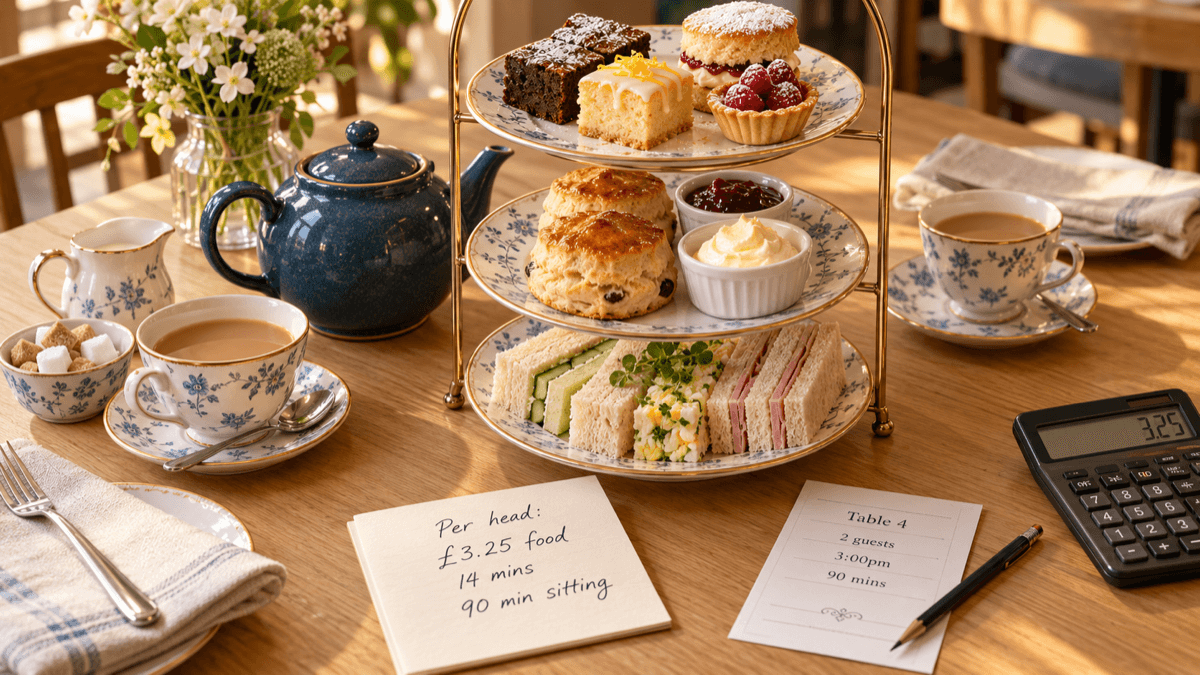
Afternoon tea is the plate that looks best on a costing sheet. A few slices of bread, a scone, some bits of cake and a pot of tea, sold for twenty-odd pounds a head. On ingredients alone it often clears 80% gross profit.
It is also the most labour-heavy thing many cafés sell, and it holds a table for an hour and a half. Neither of those shows up in the food cost.
The usual way to price it is to look at what the hotel down the road charges and knock a fiver off. Let's cost one stand properly instead, then put the hidden bits beside it.
The stand, line by line
Everything here is illustrative, ex VAT, at 2026 trade prices. Swap in your own invoices. One person's stand:
- Six finger sandwiches, two each of cucumber and cream cheese, egg mayonnaise and cress, and ham and mustard
- One scone with jam and clotted cream
- Four mini cakes: a brownie, a lemon drizzle square, a Victoria sponge piece and a fruit tartlet
- Unlimited tea or coffee
The sandwiches: you pay for the crusts
Each round is two slices, crusts off, cut into four fingers. Six fingers is a round and a half, so three slices of bread a head.
| Sandwiches, per head | Cost |
|---|---|
| Bread, 3 slices (800g loaf at £1.40, 20 usable slices = 7p a slice) | £0.21 |
| Butter, 15g at £7.20/kg | £0.11 |
| Cucumber and cream cheese, half a round | £0.12 |
| Egg mayonnaise and cress, half a round | £0.15 |
| Ham and mustard, half a round | £0.21 |
| Sandwiches | £0.80 |
The trap is the crusts. Trim them off and a quarter or more of each slice goes in the bin or the breadcrumb tub. If you cost bread by the weight that ends up in the finger, you undercount it. Cost bread by the slice, because that is what you paid for.
Swap the ham for smoked salmon (20g at £28/kg) with cream cheese and that half round goes from 21p to about 64p. Worth knowing before it goes on as standard.
The scone: cost the batch, not the scone
Nobody bakes one scone. The batch is a sub-recipe: cost it once, find its real yield, then use it as a line in the stand.
| Scone batch | Cost |
|---|---|
| Self-raising flour, 1kg at £0.65/kg | £0.65 |
| Butter, 250g at £7.20/kg | £1.80 |
| Caster sugar, 100g | £0.11 |
| Eggs, 2 | £0.47 |
| Whole milk, 450ml at £0.95/litre | £0.43 |
| Baking powder | £0.05 |
| Egg wash, 1 egg | £0.23 |
| Batch cost | £3.74 |
The cutter gets 20 from the first roll and the re-roll, but the last two off the scraps always come out lopsided. So the yield is 18, not 20: £3.74 / 18 = 21p a scone, not 19p.
Then the pots: jam at 30g a ramekin (£4.50/kg, 14p) and clotted cream at 40g (£10/kg, 40p). The jam pot is a sub-recipe too, a fixed portion even if the jam is bought in. Whatever comes back in the ramekin gets binned, so cost the portion that goes out, not what gets eaten.
Scone, jam and cream: 21p + 14p + 40p = 75p.
The minis: cost per piece from the tray
Minis come from the traybakes and sponges you already sell by the slice, cut smaller. The method is the one in costing a cake by its sellable yield: cost the tray, then divide by the pieces you can actually put out, not the cut count. Small pieces lose proportionally more to edges and crumbs.
| Mini, per piece | Workings | Cost |
|---|---|---|
| Brownie | £8.65 tray, cut 48, 44 sellable | £0.20 |
| Lemon drizzle | £6.20 tray, cut 40, 36 sellable | £0.17 |
| Victoria sponge | £6.94 cake, cut 24, 20 sellable | £0.35 |
| Fruit tartlet | Bought-in case 12p, crème pâtissière 4p, raspberries 10p, glaze 1p | £0.27 |
| Four minis | £0.99 |
Unlimited tea, and the coffee drinker
Tea is the cheapest refill you'll ever give away. Two pots of loose leaf at 12p each, plus 10p of milk and 2p of sugar and lemon, is 36p a head.
The coffee drinker is different. Two flat whites at around 50p of coffee and milk each is £1.00, and some people have three. Assume three in four choose tea and the blended figure is (3 x 36p + £1.00) / 4 = 52p a head. If your crowd skews to coffee, rerun it.
The whole stand
| Per head, ex VAT | Cost |
|---|---|
| Sandwiches | £0.80 |
| Scone, jam and clotted cream | £0.75 |
| Four minis | £0.99 |
| Tea and coffee, refills included | £0.52 |
| Garnish (strawberry, mint, edible flowers) | £0.10 |
| Napkin and stand liner | £0.09 |
| Ingredient cost per head | £3.25 |
Sell it at £24 a head. Afternoon tea eaten in is catering, and HMRC's catering guidance says you "must always charge VAT at the standard rate" on food and drink for consumption on the premises. That includes the scones and cakes that would be zero rated as a cold takeaway. So £24 / 1.2 = £20.00 ex VAT.
Gross profit: £20.00 - £3.25 = £16.75, or 83.8%. That is the number everyone stops at.
Labour: beside the food cost, not inside it
Keep labour out of the £3.25. The post on prep time and recipe cost explains why: GP% stays before labour so it's comparable with every benchmark, and labour already lives in your wage line. But afternoon tea is exactly the item that needs an after-labour figure next to it.
Hands-on minutes per head, timed across a normal session and divided by what goes out:
| Task, per head | Minutes |
|---|---|
| Sandwiches: filling, crusting, cutting fingers | 3.0 |
| Scone: share of a 27-minute session for 18 | 1.5 |
| Jam and cream pots | 0.5 |
| Four minis: share of the bake, plus cutting and finishing | 4.0 |
| Building the stand (4 minutes for a stand of two) | 2.0 |
| Front of house: explaining the tiers, refills, clearing the china | 3.0 |
| Total | 14.0 |
At the fully loaded rate of £15.93 an hour for someone on the £12.71 National Living Wage, which is 26.5p a minute, 14 minutes is £3.71.
The labour costs more than the food. After labour, each head leaves £16.75 - £3.71 = £13.04, or 65.2% of the ex VAT price. That's roughly where a flat white lands after labour. Respectable, not spectacular, and a long way from 83.8%.
The biggest line is the minis: four different bakes, each with its own finish. Minis that share a base (one sponge, three toppings) can take a minute or more off every head.
Table time: the real unit is the sitting
A per-head price hides what you're actually selling: 90 minutes of a table. As the table turn post puts it, the seat is the asset you pay rent on. So compare what a two-top earns per hour of table time, after ingredients and labour.
Afternoon tea for two, 90-minute sitting: 2 x £13.04 = £26.08, which is £17.39 per table-hour.
Walk-in coffee and cake for two. A flat white at £3.80 leaves £2.15 after ingredients and labour; a slice of sponge at £4.20 leaves £2.68. That's £4.83 a head, or £9.66 a sitting.
| Same two-top, same afternoon | Earned | Table time | Per table-hour |
|---|---|---|---|
| Afternoon tea, 90-minute sitting | £26.08 | 90 min | £17.39 |
| Afternoon tea that lingers | £26.08 | 2 hours | £13.04 |
| Coffee and cake, busy Saturday, two 45-minute turns | £19.32 | 90 min | £12.88 |
| Coffee and cake, quiet weekday, one sitting | £9.66 | 90 min | £6.44 |
Two things fall out of that.
Afternoon tea is a good use of a quiet table. On a weekday afternoon it earns nearly three times what walk-in trade would.
On a busy day, the length of the sitting decides it, not the price. At 90 minutes it beats a busy Saturday's walk-ins; at two hours the advantage nearly vanishes. In a lunch slot it can lose: a two-top with a brunch plate and a flat white each leaves about £11.88 every 50-minute turn, roughly £14.26 per table-hour at full tilt.
So:
- State the sitting length on the booking. "Your table is yours for 90 minutes" is normal in hotels and nobody minds being told.
- Start sittings after the lunch peak on busy days, 2:30 or 3pm, not 12:30.
- Get the stand out fast. Ten minutes waiting for it is ten minutes of the 90 gone, and you can't charge for them.
The hidden costs nobody adds up
Kit and breakage
A set for one two-top: a stand at £30, a teapot at £15, two cups and saucers at £16, two side plates at £8, a milk jug at £5 and two ramekins at £4. That's £78 of kit.
If a set lasts 300 sittings on average before chips and breakages take it out, that's 26p a sitting, 13p a head. Add 5p for washing three tiers and extra china and it's 18p. That's overhead, not food cost, but know it's there, and buy stands you can replace one at a time.
Plate waste
Whatever comes back on the stand was paid for and made, and can't be served again. If the bottom tier routinely comes back with two fingers left, a sixth of your sandwiches are for the bin, at about 13p of food a finger plus the time.
Watch what comes back for a fortnight and trim what never gets eaten. And offer a box for leftover cakes: 20p of packaging turns waste into goodwill.
No-shows
The prep loss is smaller than you'd think: scones and minis can go on the counter the same day. Sandwiches can't, so cut them close to the sitting. A no-show two-top with sandwiches made costs £1.60 of food and six minutes of labour (£1.59).
The table is the expensive part: around £26 of after-labour contribution for a two-top held empty for 90 minutes. That's why afternoon tea is one of the few café bookings that earns a deposit. How to size one so it's proportionate rather than punitive is in the post on deposits and no-shows.
If you're VAT registered, a deposit for an eat-in booking carries 20% VAT. GOV.UK says to declare it "when you receive it, or when you issue a VAT invoice, whichever happens first", and if a customer doesn't turn up and you keep it, "VAT remains due on the money you have received."
Swaps, upgrades and the children's stand
The gluten-free swap
The usual swap, per head:
- Gluten-free bread, about 21p a slice against 7p: +42p for three slices
- Gluten-free scone, around 45p against 21p: +24p
- Minis, a gluten-free brownie, a polenta lemon square and two bought-in pieces: about +40p
That's +£1.06 of ingredients. Then the time: a separate board, a clean-down before you start, made first and kept apart. Call it four extra minutes, another £1.06. So the gluten-free stand costs about £2.12 more per head.
Charge a supplement or build it in. If one guest in ten asks, spreading it across everyone is about 21p a head, which is why a lot of places absorb it. Either is fine, as long as you know the number.
Be careful with the words. The FSA's allergen technical guidance says a "gluten-free" claim means "no more than 20 mg/Kg in the food as sold to the final consumer", and that this applies to "non-prepacked foods such as those served in restaurants". It also advises against "no gluten containing ingredients" wording, and says that if you use it you should make clear the food isn't suitable for people with coeliac disease. In a café that's had wheat flour in the air since six in the morning, be honest about which you can promise.
The vegan swap
Closer on cost. Plant cream cheese (+6p), a plant-based alternative to clotted cream (+30p), two vegan minis in place of the sponge and the tartlet (+20p), and hummus and roasted pepper instead of ham (-8p) come to about +48p. Two extra minutes keeping it separate adds 53p: around £1.01 more a head. Make sure your allergen information follows the swap.
The prosecco upgrade
The best-paying part of the booking. A glass of prosecco for £7 a head is £5.83 ex VAT. A £7.50 bottle pours six 125ml glasses on paper; cost it at five for the generous pour and the last glass that goes flat: £1.50 a glass. Gross profit £4.33, or 74.3%. It takes about 30 seconds to pour (13p), so it leaves £4.20 a head after labour, and it uses no extra table time at all.
Back at the two-top: £26.08 + 2 x £4.20 = £34.48 for the same 90 minutes, or £22.99 per table-hour. Offer it at booking, with a non-alcoholic sparkling option for drivers.
One condition: selling alcohol needs a premises licence that covers it, with a designated premises supervisor who holds a personal licence. If you haven't got one, this isn't a quick add for December.
The children's stand
A smaller stand: four fingers of jam, cheese or ham (43p), a mini scone with jam and cream (40p), two minis (37p) and an apple juice (25p). £1.45 of ingredients. Price it at £12, or £10 ex VAT, and the GP is 85.5%. Eight minutes of labour (£2.12) leaves £6.43.
It still takes a seat for the full 90 minutes, earning about half what an adult seat does. Fine for family bookings you want, but watch it on your busiest days.
It's standard rated like everything else eaten in. The temporary 5% rate for children's meals in HMRC's catering notice ran only from 25 June to 1 September 2026.
Festive afternoon tea and December groups
December is when afternoon tea books itself. Turkey and cranberry for the ham, a mini mince pie and a stollen bite for the lemon drizzle and brownie, a spiced scone: around +40p of ingredients and a minute of extra finishing.
At £28 a head (£23.33 ex VAT), the ingredient cost is £3.65 and the GP is 84.4%. Fifteen minutes of labour (£3.98) leaves £15.70 a head after labour, nearly £2.70 more than the standard stand.
The arithmetic matters less in December than the diary does.
- Fixed sittings. 90 minutes plus 30 to reset makes two-hour slots: 12:00, 2:00 and 4:00. Walk-in demand peaks, so every table-hour costs more to give away.
- Take dietary needs at booking, not at the table. A gluten-free stand you planned costs £2.12 more. One improvised in a rush costs more, and is how mistakes happen.
- Deposits on groups. A no-show eight is four two-tops empty on the busiest Saturday of the year.
- Groups sit longer. Eight people catching up take two hours. Book a longer slot and price for it, or put the sitting length on the confirmation and mean it.
- Pre-order the extras. Prosecco taken with the booking is paid for and planned.
Keep it in one place
Costed this way, the stand is just a recipe made of parts: the scone batch, the jam pot, the brownie tray and the sandwich rounds, each costed once, as in costing sub-recipes and batches.
That's what CostingBrik does with sub-recipes: the scone batch and the jam pot portion feed into the afternoon tea as lines, so when butter or clotted cream moves on an invoice, the per-head cost moves with it.
The takeaway
Afternoon tea isn't a high-margin item that happens to take a while. It's a labour-heavy item that rents out a table for an hour and a half.
- Cost the stand from its parts: bread by the slice, scones by real batch yield, minis by sellable pieces, jam and cream by the portion that goes out.
- Put labour beside it. On these numbers, 14 minutes a head costs more than the food.
- Work out £ per table-hour, not just GP%. £17.39 at 90 minutes, £13.04 at two hours.
- Book it into quiet hours, and state the sitting length.
- Know your swap costs for gluten-free, vegan and children's stands, and decide whether to charge or absorb them.
- Sell the prosecco at booking. It's the best-paying part, and it uses no extra table time.
Cost one stand properly this week, then look at when you're booking them.
Ed O'Brien has run Hunters Cake Company for 17 years across cafés in Witney, Burford, and a bakery in Carterton, Oxfordshire. He's building Brikly - modular tools that give independent café owners the same data the big chains have, without the big chain price tag.