
Filling the dead zone: how to make the 2-4pm lull pay
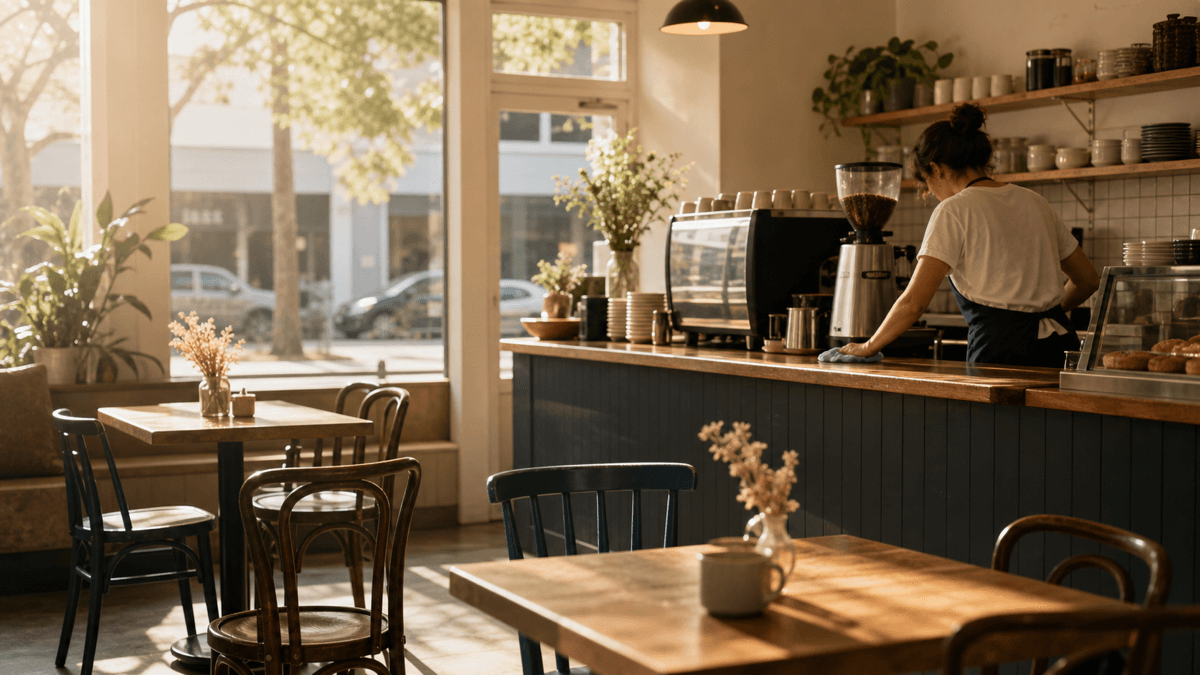
Your rent costs the same at 3pm as it does at 9am. So do your lights, your music licence, your card machine, and usually your staff. But the morning queue is long gone, lunch has cleared out, and the till has barely moved in an hour.
That stretch from roughly 2 to 4pm is the dead zone. It's where your wage percentage and your margin quietly bleed, and most cafés just accept it as the shape of the day.
It doesn't have to be. Some of that lull you can fill. The rest you can stop paying full price for.
Why the lull costs more than it looks
The frustrating thing about a quiet hour is that almost nothing about your costs goes quiet with it.
Rent, rates, insurance, the standing charges on your energy bill - none of that flexes with footfall. They run flat across the day, and a cover at 3pm carries exactly the same overhead as a cover at 9am. The difference is there are far fewer of them to spread it across.
Then there's labour, which is the big one. If you've got the same two people on at 3pm as you had at the morning peak, but you're taking a fraction of the sales, your wage percentage for that hour goes through the roof. The 9am rush where you're doing £90 of sales per labour hour is quietly subsidising the 3pm hour where you're doing £18.
Your monthly P&L hides this. A blended wage percentage of 31% looks perfectly healthy while the afternoon haemorrhages underneath the average. The lull is the single worst hour on most café P&Ls, and it's invisible until you go looking for it.
So you've got two honest options. Put more sales through those hours, or stop carrying so much cost through them. The best operators do both.
Levers to actually fill the afternoon
Filling the lull isn't about a flashy promotion. It's about giving people a reason to come in at a time they currently don't, and matching that reason to who's actually free in the middle of a weekday afternoon.
Build an off-peak offer
The simplest lever is a deal that only exists in the dead hours. A 2-4pm coffee-and-cake combo at a tenner. A "cake o'clock" slot where a slice and a flat white come in under what they'd cost separately. A proper afternoon-tea sitting, booked in advance, that turns a quiet table into a £20 cover.
You're not discounting your busy trade. You're putting a price on hours that were otherwise dead, and a smaller margin on a sale beats a full margin on a sale that never happened. It's also one of the surest ways to get more covers out of every seat across the day, turning idle afternoon tables into paying ones. Pick your slowest lines to feature, the ones already sat in the display, and the offer costs you almost nothing to run.
Position for who is free at 3pm
The 9am crowd is commuters and the school run. The 3pm crowd is different, and it's worth knowing who it is.
- Remote workers and students. Reliable wifi, plug sockets at the tables, and a laptop-friendly attitude turn your quiet afternoon into someone's office. They'll buy a coffee an hour to keep the seat.
- Parents before the school run. The half-hour before pickup is dead time for a parent and a perfect window for a quick coffee and a babyccino. In August the school run vanishes but the family trade doesn't, and turning the school holidays into family trade without denting your margin covers how to capture it without a loss-leading kids' menu.
- Retirees and the unhurried. The people who actively avoid your morning crush will happily come at 3pm if they know it's calm.
You don't need all of them. Pick the group that fits your site and your area, and make your afternoon genuinely good for them.
Run an afternoon-specific menu or display
By 3pm your morning pastries are tired and the lunch counter is picked over. A small, deliberate afternoon offer - a couple of traybakes, a scone, a proper pot of tea - reads as fresh rather than leftover. It also nudges spend per head up, because an afternoon treat is an indulgence, not a grab-and-go.
Use timed loyalty
Loyalty is a brilliant lever for the lull because you can aim it. Double stamps on an afternoon coffee, or points that only redeem between 2 and 4pm, pull your existing regulars into your quiet window rather than rewarding them for visits they'd have made anyway. It's the cheapest footfall you'll ever buy. We've written before about loyalty programmes that actually work for independent cafés, and aiming the rewards at off-peak hours is one of the smartest ways to use one.
Partner with what's around you
Your quiet floor space is an asset other people need. The local business with no meeting room. The book club, the knitting group, the NCT crowd looking for somewhere to land. A standing club booking, or a pre-order and click-and-collect for the school-run rush, turns empty tables into committed covers you can plan around.
Put on low-cost events that suit the hours
Knit-and-natter. A baby and toddler group. A quiet study afternoon for students. These cost you next to nothing to host, they fill the exact hours that are otherwise dead, and they build the kind of regular, sticky trade that doesn't shop on price. The afternoon lull is the natural home for them because you've got the room and the staff are already there. If your version of this is a wine evening, a temporary event notice covers it for £21, and it's worth working through whether the evening actually pays before you buy the glasses.
When the answer is to manage cost, not chase covers
Here's the part most "fill your quiet hours" advice skips. Sometimes the right move isn't more sales. It's less cost.
Not every quiet hour can be filled profitably. If you're in a commuter spot that genuinely empties out after lunch, you can run all the cake o'clock deals you like and still be staring at an empty room at 3pm. Flogging a dead hour with discounts you can't afford is just losing money more slowly.
When that's the reality, the lever isn't turnover, it's labour. If the afternoon is always quiet, you shouldn't be carrying peak staffing through it. Match your rota to the actual demand curve so the bodies are in the peaks and trimmed back in the trough, with one person covering the floor and getting the prep done rather than two stood idle. I've gone through how to build demand-based rotas that protect your wage percentage in full, and for a permanently dead afternoon it's often the more honest answer than any promotion.
The two approaches aren't in competition. Fill the hours you can fill, and stop overpaying for the hours you can't.
Measure your real curve before you act
Before you spend a penny or move a single shift, look at what your afternoon actually does. Not what it feels like - what the till says.
Every transaction you take is time-stamped. Pull a few weeks of sales out of your POS, group them by hour and by day of the week, and your real demand curve appears. You'll often find the lull is narrower or wider than you assumed, or that it's brutal on a Tuesday and fine on a Saturday. That changes what you do about it.
It's worth knowing your café break-even point too, because once you know how many covers you need just to cover the day, you can see at a glance which hours are pulling their weight and which are passengers. The afternoon is almost always a passenger - the question is whether it's worth carrying.
It's also worth checking the season. A lull in June behaves differently from a lull in November, and some of what looks like a structural dead zone is really just a seasonal dip. Shifting your menu and mix for summer trading can do more for a warm-weather afternoon than any 3pm promotion.
The takeaway
The 2-4pm lull is where your fixed costs run on while your sales fall away, and it hides inside a healthy-looking monthly average until you go and find it.
So go and find it. Pull your daypart data, see the real shape of your afternoon, and then pick one lever. An off-peak coffee-and-cake deal, a timed loyalty perk, a standing group booking, or a reshaped rota that stops you overpaying for the quiet. Whichever you choose, trial it for a fortnight and measure two numbers against the same daypart last month: covers, and spend per head.
If they move, keep it and add another. If they don't, the answer was probably to manage the cost, not chase the covers. Either way you'll know - and knowing is the whole point.
Ed O'Brien has run Hunters Cake Company for 17 years across cafés in Witney, Burford, and a bakery in Carterton, Oxfordshire. He's building Brikly - modular tools that give independent café owners the same data the big chains have, without the big chain price tag.